
Bag Quality Consistency: How to Prevent Quality Fade in Repeat Bag Orders
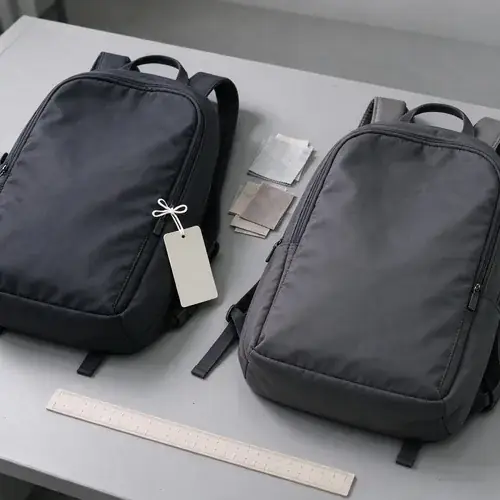
Bag quality consistency means maintaining the same approved materials, construction standards, workmanship, and appearance across repeat production runs. Most repeat-order quality failures are not caused by a bad factory. They are caused by undocumented substitutions, uncontrolled material variation, and process drift during scaling. Final inspection alone usually cannot prevent bag quality consistency problems if material approvals and process controls are weak. This guide gives buyers the approval systems, batch checks, and supplier questions that help keep second, third, and fourth runs from drifting.
The commercial damage shows up late, which is why most buyers miss it. A first order looks right and sells through. The replenishment order "looks the same" in a photo but can start generating returns, negative reviews, or quiet customer comments that the bag "feels different." For a marketplace seller, that can ripple into review decline, conversion loss, and inventory that no longer matches the listing. For a brand or distributor, it can erode trust in the exact SKU the buyer worked hardest to build.
You fix this the way a production engineer would, not the way a nervous first-time buyer would. Lock the specification, store a controlled reference sample, trace material lots, check in-process work at fixed stations, and require written sign-off for every change. The rest of this article walks through the main failure modes and the controls that catch them early.
Quick Answer: The 30-Second Buyer Decision
Repeat bag orders usually degrade because one of five things changes without the buyer's control: the fabric lot, the filler or foam, the hardware source, the production line, or the packaging. You cannot stop every physical variation in textiles, but you can usually reduce the worst commercial failures with four systems.
First, keep an approved BOM (bill of materials) that lists material descriptions, suppliers where possible, density or thickness ranges, color references, and finishing requirements. Second, archive a golden sample that is labeled, versioned, and linked to that BOM. Third, require written deviation approval before any material or process substitution. Fourth, run incoming, inline, and final batch QC against measurable acceptance criteria, not just visual "it looks fine."
A passed sample does not make future consistency automatic. The control system is what keeps later production aligned with the sample. Put another way: the supplier who can show you dye lot records, signed changes, and fixed QC checkpoints is lower repeat-order risk than the supplier who simply promises "same as last time."
Scope of This Guide
This guide covers repeat-order quality control for bags and luggage: backpacks, laptop bags, school bags, travel bags, duffel bags, cooler bags, and trolley or hardside luggage where material stability and structural components matter. It focuses on the operational side—material traceability, approval documentation, process checkpoints, batch inspection, and supplier accountability—not on consumer shopping or broad "how bags are made" education.
The article does not cover price negotiation, shipping logistics, or product design from scratch. It also does not promise defect-free repeat production. Textiles, foams, coatings, and manual sewing all have natural tolerance ranges. The realistic goal is to detect and reject unacceptable drift before the cartons leave the factory, and to remove ambiguity about what "acceptable" means on each order.
Why Bag Quality Consistency Often Fails After the First Order
Most buyers assume the risk is in the first order. In practice, the risk often shifts to the second and third orders, when the supplier's routines relax, the production team changes, or purchasing pressure quietly pushes substitutions. The central reason is that repeat production is rarely identical to the original sample line. It's a new batch of material, sometimes a different set of hands, and often a different incentive structure inside the factory.
Understanding where drift originates is not academic. If you only know the symptom—"the second order felt thinner"—you end up arguing about feel instead of checking the foam density spec, the lot records, and the inline measurement points. That is a losing conversation. Instead, start by mapping the failure sources to the symptoms you can actually verify.
Material Batch Variation Is More Common Than Many Buyers Expect
A buyer approves a sample. The factory sources exactly the same material description for bulk. The result can still differ in tone, hand feel, stiffness, thickness, or coating performance. That's because textile and foam batches are not perfectly identical products—they are produced in lots, and each lot carries its own dye, extrusion, or coating conditions.
Fabric dye lot variation is the classic example. Two rolls of the same specification, dyed to the same Pantone target, can sit visually different under retail lighting. A nylon 600D in one lot may appear slightly warmer or duller than the next lot because the dye uptake, finishing, or spinning conditions shifted. Likewise, foam density and thickness can vary within the supplier's accepted tolerance, changing how the bag holds its shape. A softer foam lot can make a laptop backpack feel less protective in a side-by-side comparison, even when the foam is technically "the same grade."
PU coating thickness is another quiet variable. It affects water resistance, surface sheen, and abrasion performance, but it's invisible unless you compare feel or run the specified surface-level checks. Webbing, lining, and even zipper tape can vary between lots enough for a consumer to notice a difference in tactile quality. Colorfastness is a related concern: a fabric that passes in one lot may need re-verification when the lot changes, especially for dyed polyester or nylon used in high-exposure areas. If colorfastness is contractually relevant, ISO 105 or AATCC reference methods are the type of framework to request—but only as buyer-defined confirmation, not as an automatic pass.
Process Drift Happens When Production Scaling Changes the Original Conditions
"Same factory" does not mean same process execution. The first order may have been produced by the most experienced sewing team while the factory owner gave it personal attention. The third order may run on a different line, with newly trained workers, a tighter schedule, or part of the work moved to a subcontractor.
New workers can create stitch consistency risk quickly. Sewing tension, seam alignment, stitch spacing, and bartack quality all depend on operator skill and machine settings. A new line can produce the same pattern with slightly different stitch density or pulling tension. The visual difference is subtle, but it shows up at stress points: handles, shoulder straps, zipper openings, and corners. Machine settings can drift too. A change in needle type, thread tension, or folding habit can alter how the finished seam sits. If a subcontractor takes over a portion of the order, the QC chain changes too—often without the buyer being told.
If you want to see where that variability enters the overall flow, review the complete bag manufacturing process and QC workflow. The key insight for repeat orders is that the process risk is not static. It changes every time the factory adds capacity, shifts personnel, or moves capacity to a different workshop. Buyers who only audit the factory once miss that the factory itself is a moving system.
The Approval Systems That Reduce Repeat-Order Quality Risk
The prevention system starts long before sewing. After the first order, the buyer's job is to convert the approved sample into a set of production control documents. That means a physical reference, a written specification, and a change-control rule. These three together answer the biggest question in repeating production: "What are we all trying to match?"
A good approval system has a specific job: it removes the supplier's discretion to interpret. If there is no golden sample and no BOM, the factory's reference is whatever the latest material purchase or the newest sewing supervisor believes is correct. When buyers complain about "drifting quality" after building a supposedly stable product, they usually find that there was never a controlled document anchoring the product. There was only an image, an email, and a shared assumption.
Golden Samples Must Be Linked to Approved BOMs and Process Notes
A golden sample is not just a sample. It is the signed physical reference that future production is supposed to match. The catch is that a golden sample only works if it is labeled, dated, versioned, and connected to the bills of materials and process documentation. A naked bag on a shelf proves nothing.
The golden sample should be sealed or tagged, stored by the supplier, and possibly mirrored as a buyer copy. It needs a version number because products evolve. If you change a zipper puller, lining, or logo position, you should create a new golden sample or a written amendment to the existing one. Otherwise the factory keeps comparing production to a sample that no longer matches your current specification. For a practical walkthrough of how to approve a sample before mass production, use the Bag Sample Approval Checklist for B2B Buyers.
The golden sample container or tag should reference the BOM, the material swatches, the logo placement measurements, and the packaging proof. Think of it as the physical front end of a document set. If the supplier cannot show a labeled, controlled reference sample with version history, that is a repeat-order risk signal, no matter how polite their replies are.
Written Deviation Approval Is More Important Than Verbal Confirmation
The single most dangerous phrase in repeat bag production is "we changed it slightly, hope that's okay." Most suppliers do not start out intending to make a bad product. They start out under procurement pressure, and a substitution feels small to them: a slightly different dense foam, a similar-looking zipper, a lining of the "same weight." But each small change compounds, and three small changes later, the product no longer matches the original approval.
Put written deviation approval into the purchase order for any material, construction, hardware, or packaging change before production continues. That means the supplier must describe what they propose to change, why, and what the visual or performance effect might be. You then approve in writing or reject. Verbal confirmation creates ambiguity, and ambiguity favors the party with the least to lose from a downgrade.
The buyer should also map responsibility: who proposes changes, who approves them on the supplier side, and who confirms customer sign-off. A supplier that says "we never change anything" is either unusually stable or lacking visibility into its own purchasing. Ask instead for the written change log, even if it's a simple shared spreadsheet. The existence of a revision log is a stronger trust signal than an absolute promise.
Material Control and Incoming QC for Repeat Bag Orders
Incoming quality control (IQC) is where repeat-order drift is cheapest to catch. If the wrong fabric or foam enters the cutting room, every downstream check becomes rework at the most expensive point. IQC shifts the burden to before cutting, when materials can still be rejected, re-sourced, or re-approved without killing the delivery.
Buyers often assume IQC is the factory's problem. For repeat orders at scale, it is a shared responsibility: the supplier checks incoming materials against the specification, and the buyer verifies that the check actually happened, produces records, and triggers a decision when something is out of tolerance. Without that second layer, IQC can become a form that someone signs without comparing anything.
Which Materials Need Batch-Level Verification Most Often
Not every component has the same repeat-order risk. Some are stable enough to check by document; others need physical comparison on every lot. Prioritize the materials that create the most visible or structural complaints.
Fabric and lining are the most visible batch variables. They affect color, hand feel, weight, and drape. Foam and padding affect shape retention and protection. Zippers affect daily tactile experience and are a common return trigger. Webbing affects strap feel and load performance. Printed or embroidered logos can vary with ink, thread, and execution on different substrate batches. For luggage, wheels and trolley systems are structural, so a batch-level change in wheel durometer or trolley tube wall can shift durability and handling.
Buyers should ask the supplier to flag which materials have changed source or lot since the previous order. That single question surfaces most substitutions before they hide inside a finished bag.
Color Consistency Requires More Than Pantone Matching
Buyers treat the Pantone reference as a final answer. In bag production, the Pantone number is a target, not a result. The same Pantone can look different after knitting, weaving, dyeing, coating, or lamination, and it can look different again under showroom, warehouse, and marketplace photography lighting.
The practical control is a bulk lab dip or bulk fabric swatch approved against the golden sample and the original fabric, not only against a printed Pantone card. The buyer should also define tolerance: does "close" mean visually acceptable at arm's length under specific lighting, or measured with a light box and a defined delta? Both are legitimate, but they must be written down.
For a deeper technical walk-through of dye lots, lab dips, and visual mismatch in production, read color consistency and Pantone control in bag production. The short version for repeat orders: freeze the approved bulk swatch, compare each new lot against it under controlled light, and escalate when the difference is noticeable in the channel where the product sells.
Inline Inspection and Batch QC During Production
If material control is the early warning system, inline inspection is the mid-production sensor. By the time a bag reaches final inspection, the seams are sewn, the hardware is installed, and a defect is already a finished product with labor invested. Inline QC catches issues while they can still be corrected at the machine, which changes the whole economics of quality.
Inline inspection works best as a small set of fixed checkpoints—usually after cutting, after the first sewn units, and at the point where hardware or branding is applied. The key is that the buyer defines the check points and the sample sizes, not just "the factory does IPQC." A vague IPQC promise is no more useful than no promise.
Final Inspection Alone Usually Finds Problems Too Late
Final inspection has three basic problems. It finds defects after sewing is complete, so correction means rework or discarding finished units. It can only sample a small portion of the cartons. And if the drift is subtle—slightly thinner foam, slightly different lining, a marginally weaker bartack—a final visual check against the golden sample may flag the color but miss the structural difference.
The business cost is worse than the factory cost. Rework adds delay. Mixed batches shipped to a marketplace warehouse create listing inconsistency: some customers receive the original feel, others the drifted version. That pattern shows up as review variance, which is harder to fix than a single batch defect. Final inspection is necessary, but it is the backstop, not the control system. For the inspection-stage logic and sampling approach, use the Bag Quality Control Checklist for Buyers alongside the inline checkpoints described here.
AQL sampling is useful for major and minor visual defect counts, but AQL is not a consistency system by itself. It answers "how many defects are acceptable this shipment," not "does this material match the approved reference." Buyers who want bag quality consistency should pair AQL with lot-to-golden-sample comparison and defined functional tests.
Buyer-Defined Acceptance Tests Reduce Supplier Interpretation Gaps
The buyer's biggest leverage in repeat orders is to define the pass/fail test before production, not after a dispute. A well-written acceptance test includes the method, the sample size, the pass threshold, and the consequence of failure. That shifts the conversation from subjective taste to written criteria.
Common bag acceptance checks include load tests on handles and shoulder straps, zipper cycling, wheel rolling tests for luggage, abrasion reference checks on high-wear panels, and packaging drop or carton integrity checks. The standard references—such as ASTM or ISO methods—serve as useful frameworks, but they are not automatic defaults. The relevant test depends on the product, target market, use case, and customer complaint history.
Supplier Process Control Questions Buyers Should Ask Before Repeat Orders
A supplier's ability to keep repeat production stable is not about whether they were nice during sampling. It's about whether they have process control in four areas: material sourcing, revision management, inspection reporting, and corrective action. You can assess these before placing the next order, and you should assess them again after the order ships.
Ask questions that require evidence rather than reassurance. "How do you approve material substitutions?" is a question. "Has the fabric source changed since the last order?" is the follow-up that turns it into a verification. The supplier verification table below maps control areas to evidence and red flags; use it during supplier review meetings, not just before a new relationship.
Questions to Include in Repeat-Order RFQs and Production Reviews
The RFQ is where you hard-wire the rules. A repeat-order RFQ should not simply say "same as last order." It should specify the reference sample version, the BOM version, the material lot requirements, the change-approval rule, the inspection checkpoints, and the reporting expectations. This makes the order a controlled instruction rather than a hopeful memory of the previous run.
Copyable supplier questions for repeat order review:
- How are material substitutions approved before production?
- Are dye lots recorded per order, and can you submit the current lot for approval before cutting?
- Who controls incoming material inspection on your side?
- How are process revisions documented and shared with the buyer?
- Are any cutting, sewing, printing, or assembly steps subcontracted?
- How are rejected batches isolated from approved production?
- Can you retain and label an approved reference sample for each reorder?
- Which line or team will run this order, and has it changed since the last run?
These questions do not make consistency automatic by themselves. They create a paper trail and a shared language for when inconsistency happens—and that is the practical goal.
Repeat-Order Quality Consistency Checklist
This checklist is the short operational version of this guide. Work through it before confirming the next production run. If a box cannot be ticked with a document, that's the first thing to fix.
- Approved BOM updated to the current version and attached to the PO
- Golden sample labeled, dated, and versioned; buyer copy stored where accessible
- Material lot verification: fabric, lining, foam, webbing, zipper, hardware compared to approved references
- Dye lot or bulk swatch approved before cutting for all visible materials
- Packaging proof approved: polybag, barcode, carton strength, shipping mark
- Change approval workflow confirmed in writing: no substitutions without buyer sign-off
- Batch traceability confirmed: lot or production date marked per order where applicable
- Inline inspection timing agreed: first-piece, after cutting, after logo application, before packing
- Buyer-defined acceptance tests listed: load, zipper, wheel, abrasion, packaging criteria
- QC reporting agreed: incoming, inline, final reports plus AQL sampling record
- Supplier corrective action record reviewed from the previous order
Supplier Verification Table for Repeat Bag Orders
| Control area | Why it matters | What to ask | Evidence to request | Red flag |
|---|---|---|---|---|
| Material sourcing | Substitution is the top driver of fade | Has any material source changed since the last order? | Approved material list, lot records, swatch submission | "Similar" or "same quality" wording with no document |
| Golden sample control | Explains what production must match | Is the current golden sample labeled and versioned? | Photo of tagged sample, version log | No labeled reference sample |
| Revision management | Prevents silent process changes | How are process or material changes recorded? | Revision log, deviation emails | No written change history |
| IQC/IPQC/FQC | Catches drift at the cheapest stage | What checkpoints run on this order? | Inspection reports with dates and measurements | Verbal-only QC claims |
| Corrective action | Tells you if last order's issues were fixed | What corrective action was taken after the last order? | Corrective action record or summary | No memory of previous complaints |
| Subcontracting | Hidden lines create hidden variation | Which steps are outsourced, if any? | Subcontractor disclosure | "We handle everything" with no process detail |
FAQ: Repeat-Order Quality Consistency in Bag Production
These are the practical questions buyers ask when scaling recurring bag production, and the answers you'll actually use when a second or third order starts to drift.
Why did my second bag order feel thinner than the first?
The most common causes are a different foam density or thickness, a thinner lining, a lighter fabric hand, or reduced padding in a high-stress area. The supplier may have sourced a lower-cost equivalent, changed the foam supplier, or adjusted construction to save labor. Instead of arguing about "feel," ask for the approved BOM and the current foam or padding specification, then compare the lot records and measure the batch against the golden sample.
Can the same Pantone color still look different between orders?
Yes. A Pantone reference is a target number, not a physical dye lot. Fabric construction, weave, dye uptake, coating, and finishing all influence how the final color appears. Different lighting can also make the same lot look different. The practical control is to approve a bulk swatch or lab dip against the original product, define a tolerance, and use the same lighting conditions for comparison on every reorder.
Should buyers keep their own golden sample?
Yes, when practical. The buyer's own golden sample provides a reference that does not depend on the supplier's memory or storage. It's especially useful for marketplace sellers managing multiple replenishment SKUs. The supplier should also keep a labeled, versioned reference, and the two should match. A sealed, documented buyer copy is a strong control when disputes arise.
Does ISO 9001 mean repeat-order consistency is automatic?
No. ISO 9001 certification signals that the supplier operates documented quality processes including incoming inspection, process control, nonconforming product handling, and corrective action. It does not automatically make the next fabric lot or hardware batch match your approved sample, and it does not replace buyer-defined acceptance criteria. Treat it as a useful supplier filter, not a substitute for batch control and written approvals.
How often should inline inspections happen?
Inline inspection frequency should be buyer-defined and product-specific. A practical pattern for bags is: first-piece check when sewing starts, a checkpoint after the first completed units and after logo or hardware application, then final inspection after packing. High-risk components or new lines may need more frequent checks. The exact number is less important than having defined checkpoints with recorded results, not a vague promise that the factory "does IPQC."
What creates the biggest marketplace review risk in repeat bag orders?
The biggest review risk is inconsistency within a single replenishment cycle or across cycles: some customers receive the original feel and others receive the drifted version. That inconsistency shows up as conflicting reviews, "different from photo" complaints, and rising return rates. Color mismatch, thinner padding, zipper feel changes, and packaging shifts are common triggers. Buyers reduce this risk by comparing each production lot to the golden sample, approving bulk dye lots, and running inline checks before a flawed lot ships.
Official Sources and Compliance References
These references support the quality control and material testing concepts in this guide. They are frameworks and methods, not guarantees of supplier performance, and the buyer should confirm which methods the supplier actually uses for the product in question.
- ISO 9001 quality management systems — relevant for understanding documented process control, incoming inspection, nonconforming product handling, and corrective action. Certification status should be verified with the supplier, not assumed.
- ISO 105 series for colorfastness, including selected parts for fabric colorfastness testing, where colorfastness is contractually relevant.
- AATCC textile testing methods — a reference family for colorfastness, dimensional change, and other fabric properties in US-market contexts.
- ASTM textile and package testing references — used selectively where specific abrasion, tensile, or packaging performance criteria are accepted by the buyer and supplier.
- AQL sampling methodology — the common acceptance sampling logic used in final inspection; buyer-defined AQL levels and defect classifications should be written into the order.
These standards do not eliminate batch variation. They provide a common language for defining and verifying acceptable performance.
Conclusion
Repeat-order quality fade is a management system problem, not only a factory capability problem. The supplier's past sample does not protect future production. What protects future production is the buyer's control structure: a versioned BOM, a labeled golden sample, written change approval, material lot verification, defined inline checkpoints, buyer-defined acceptance tests, and documented corrective action.
If you're a brand owner, marketplace seller, or procurement manager running recurring bag programs, the next reorder is the test of your system, not your luck. Build the checklist into the RFQ, keep the golden sample current, and ask the supplier for lot records and change logs the same way you'd ask for the shipping date. That is how you stop trying to prove something "feels different" and start catching the difference in the document, the swatch, and the batch.
When you're preparing your next repeat-order RFQ or supplier review, bring these questions to the factory you're auditing or to OMASKA with your existing bag specification and the previous order's QC history. The goal is the same on every run: a controlled product, not a pleasant surprise.
Get A Quote

Get A Quote
0 Comments