
Vegan Leather Bags: PU, Microfiber, Bio-Based Materials & OEM Sourcing Risks
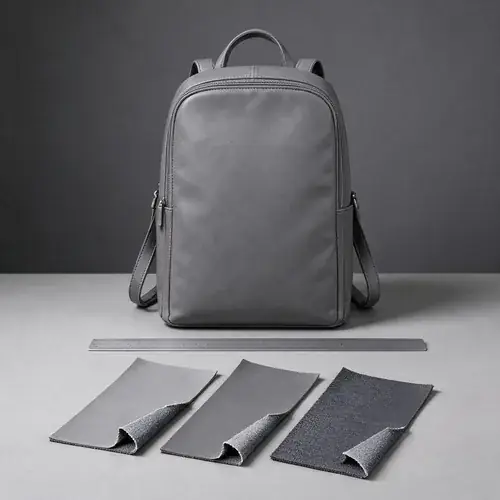
Most vegan leather bags are polyurethane-coated textile composites, not single plant-based sheets, and that distinction drives nearly every sourcing risk. If you choose a vegan leather by surface feel, marketing story, or price alone, you are likely building peeling, cracking, color migration, or hydrolysis complaints into the product. The practical decision is which construction—standard PU-coated fabric, microfiber-backed vegan leather, or hybrid bio-based material—matches your bag category, expected lifecycle, sales channel, and repeat-order stability.
I’ll be direct: brand owners, Amazon sellers, online retailers, and importers lose more money from review risk, return rates, and batch inconsistency than from any material price difference. This guide compares vegan leather categories on durability, OEM scalability, coating failure modes, compliance documentation, and what to confirm with a supplier before sampling. It’s written for procurement teams, product managers, and anyone preparing an RFQ for vegan leather bags, not for consumers shopping for a single handbag.
By the end, you should be able to write a more precise RFQ, reject weak sustainability or performance claims, and choose the least-risk vegan leather strategy for your business model. If you only remember one rule: make the coating system and backing structure the primary decision, then treat the surface texture and plant-based story as secondary.
Quick Answer / 30-Second Buyer Decision
For long-life daily-use bags, microfiber vegan leather is usually the safer default when the supplier can confirm abrasion and flex performance. Standard PU leather is better for lower-cycle fashion bags, promotional items, and fast-turn private label programs. Bio-based and plant-based alternatives should remain pilot or capsule production until repeat-order consistency, color matching, and material allocation are confirmed.
A practical selection sequence looks like this:
- Stock PU-coated fabric: use for promotional bags, event giveaways, seasonal fashion, and low-cost cosmetic pouches where lifecycle expectations are short.
- Microfiber vegan leather: use for laptop backpacks, structured handbags, daily-use crossbody bags, and any area that flexes or rubs repeatedly.
- Bio-based hybrid material: use for a limited storytelling capsule, not as the core material of a scalable catalog unless your supplier has proven repeat production and controlled color tolerance.
The material alone does not guarantee durability. The same PU-coated surface can perform very differently depending on backing, thickness, lamination, edge construction, and reinforcement.
What Does "Vegan Leather" Mean in Bag Manufacturing?
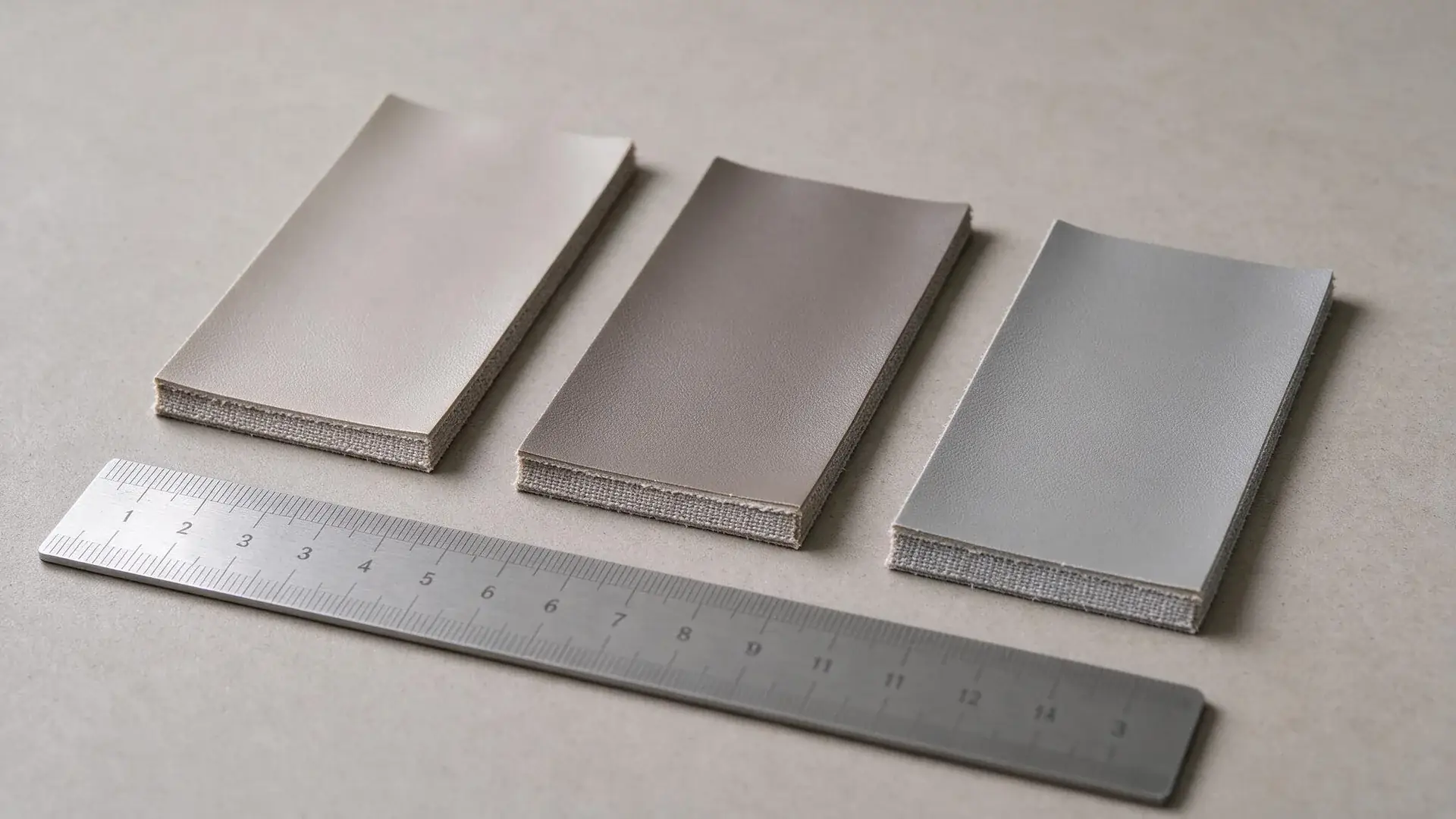
"Vegan leather" means the material contains no animal-derived leather, but it does not automatically mean biodegradable, plastic-free, bio-based, or sustainable. In bag manufacturing, the term usually describes a coated textile or composite that imitates leather hand feel and appearance. Most commercial vegan leather is polyurethane, either coated onto a woven or knitted fabric or carried by a denser microfiber substrate.
This matters because the backing and coating are where production failures come from. The surface grain is easy to photograph, but the real decision is what sits underneath it. If you want a clearer positioning comparison with animal-origin leather and standard faux materials, the faux leather vs real leather bags sourcing guide covers the same decision from a brand and cost angle.
Standard PU Leather
Standard PU leather for bags is typically a polyurethane coating applied to a polyester, nylon/cotton, or recycled polyester backing. The coating can be smooth, embossed with a grain, or finished with a soft-touch surface. This is the dominant commercial material for vegan leather bags because it balances customization, availability, and manufacturing scalability.
The main trade-off is mechanical. A standard PU-coated fabric is usually thinner and more flexible than microfiber, but it can wear faster at edges, fold lines, and high-friction contact zones. The backing matters more than many buyers assume: knitted backing is softer and easier to fold, while woven backing is stiffer and better for structured panels. Ask the supplier which side of the composite carries the strength.
Microfiber Vegan Leather
Microfiber vegan leather uses a dense microfiber substrate—often nonwoven, knitted, or a layered structure—that is impregnated or coated with polyurethane resin. The denser structure gives it a more consistent surface and, when formulated and processed correctly, better abrasion resistance and structural retention than a thin standard PU coating.
That advantage comes with cost and processing trade-offs. Microfiber may be less supple than a low-thickness PU-coated knit, and it can be overkill for a short-life promotional bag. You are paying for performance you may not need. For high-flex areas, ask for flex-cycle and adhesion data instead of assuming all microfiber performs the same.
Plant-Based and Bio-Based Alternatives
Plant-based vegan leather alternatives include cactus-based, apple-based, pineapple-leaf-based, and mushroom/mycelium materials. The key commercial reality is that most plant-based alternatives still rely on polyurethane binders or polymer coatings to create a stable sheet. Some products may be partially bio-based by weight, but that does not make them plastic-free, compostable, or automatically safer in a landfill.
Cactus leather bags are a common search term, but the material composition varies by supplier and may be a coated hybrid rather than a pure cactus sheet. A buyer should confirm the exact bio-based percentage, the remaining polymer content, and which part of the composite is plant-derived. The surface story may be excellent for brand positioning; the sourcing story may still be closer to a specialty PU laminate.
| Material type | Typical structure | Durability tendency | OEM scalability | Surface consistency | MOQ complexity | Common risks |
|---|---|---|---|---|---|---|
| Standard PU | PU coating on woven or knitted backing | Lower to moderate; depends on backing and thickness | High; widely available | Good for stock colors and standard grains | Lower for stock; rises for custom color/grain | Edge cracking, peeling, backing show-through |
| Microfiber | Dense microfiber substrate with PU resin | Higher abrasion and structure retention when confirmed | Moderate; fewer stock choices | Generally very consistent | Higher than standard PU in many projects | Higher cost, stiffness, supplier-dependent quality |
| Cactus hybrid | Plant-derived layer typically combined with PU/polymer binder | Project-specific; not inherently more durable | Limited; supplier allocation matters | Can vary by batch and finish | Usually higher and less flexible | Unverified bio content, split, color variation |
| Apple-based | Fruit byproduct layer combined with polymer binder | Moderate; often used in small leather goods | Limited to selected suppliers | Surface texture can vary | Higher; limited stock availability | Marketing claims outpace repeat supply |
| Pineapple-based | Leaf fiber material usually coated or laminated | Moderate; may show natural fiber variance | Limited and supplier-dependent | Visible fiber variation common | Higher for consistent color lot | Batch color shifts, coating delamination |
| Mycelium | Grown material often finished with polymer or backing | Early-stage; durability profile must be project-confirmed | Very limited for bag OEM | Highly variable without supplier control | High; often long development path | Scaling gaps, low-color control, cost volatility |
PU Leather vs Microfiber Leather for Bags
PU leather vs microfiber leather is not a contest where one material wins every category. The decision should follow the bag's expected lifecycle, flex zones, and return risk. Microfiber typically offers better surface density and abrasion resistance, while standard PU offers more supply flexibility, greater embossing range, and lower complexity for short-run decoration.
The table below gives a rule-of-thumb matching, not a warranty. Use it to shortlist, then test the selected material in the actual bag pattern.
| Bag application | Preferred starting material | Reason | Main limitation to confirm |
|---|---|---|---|
| Daily-use backpacks | Microfiber for stress panels | Higher abrasion and edge resistance | Stiffness, handle and stitch compatibility |
| Laptop bags | Microfiber or reinforced woven-back PU | Repeated loading and corner wear | Need structure without cracking at gussets |
| Cosmetic bags | Standard PU on woven or knitted backing | Soft hand, easier folding, lower cost | Thin coatings can show backing under lighting |
| Fashion handbags | Standard PU for seasonal, microfiber for structured carry | Match cycle length to material cost | Sharp folds and metallic finishes are high risk |
| Promotional bags | Stock PU | Fast decoration and availability | Do not promise daily-use durability |
| Luggage panels | Reinforced microfiber or high-abrasion PU | Contact wear and scuffing | Edge paint and handle attachment must be tested |
Daily-Use Backpacks and Laptop Bags
For products that flex thousands of times and carry weight, standard thin PU on a soft knit is the riskiest choice. Microfiber vegan leather, or a PU-coated woven backing with proper reinforcement, usually holds shape better at the sides, bottom corners, and laptop compartment edges. The critical areas are not the flat center panel; they are the gussets, handle attachment points, zipper stress lines, and corners where the material folds under load.
Fashion Handbags and Cosmetic Bags
Fashion handbags and cosmetic bags have shorter expected lifecycles, so standard PU leather is often commercially rational. For cosmetic bags, suppliers may reference a common PU thickness range such as 0.6–0.8 mm, but confirm this for your specific pattern because a thin material can show backing texture through the surface. Structured vanity cases usually need a stiffer woven backing, while softer pouches can take knitted backing.
Promotional and Event Bags
Promotional and event bags are the one case where a standard stock PU frequently makes more sense than microfiber. The value is in branding, speed, and landed cost, not long-term durability. The main failure to avoid is presenting a cheap stock PU item as a premium daily-use product, because that gap will show up in reviews and damaged inventory.
Luggage Panels and Trim Applications
Luggage panels and trim need a higher abrasion threshold because wheels, handles, and conveyor surfaces cause repeated contact wear. A reinforced microfiber vegan leather or a high-abrasion PU with a stable backing is a safer starting point than a fashion-grade soft PU. Check edge paint compatibility and make sure the coating will not delaminate around rivets, frame channels, or retractable handle openings.
Why Vegan Leather Bags Fail in Real Use
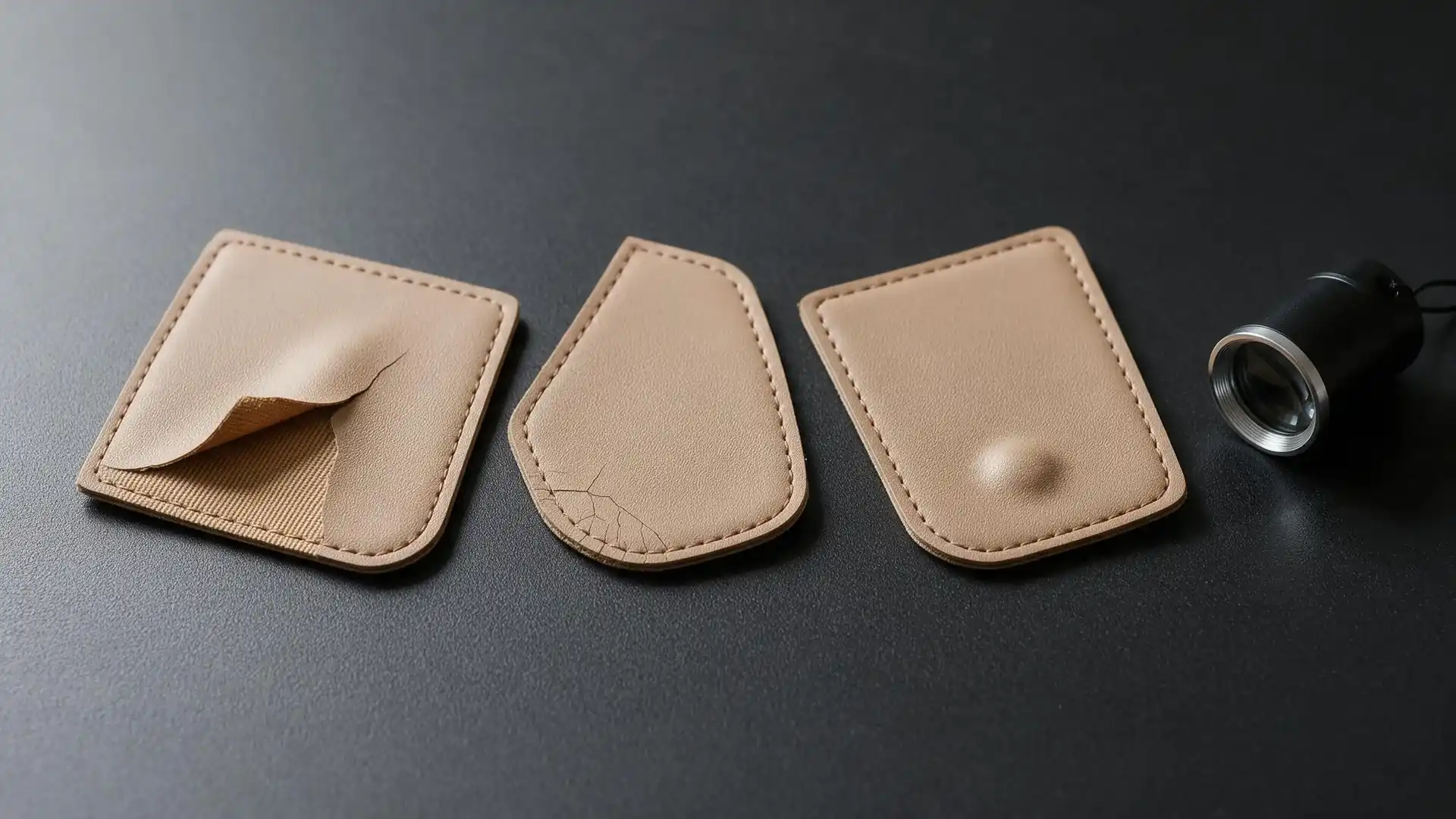
Most vegan leather bag failures are not random. They follow a short list of mechanisms: hydrolysis, fold-line cracking, coating adhesion loss, and surface instability such as odor or color migration. When you know the mechanism, you can write a better test plan instead of waiting for customer photos.
For the broader structural reasons bags wear out—stitching, reinforcement, hardware weakness, and stress points—see the separate guide on why some bags are more durable.
Hydrolysis and Humidity Exposure
Hydrolysis is the chemical breakdown of polyurethane when water molecules attack certain ester linkages. The risk increases in hot, humid storage, during sea freight in warm climates, and in warehouses without climate control. A bag can look fine at final inspection and still degrade during transit or after months in a closed box.
Not all PU formulations hydrolyze at the same rate. Some ether-type formulations resist hydrolysis better than ester-type material, but you cannot see the difference on a sample. Ask the supplier to state the polyol or chemical system used and request a buyer-defined humidity or hydrolysis exposure test. If the supplier cannot answer chemistry questions, treat long-term durability as unconfirmed.
Fold-Line and Edge Cracking
Vegan leather cracks at fold lines when the coating is too rigid for the bend radius, when the backing is over-laminated, or when the pattern forces a sharp crease at a gusset or flap. Thin standard PU often resists folding at first, then loses coating adhesion after repeated flex.
The prevention is partly in design and partly in material selection. Use a slightly larger inside radius on flap edges, avoid folding thick structured vegan leather into a hard crease, and choose a more flexible coating for high-flex panels. During sampling, open and close the key fold areas repeatedly and inspect under side light for micro-cracks.
Surface Delamination and Peeling
Delamination happens when the coated surface separates from the backing. The cause is usually weak lamination, an under-specified backing, edge moisture entry, or excessive stress at seams and trim. A material can pass a flat abrasion test and still peel at the edge because the test does not reproduce folding, stitching, and humidity together.
Ask for a coating adhesion test and specify a flex-plus-humidity test for any bag that will be folded, packed tightly, or exposed to coastal humidity. Edge paint compatibility also matters: some release agents or excess plasticizers in PU can prevent edge paint from bonding.
Odor, Color Migration, and Coating Stability
Odor complaints usually come from residual solvents or from off-gassing inside sealed polybags. Air out a production sample inside its actual packaging for a realistic period and smell it before approval. Color migration can occur when a dark lining or hardware transfers onto a light vegan leather surface, or when plasticizer migration makes the surface tacky. Request color fastness to rubbing, water contact, and a dark lining-to-surface contact test as relevant.
Are Bio-Based Vegan Leather Materials Commercially Scalable?
Bio-based leather alternatives are best treated as sourcing projects, not as drop-in replacements for stock PU. The material may look clean and consistent as a single swatch at a trade show, then perform differently when cut in bulk, embossed, stitched, edge-painted, and shipped through a humid container.
The commercial question is not whether a material is innovative, but whether you can reorder it in a similar color, similar hand, and similar lead time six or twelve months later. A buyer should demand production history before launch, not only a sample card.
Second-Generation Hybrid Materials
Second-generation hybrid materials combine plant-derived content with polyurethane or other polymer systems to improve physical stability. They are easier to cut and stitch than early pure plant sheets, but the bio-based share can be lower than the marketing implies. Confirm whether the percentage refers to total composite weight, coating solids, or feedstock input, and ask for documentation.
These hybrids can be a reasonable middle ground for fashion capsules and lifestyle accessories, especially when the brand story is based on partial plant content rather than a "100% natural" claim. The risk sits in color consistency and material allocation, not necessarily in physical performance.
Mycelium and Emerging Next-Gen Materials
Mycelium and other emerging materials are still early-stage for large bag OEM programs. They may be available through small runs or partner suppliers, but repeat production, color tolerance, and coating consistency require much more supplier control than a standard coated textile. Use these only for limited launches, and keep a full backup material approval in place.
When OEM Buyers Should Use Stock PU Instead
Stock PU makes sense when the business model depends on fast repeat orders, multiple colorways, low complexity, and predictable compliance. If a bio-based material can only be allocated through one specialty source, every reorder becomes a single-point failure. That is acceptable for a limited marketing capsule; it is not acceptable for a core catalog SKU with sustained marketplace sales.
Compliance, Sustainability Claims, and Greenwashing Risks
The safest way to market a vegan leather bag is to say what the material is with verified, narrow claims: no animal leather, PU-coated textile, recycled backing if documented, or partially bio-based with a defined share. Avoid broad words like "eco-friendly," "biodegradable," "plastic-free," or "sustainable" unless a supplier document supports the exact claim for the final coated composite.
This connects directly to material traceability and greenwashing risk. For the wider material selection framework, read the sustainable bag materials guide.
| Claim or requirement | What it actually means | What to request from the supplier |
|---|---|---|
| Vegan | No animal-derived leather | Supply chain confirmation for coating, backing, adhesive, and trim |
| Bio-based | Contains some plant-derived content | Bio-based percentage by weight, test basis, and remaining polymer content |
| Plastic-free | No petroleum-based polymer | Highly unlikely for most commercial vegan leather; require full composition breakdown |
| Biodegradable | Degrades under specific conditions | Test method, conditions, timeframe, and whether the final coated composite was tested |
| REACH compliant | Meets EU chemical restrictions for relevant substances | EU REACH declaration or test report for SVHCs applicable to the material |
| OEKO-TEX Standard 100 | Tested for certain harmful substances where applicable | Certificate number, standard, product class, and whether the coated composite is covered |
| California Proposition 65 | Warning requirements for listed chemicals in California | Product testing or material declaration for phthalates, lead, and other listed substances |
| PETA-Approved Vegan or Vegan Society Trademark | Brand or product-level animal-free certification | Confirm supplier has current permission and which product or component is covered |
EU REACH applies to chemical safety and substances of very high concern. California Proposition 65 is a warning and disclosure regime for products sold in California. Neither one is a substitute for physical durability testing. Vegan certification does not mean sustainable, plastic-free, or non-toxic by itself.
OEM Development Risks Buyers Often Miss
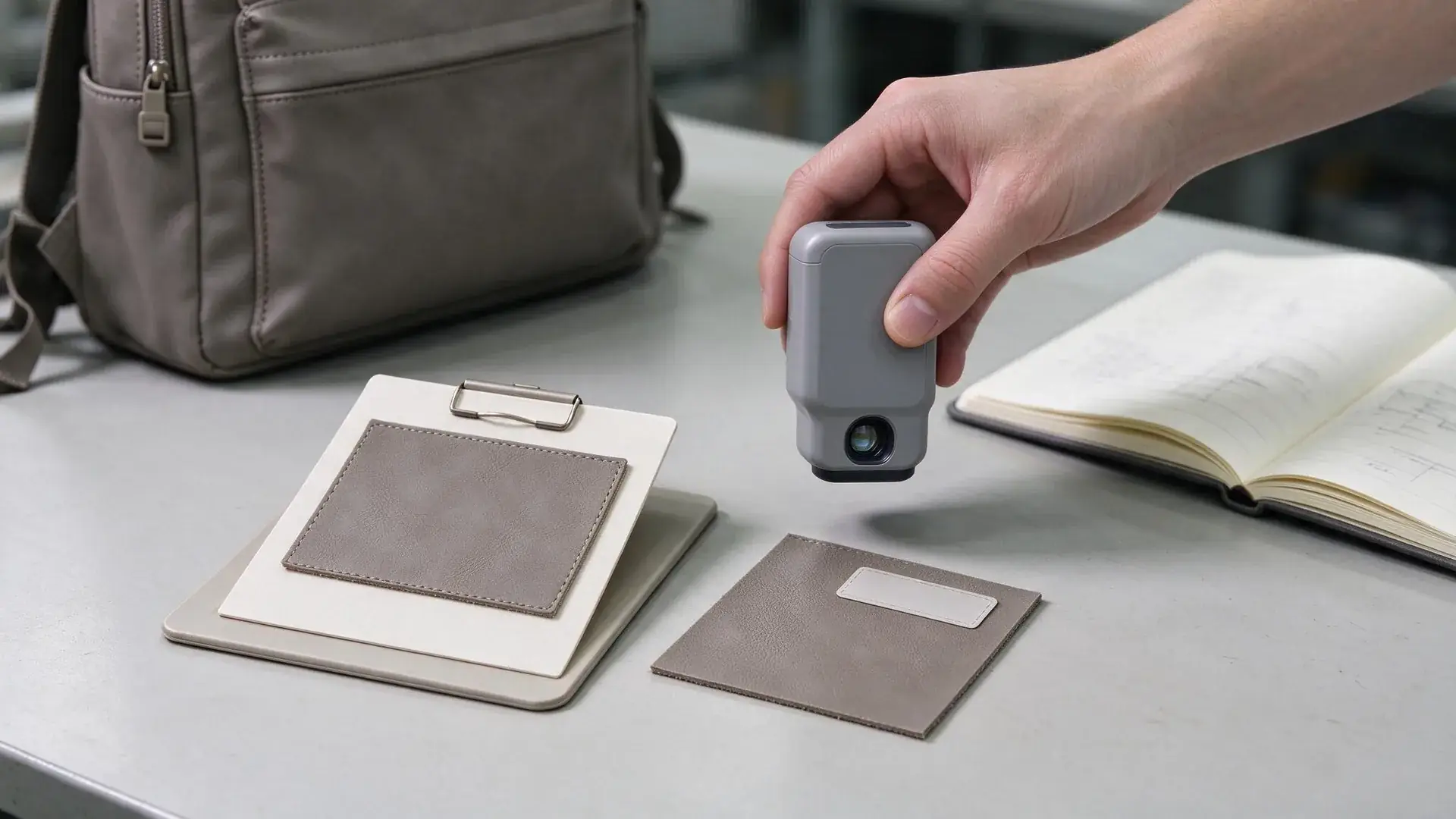
The most expensive vegan leather failures happen after sampling and before reorder. A supplier may show a beautiful swatch, cut a clean prototype, then have to source a different mill lot for bulk production. That gap between sample and bulk is where color shift, stiffness change, or coating adhesion loss enters the order.
If you are managing a China-based or cross-border bag program, the same sourcing risks apply. The sourcing bags from China mistakes guide covers supplier verification and production consistency in more detail.
Stock Material vs Custom Material Development
Stock material means the supplier already uses that vegan leather in production or holds it in a known color range. Custom material development means the mill builds a new color, grain, backing, or bio-based formulation for your order. The two paths have completely different risk profiles.
Stock material is faster to sample and easier to replace on reorder. Custom material gives differentiation but can require a larger initial buy because the mill may set a minimum batch, and unsold specialty material becomes dead inventory risk if your sales forecast changes. Ask the supplier to separate material MOQ from finished-bag MOQ so you understand which constraint you are actually buying against.
Why Samples and Bulk Orders May Differ
Prototype material is often mill-end or small-lot stock. Bulk material may come from a different production run with a slightly different coating thickness or surface treatment. That is why one pre-production sample is not enough for a custom vegan leather bag. Approve a final material swatch, a pre-production sample in the actual material, and a production lot reference card before cutting begins.
MOQ Reality for Specialty Vegan Leather
Specialty vegan leather often creates MOQ complexity at the material level, not just the bag level. A mill may require a minimum quantity of meters per color, while the bag factory may quote a separate minimum quantity for cutting, hardware, and packaging. The result is that a small initial brand run may be forced to absorb more material than needed. Confirm material minimums, color minimums, setup charges for custom embossing, and whether excess material can be transferred to a later order.
Supplier Verification Before You Commit to Material
Supplier verification for vegan leather should focus on three things: the material's real composition, the supplier's ability to produce a repeatable batch, and the factory's ability to handle the material without creating new failure modes. A good supplier can explain backing, coating chemistry, edge paint compatibility, and testing limitations without hiding behind the word "vegan."
Ask for these before approving development:
- Material technical datasheet: backing fiber, coating chemistry, total thickness, coating weight, softening mechanism, and recommended use.
- Compliance declarations: REACH statement, OEKO-TEX certificate if applicable, Proposition 65 declaration for US, and any Vegan Society or PETA-Approved Vegan documentation.
- Batch consistency process: how the supplier manages color tolerance, lot-to-lot variation, and mill source changes.
- Edge paint compatibility record: which edge paint system the factory has used with this vegan leather, not just a generic recommendation.
- Production sample in actual material: not a substitute swatch, not a similar colorway, and not a different backing.
- Moisture/odor screening: a sealed-package test or ventilation check before bulk packing.
A factory can be excellent at cutting nylon and still mishandle thin vegan leather at seams. The verification question is not "do you make vegan leather bags?" It is "what was the last vegan leather bag order you ran in this material, backing, and construction, and what defects did QC catch?"
RFQ Checklist for Vegan Leather Bag Projects
A precise RFQ reduces the chance that three suppliers quote different materials under the same words. Use this table as a starting template.
| Field | Your input / options |
|---|---|
| Bag category | Backpack, handbag, cosmetic bag, laptop bag, promotional bag, luggage trim, other |
| Target market | EU, US, global marketplace, retail, promotional |
| Expected lifecycle | Single event, seasonal, daily use 1–2 years, daily use 3+ years |
| Material preference | Stock PU, microfiber, bio-based hybrid, buyer-defined |
| Coating system | Standard PU, hydrolysis-resistant PU if confirmed, supplier-recommended |
| Backing structure | Woven, knitted, nonwoven, RPET backing if documented |
| Thickness target | Project-specific range to confirm with supplier |
| Surface texture | Smooth, embossed grain, cross-hatch, matte, soft-touch |
| Reinforcement areas | Bottom, handle attachment, flap edge, zipper ends, corners |
| Logo method | Deboss, emboss, screen print, heat-transfer, metal plate, other |
| Lining interaction | Dark lining contact, hardware rub points, internal coating |
| Compliance documents | REACH, OEKO-TEX, Proposition 65, vegan certification |
| Packaging and storage | Polybag type, ventilation, insert card, humidity control requirement |
| Acceptance tests | Abrasion, flex, coating adhesion, color fastness, hydrolysis exposure |
| Inspection standard | AQL level or buyer-defined defect limits |
| Material source | Stock, custom mill development, supplier allocation |
| Reorder plan | Expected repeat frequency and color expansion |
Do not accept a quote based only on bag dimensions and logo placement for a vegan leather item. The material specification is the quote.
FAQ
These questions cover the decisions buyers most often ask before shortlisting suppliers or approving vegan leather samples.
Is vegan leather durable enough for backpacks?
It can be, but "vegan leather" alone does not tell you. For daily-use backpacks, microfiber vegan leather or a reinforced woven-back PU is the safer starting point. The buyer should verify abrasion, flex, coating adhesion, and hydrolysis resistance on the actual material and pattern before mass production. Thin standard PU on a soft knitted backing is usually the wrong choice for heavy daily use.
What is the biggest risk with PU leather bags?
The biggest risk is hydrolysis and coating delamination under heat and humidity. A PU bag can look perfect at final inspection, ship through a warm container, and then peel or crack after a few months in storage or use. The buyer's defense is a specified PU formula, a humidity exposure test, proper edge construction, and sealed-package odor inspection.
Are cactus leather bags fully plant-based?
Most cactus leather products are hybrid composites that contain a cactus-derived layer combined with a polyurethane or polymer binder. "Cactus leather" is a sourcing and marketing category, not proof that the material is plastic-free or biodegradable. Ask the supplier for the bio-based percentage, the remaining polymer content, and the test basis behind any plant-content claim.
Which vegan leather material is closest to real leather?
Microfiber vegan leather with a dense substrate and a well-formulated surface usually comes closest to the hand, structure, and edge performance of real leather in a bag. It does not mean it is identical. It also does not have the same patina, repairability, or natural fiber behavior. For brand positioning and cost, standard PU can fill that role in short-cycle fashion items.
Can vegan leather bags pass EU compliance requirements?
They can, but compliance depends on the specific coating, backing, adhesive, dye, and hardware. REACH applies to chemical substances in the finished article. OEKO-TEX Standard 100 may apply to the textile or coated material if the supplier has tested it. The buyer should request current declarations rather than assume all vegan leather is automatically EU-ready.
What tests should buyers request before mass production?
At minimum, request color fastness to wet and dry rubbing, coating adhesion, flex testing under humidity, and a buyer-defined abrasion or Martindale test. Add a sealed-package odor check and a hydrolysis exposure test for humid markets. For structured bags, include edge paint adhesion and fold-line cracking inspection. The exact pass/fail values should be set with your supplier and your target product lifecycle, not copied from a generic checklist.
Official Sources and Compliance References
These references support the compliance and claim-boundary discussions in this article. Use them to verify current requirements before launch.
- OEKO-TEX official site: confirms the scope and product classes of OEKO-TEX Standard 100 and related certifications.
- European Chemicals Agency (ECHA): provides REACH regulation details, Candidate List of substances of very high concern, and chemical safety information.
- California Proposition 65 official source: lists chemicals, warning requirements, and business obligations for products sold in California.
- PETA-Approved Vegan official program: explains the meaning and scope of the PETA-Approved Vegan mark.
- The Vegan Society Trademark: explains the trademark's animal-free and supplier verification requirements.
- Material supplier technical datasheets: define the actual coating, backing, thickness, and test parameters for the specific vegan leather lot you are sourcing.
These sources do not replace a supplier's current material declaration, and they should be checked against the exact product, market, and age group.
Conclusion
Choose vegan leather for bags the way you would choose a fabric, not a marketing label. Start from the backing and coating system, match the material to the bag's lifecycle, and verify hydrolysis, adhesion, flex, and batch consistency before committing to bulk. Standard PU solves availability and cost for short-cycle products. Microfiber solves abrasion and structure for daily-use products. Bio-based alternatives solve storytelling and differentiation, but only when supply continuity and color control are proven.
The most useful next step is to send a supplier a clear material specification instead of an open quote request. If you are preparing vegan leather bag OEM/ODM sourcing with target market, quantity, lifecycle, material preference, logo method, compliance documents, and packaging requirements, OMASKA can help structure the sampling and verification process around the risks that actually decide profitability.
Get A Quote

Get A Quote
0 Comments