
Custom Handbag Manufacturer Guide: Materials, Sampling & Risk Control
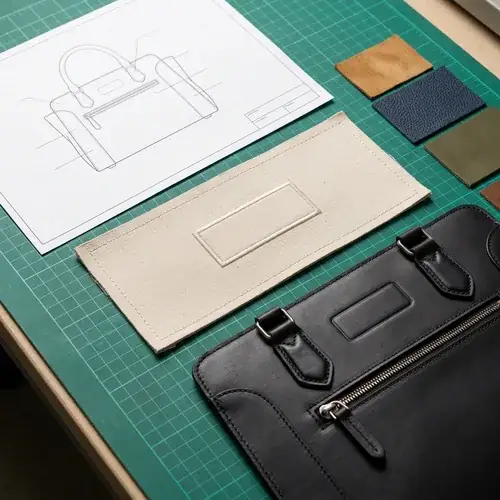
A custom handbag manufacturer is an OEM or ODM facility that turns a brand's tech pack, material selections, and hardware plan into a production-ready fashion handbag. That means pattern making, sample rounds, skiving, edge painting, hardware attachment, and final inspection—not just cutting and sewing a generic bag.
If you treat this like an ordinary soft-goods order, the usual result is predictable: samples that look decent in photos but fail in hand, edge paint that peels, hardware that tarnishes, a body that loses its shape, and bulk production that no longer matches the approved sample. The commercial damage is returns, platform reviews, rework, and lost brand trust. This guide helps you avoid that by specifying handbags like a sourcing manager, not a fashion sketch.
You'll walk through material categories, hidden structural components, sample gates, measurable QC checkpoints, supplier capability questions, and a ready RFQ structure. The goal is to move from "I have a design idea" to "I can approve bulk production against a signed reference sample without guessing."
Quick Answer / 30-Second Buyer Decision
Start with the right factory category, lock the material physically, and never approve bulk from a photo.
- Choose a custom handbag manufacturer with demonstrated handbag work—cylinder-bed or post-bed sewing, skiving, multi-coat edge paint, and structured-body experience—rather than a backpack or promotional-bag plant.
- Specify materials with physical swatches. Drape, thickness, backing, finish, and hand-feel cannot be judged from a screen.
- Keep the first prototype separate from the pre-production sample. The first sample checks proportion and silhouette; the PPS confirms final material, hardware, color, and workmanship.
- Put hidden engineering in the tech pack: stiffener type, lining denier, edge paint color and coat count, handle drop, hardware plating method, and attachment points.
- Make QC measurable: dimension tolerance including handle drop, stitch length, edge paint adhesion, bar tacks, hardware function, plating consistency, and color tolerance against a sealed standard.
Scope of This Guide
This guide is for fashion brand founders, product managers, private-label retailers, wholesalers, and sourcing teams developing women's fashion handbags—shoulder bags, crossbody bags, totes, and top-handle bags.
It covers OEM and ODM handbag development: material selection, structure and hardware engineering, sample revision stages, production QC checkpoints, supplier evaluation, RFQ preparation, and common sourcing mistakes. It does not cover backpacks, hard luggage, hydration products, tactical gear, or promotional tote programs. Those categories use different stress points, closures, stiffeners, and manufacturing logic.
The language here is deliberately production-level. You'll see terms like skiving, edge paint, handle drop, stiffener, tech pack, PPS, rack plating, and salt spray. If you're new to general bag factory workflows, review the complete bag manufacturing process before applying the handbag-specific controls below.
Why Handbag Manufacturing Requires Specialized Sourcing
A handbag is not simply a smaller backpack with a nicer logo. It is a structured or semi-structured accessory where the cut edges, seams, gussets, top line, and handle attachment points are all visible and touch-sensitive. That changes the manufacturing requirements.
Handbag work often requires different sewing equipment and finishing processes. Tight curves, narrow seams, folded edges, and polished hardware call for cylinder-bed or post-bed machines, skiving machines to thin leather or material edges before folding, and manual or semi-automated edge finishing systems. Backpacks may tolerate an exposed bound seam or a simple folded edge; a handbag's cut edge usually needs edge paint, burnishing, or a folded construction that hides raw edges cleanly.
The bigger risk is invisible: most buyers notice fabric and logo first. The supplier's pattern room, stiffener stock, edge-paint capability, and hardware alignment standards matter more to your final product than the promotional photo of the bag.
| Handbag-specific requirement | Why it matters | What to verify |
|---|---|---|
| Pattern room with handbag experience | Controls proportions, gusset shape, top-line alignment, and handle placement | Ask for pattern-level samples, not just finished product photos |
| Cylinder-bed or post-bed sewing | Handles tight curved seams and sharp corners without puckering | Request close-up seam photos or a live sample-room view |
| Skiving and edge finishing | Reduces bulk at folded or turned edges; prevents raw, thick, uneven edges | Confirm skiving capability and edge-paint samples in your material |
| Body stiffeners and reinforcement | Keeps the bag from collapsing, sagging, or losing shape at retail | Ask what stiffener is planned and request bend/structure approval photos |
| Multi-point hardware alignment | Handle loops, side D-rings, dog clips, and magnetic snaps must align under load | Verify on PPS, not first prototype |
Material Selection: Leather, Vegan, and Fabric Options
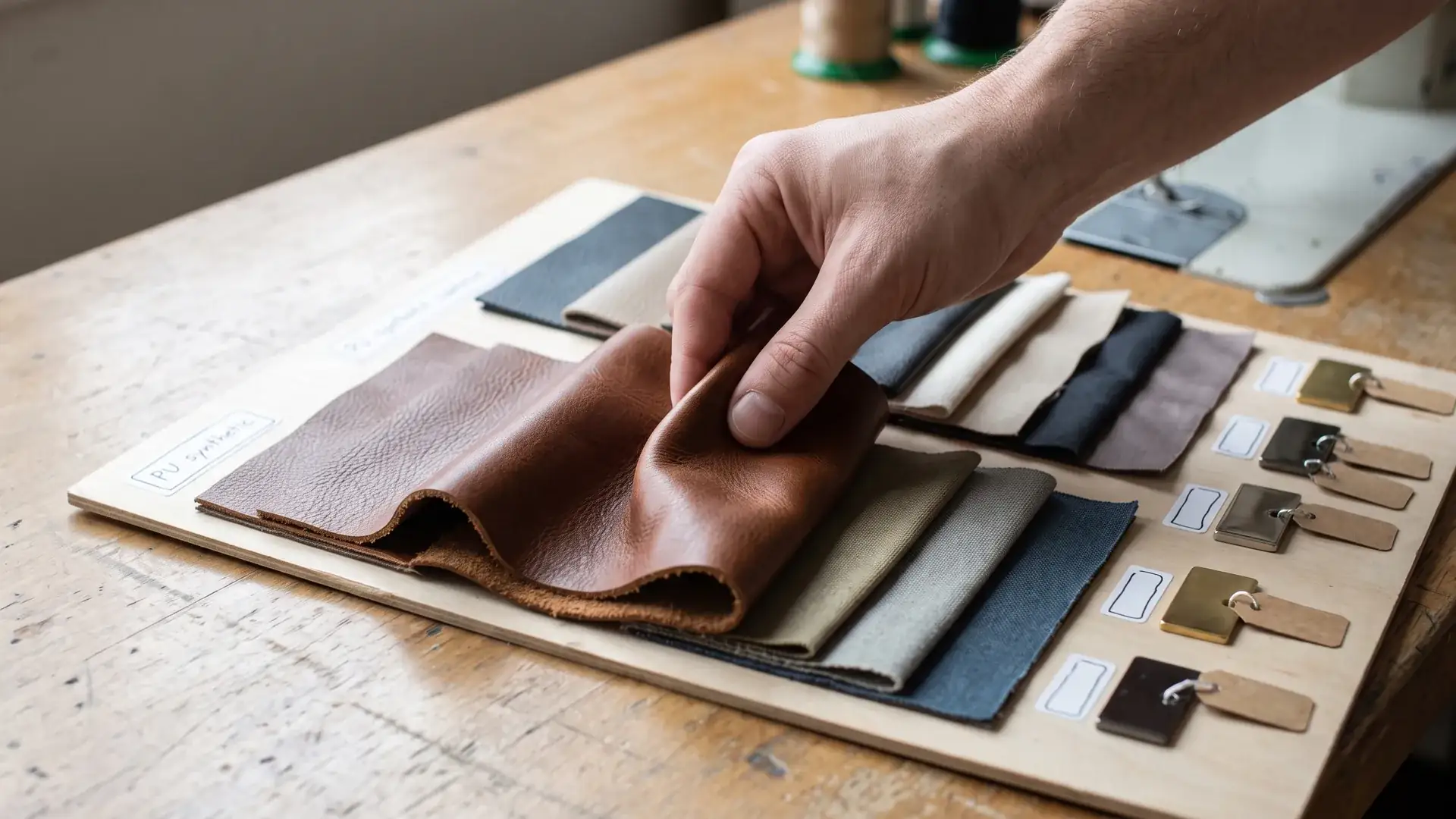
Never choose handbag shell material from a photo. A screen can tell you the color; it cannot tell you the drape, thickness, backing, scratch recovery, edge behavior, or the way the material folds at a corner. You need a physical swatch book or sealed swatch set with supplier reference code, thickness, backing, finish, and color range.
Material decisions should follow the retail positioning, price architecture, usage frequency, and brand compliance policy. A premium top-handle bag and a fast-fashion crossbody should not use the same material logic even if they look similar in the folder.
If you are deciding between leather and synthetic, use the same evaluation discipline: compare finish, edge performance, yield, and supplier documentation. For a deeper breakdown on leather grading and PU comparison, see the Custom Leather Backpack Sourcing: Material, Cost, and Quality Checks for B2B Buyers.
| Material type | Best for | Real trade-off or risk | What to confirm with supplier |
|---|---|---|---|
| Full-grain leather | Premium structured shoulder, top-handle, and crossbody bags | Natural grain variation, scars, and hide yield affect cutting efficiency and color matching | Tannery source, thickness, grade, LWG status if claimed, color-lot variation, yield assumptions |
| Top-grain leather | Uniform, polished, more consistent luxury-look bags | Surface is corrected or split; finish adhesion and wear on high-friction areas matter | Finish adhesion, colorfastness, wear results on corners and strap folds |
| Split or coated split leather | Entry-level leather-look styles | Lower tensile strength and less natural grain character; can crease or tear at thin edges | Exact composition, skiving behavior, reinforcement requirement at seams |
| PU synthetic vegan leather | Mid-tier contemporary bags and quick color assortment | Conventional PU often performs in the two-to-five-year range under daily use; formula and backing determine results | Coating solids, hydrolysis resistance, scratch recovery, cold flex, REACH/RSL test data |
| PVC synthetic | Low-cost glossy or wet-wipe styles | Stiff hand-feel and plasticizer migration risk; regulatory pressure in some markets | Phthalate content, cold flex, odor, EU chemical compliance if applicable |
| Plant-based or bio-based PU / fiber materials | Premium vegan narrative and better durability positioning | Performance can sometimes be engineered to last a decade or more depending on formula, but hand-feel, adhesion, and cost are inconsistent | Bio-based content claim, backing, independent durability data, GRS if recycled content is claimed |
| Cotton canvas, waxed canvas, blended fabric | Casual totes, crossbody bags, lightweight summer styles | Colorfastness, fraying, and shape retention depend on weave and coating | Weight, weave density, coating, shrinkage, reinforcement at handles and stress points |
| rPET or recycled lining fabric | Brand sustainability programs for interior material | Denier and weave alone do not guarantee strength or clean color | GRS transaction documentation, denier, colorfastness, pilling test |
A useful planning assumption—ask your supplier for data—is that conventional PU/PVC-based synthetic leather often falls in roughly a two-to-five-year daily-use range, while premium plant-based or high-solids polyurethane constructions can be engineered to last longer, sometimes a decade or more, with the right backing and finish. That does not replace supplier test data for your exact material, but it helps you align material choice with your brand's durability promise.
Handbag Hardware & Structure Engineering
The visible fabric is only part of what makes a handbag look good. The hidden construction and the metal parts are where bulk production usually goes wrong.
Stiffeners and lining: the hidden shape
A handbag loses its appeal quickly when the front panel wrinkles, the base sags, or the gusset collapses. That is not automatically the shell material's fault; it's usually the stiffener or reinforcement choice.
Common hidden components include leather board or fiberboard, EVA sheets, non-woven reinforcement, plastic sheet inserts, and edge stays. Each has a different stiffness, thickness, weight, and folding behavior. A supplier might use a cheaper stiffener to save cost, which changes the bag's structure even when the outer material is correct.
Lining is the other quiet variable. A lightweight fashion bag might use a 210D polyester lining; a more structured interior or heavier bag may need a 420D polyester or a cotton-twill/microsuede lining. Confirm denier, color, seam allowance, and whether the lining is cut generously enough to avoid pulling or bagging. A lining that is too tight will distort the bag's outer shape.
You should specify the stiffener material and its placement in the tech pack: front panel, back panel, base, gusset, and handle attachment reinforcement. Do not leave it as "standard structure." Standard structure does not exist across factories.
Hardware plating and attachment
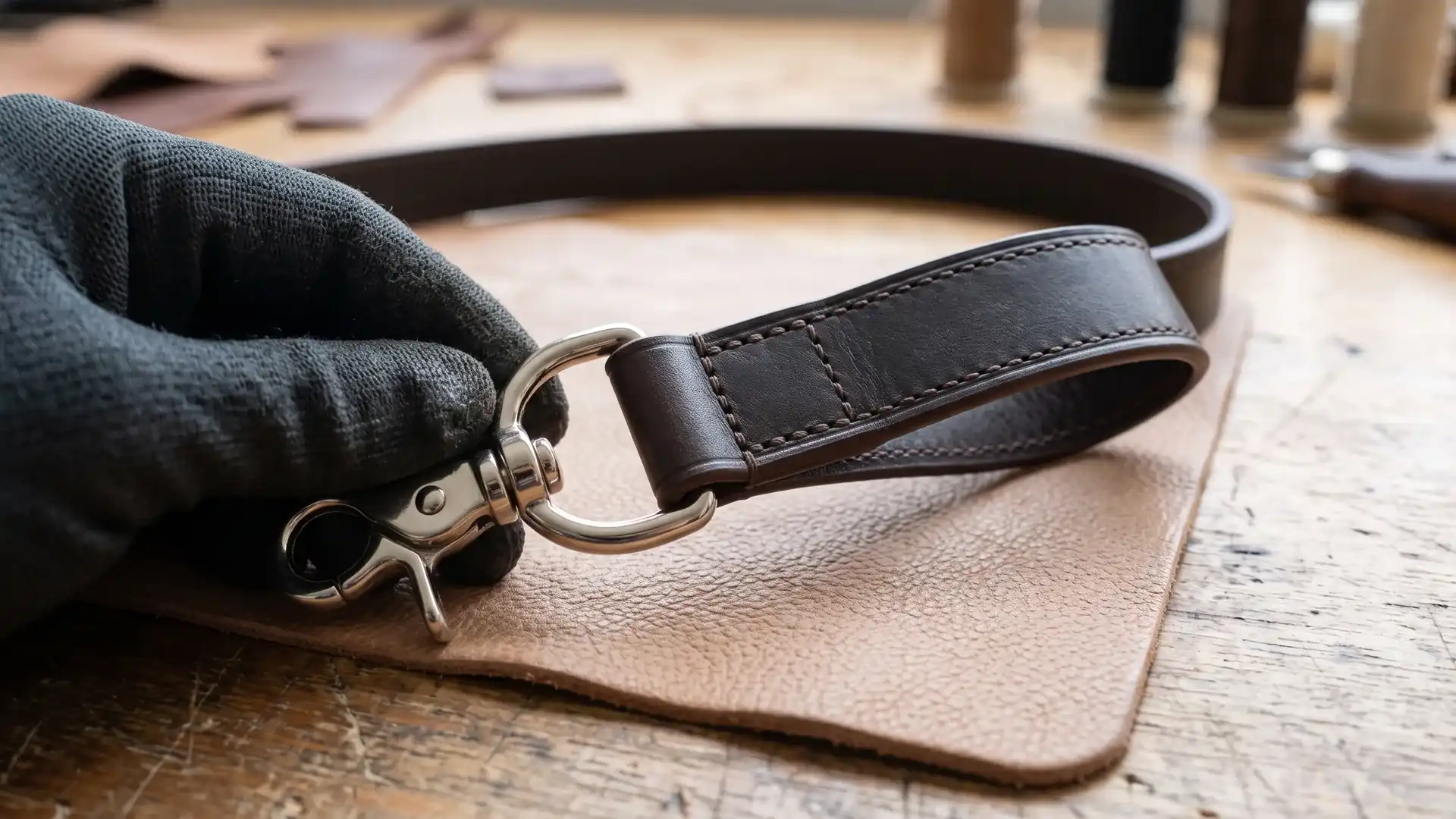
Hardware is the second major defect source after edge paint. D-rings, dog clips, swivel hooks, magnetic snaps, zipper heads, buckles, and feet all need a defined finish and attachment method.
Plating method matters. Rack plating generally produces more even, consistent coverage on visible surfaces because each piece is hung and plated individually. Barrel plating is more economical for small parts but can leave uneven deposition, especially on flat or highly visible metal surfaces. For high-visibility handbag hardware, ask whether the supplier uses rack plating or can provide a consistent plated finish from an approved hardware source.
Salt spray testing is a buyer-defined verification. Do not accept a generic factory hardware certificate as proof for your specific order. Request a test report tied to the actual plating lot or finished hardware you are approving, and define the number of hours based on your target market and durability expectation. Some brands define a shorter salt spray threshold for general fashion hardware and a longer threshold for premium positioning, but the target should be set by your brand against the supplier's capability.
Also confirm attachment logic. A sharp rivet end or a weak magnetic snap can damage the material or fail in wear. Strap attachments, handle loops, and side D-rings should have reinforcement stitching or bar tacks at exact points.
The Handbag Manufacturing Process: From Tech Pack to Pre-Production Sample
A serious handbag order follows a controlled sampling path. The purpose of each sample round is different, and skipping one does not save time—it transfers the mistake to bulk production.
The workflow is: tech pack review, pattern making, first prototype, revision samples, pre-production sample, signed reference sample, and then bulk. Each stage has an approval decision attached to it.
| Sample stage | What is being checked | Buyer approval action |
|---|---|---|
| Tech pack review | Silhouette, dimensions, material direction, hardware plan, construction notes, logo placement | Correct and sign before pattern making starts |
| First prototype | Proportion, volume, handle drop, opening, balance, overall stance | Judge shape and fit, usually on substitute material; mark changes in writing |
| Revision samples | Specific fixes from the prototype round | Re-check only the changed points plus any affected nearby seams |
| Pre-production sample | Final production material, final hardware, final edge paint, final lining, final labels, final stuffing if used | Approve as the signed reference sample for bulk QC |
| Bulk reference copy | Keeps the approved standard in the factory | Store one sealed reference bag at the factory and one with buyer/QC |
Custom hardware, custom logo plates, and unique edge-paint colors may add tooling or setup work. The exact tooling fee and lead time are quote-dependent and supplier-confirmed. Ask the manufacturer to separate stock-hardware lead time from custom-hardware tooling time so your sample schedule does not collapse.
The first prototype should not be treated as a production sample. It is a proportion and construction test. Some factories use substitute material for speed, which is fine only if the buyer understands that hand-feel, drape, edge behavior, and final color are not yet represented. Approve the PPS only when it is made from the actual bill of materials.
Production Risk Control & Quality Inspection (QC)
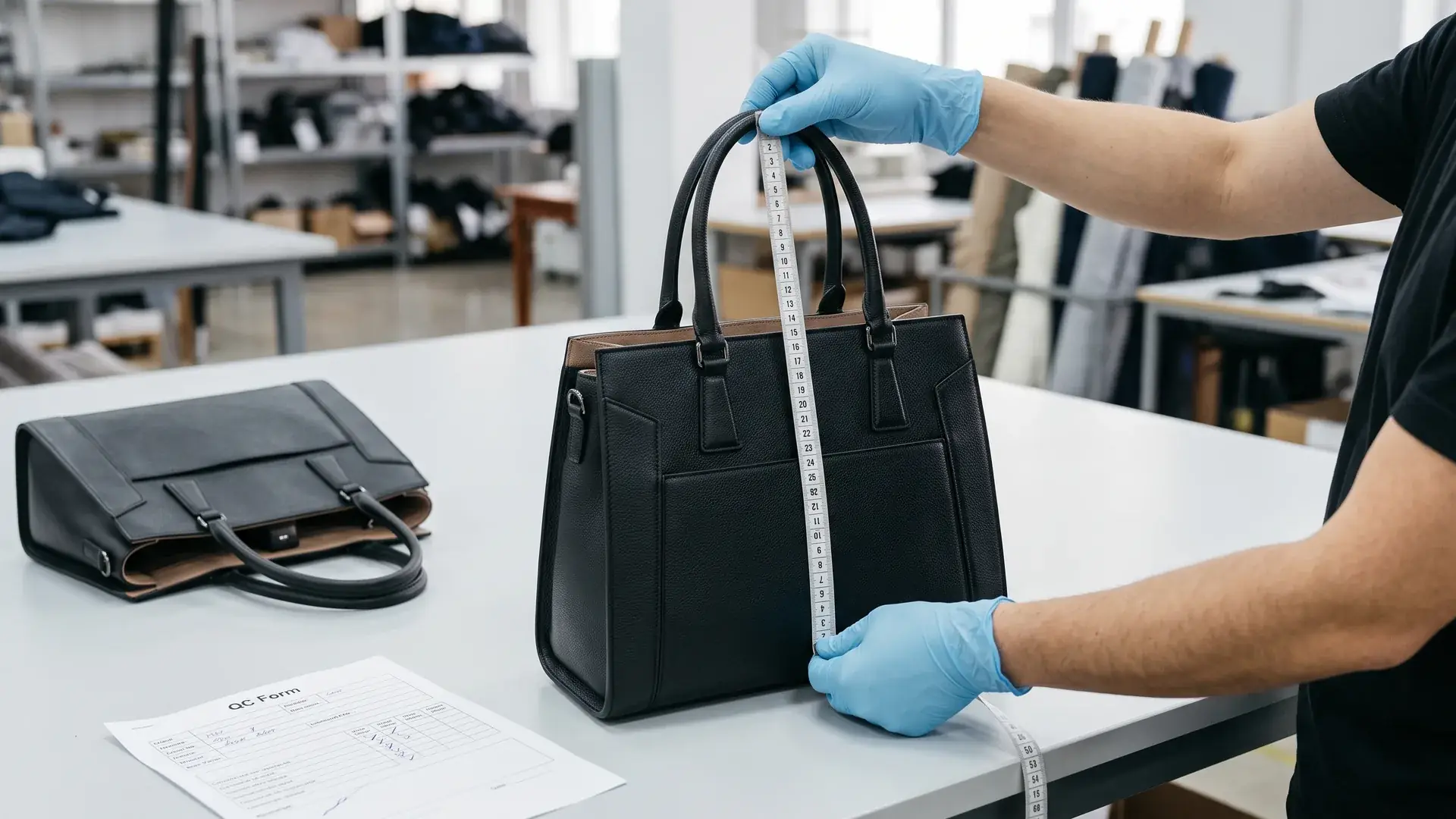
Handbag QC fails when the buyer only says "check quality." You need a defined acceptance standard. The best format is a QC checklist tied to the signed PPS and the tech pack tolerance table. For serious handbag production, define an inspection standard built around the specific defects that create returns and chargebacks.
| Inspection point | What to define | Major failure examples |
|---|---|---|
| Dimensions and handle drop | Buyer-defined tolerance for width, height, depth, strap length, and handle drop | Handle drop outside tolerance changes how the bag sits on the body |
| Stitch quality | Target stitch length or SPI, no skipped stitches, clean backstitch, correct thread color | Skipped stitches on visible seams, needle holes in leather, loose threads |
| Edge paint | Smooth, fully cured, no bubbles, no cracking, good adhesion, consistent color | Peeling edge paint, cracked finish at fold lines, sticky uncured coating |
| Hardware | Even plating, no scratches, no sharp edges, function of zipper/clasp/snap, salt-spray report | Tarnished finish, weak snap, stuck zipper, plating mismatch between parts |
| Lining | Taut but not pulling, no twisting, seams locked, no exposed raw edges | Lining bagging, twisted interior pocket, seam opening |
| Load and attachment | Buyer-defined pull/load test on handles, straps, D-rings, and reinforcement points | Thread tear at strap attachment, rivet pull-through, handle twist |
| Color and material match | Sealed standard sample, lightbox or D65 viewing condition, visible shade tolerance | Panel-to-panel shade difference, material substitution without approval |
Stitch density should be defined in the tech pack. Handbag leather and leatherette work often benefits from a tighter, more controlled stitch than soft luggage fabric, but the exact stitch length depends on material thickness and seam type. Ask the factory to propose the stitch length and provide a sewn sample for approval before bulk.
AQL is a sampling tool, not a quality guarantee. You can use a buyer-defined AQL sampling plan for visual inspection, but critical defects such as a broken strap attachment, unsafe metal edge, or torn seam should normally trigger zero-acceptance or an independent decision depending on your brand's risk policy. Put that decision in writing before the third-party inspection starts.
How to Evaluate a Custom Handbag Manufacturer
Do not shortlist a custom handbag manufacturer on unit price alone. Price tells you the cost of labor and material; it does not tell you whether the factory can handle edge paint, stiffener insertion, hardware alignment, and repeatable handbag finishing. Those failures appear later as defect rates and retail returns.
Ask the category question first. A factory that makes mostly backpacks, promotional bags, or luggage may be excellent at those products and still not have the handbag-specific machines, edge finishing lines, or pattern room habits you need.
For a broader framework on auditing general bag suppliers, see this guide on how to evaluate bag manufacturers before narrowing to handbag capability.
| Supplier question | Why it matters | Red flag |
|---|---|---|
| What share of recent output is handbags, totes, or structured shoulder bags? | Confirms category fit and pattern-room habit | Vague answer, no handbag samples, only backpack or travel products |
| What edge finishing methods do you use in production? | Shows whether edge paint quality is controlled or improvised | Factory cannot show consistent edge-paint samples |
| What stiffener materials do you normally stock or source? | Prevents unexpected collapse in bulk | No answer or "whatever you choose" without technical guidance |
| Who manages hardware sourcing, plating, defect replacement, and delays? | Clarifies responsibility mapping | Supplier wants buyer to supply all hardware but accepts no delivery risk or QC ownership |
| What documentation can you provide for leather or synthetic material compliance? | Confirms whether the factory can support REACH, LWG, GRS, or buyer RSL requirements | Only generic certificates, no lot-specific or supplier-level traceability |
| What is your sample revision and PPS control process? | Predicts how carefully they handle version changes | They approve bulk directly from first sample or photos |
Also request a live video or photo tour of the sample room, not a brochure. Look for skiving machines, edge-paint racks or rollers, structured bag patterns, and a clean bench for hardware inspection. The visual should show handbag-specific work, not just rows of general sewing machines.
Ask the supplier to define responsibility for defects clearly: who reworks edge paint, who replaces defective hardware, who absorbs rework freight, and how bulk inspection is handled if a third party is involved. If a supplier is vague about that, assume the buyer holds the risk.
RFQ Checklist for a Custom Handbag Manufacturer
A precise RFQ saves sample rounds. If you submit only "custom handbag, looking for price," the supplier will either guess or quote the cheapest construction. Use this table when you send an inquiry to a custom handbag manufacturer.
| RFQ field | Your input or options |
|---|---|
| Bag type | Shoulder bag, crossbody, tote, top-handle, satchel, clutch |
| Target market / channel | Fashion retail, e-commerce, marketplace, wholesale, private label |
| Estimated quantity / annual volume | Trial order quantity, projected repeat volume, or season plan |
| Target retail band / cost position | Market positioning, not a fixed price quote |
| Shell material | Full-grain, top-grain, split, PU, PVC, plant-based, canvas, rPET |
| Lining material | 210D polyester, 420D polyester, cotton twill, microsuede |
| Stiffener / reinforcement | Leather board, EVA, plastic sheet, non-woven, TBD |
| Hardware | Zipper type, D-ring, dog clips, swivel hooks, magnetic snap, feet, plating finish |
| Logo / branding method | Deboss, foil stamp, printed label, metal badge, embossed leather patch |
| Color and finish | Pantone reference, sealed standard sample, finish description |
| Sample requirements | First prototype, revision rounds, PPS, signed reference sample |
| Compliance requirements | REACH/RSL, LWG leather scope, GRS recycled claim, buyer-specific RSL |
| Packaging | Dust bag, polybag, carton strength, hangtag, barcode, retail label |
| Required deadlines | Tech pack approval, first sample, PPS, bulk ex-factory, shipping mode |
| Inspection requirement | AQL sampling plan, third-party inspection, measurement list |
If you already have a tech pack, send it with the RFQ. If you do not, do not let that stop the inquiry—write down the silhouette, material direction, target market, and approximate dimensions. A qualified manufacturer can turn that into a project-specific development plan, but the first quote will be conditional on final materials and construction.
Common Mistakes in Women's Handbag Sourcing
These are the mistakes that show up late, after deposit is paid and bulk is sewn.
- Choosing material from a photo. A material can look identical in a catalog and feel completely different in person. Always request physical swatches.
- Approving the first prototype. First samples often use substitute material. If you approve that as the bulk standard, the final PPS will surprise you.
- Leaving stiffener unspecified. A floppy front panel or collapsed base is usually a hidden stiffener decision, not a visible material defect.
- Ignoring edge paint. Edge paint is one of the most common warranty issues. Check adhesion, cure, bend flexibility, and color consistency on the PPS.
- Skipping handle drop measurement. A comfortable handle drop is a fit issue. Off by a small amount can change how the bag hangs on the shoulder.
- Using "high quality" as the only QC instruction. Define dimensions, stitch length, edge paint, hardware function, and defect categories. If it's not written, it's not inspected consistently.
- Assuming custom hardware is free. Custom logo plates, special zipper pullers, or unique buckles may require tooling or a setup fee. Confirm the amount and who owns the tooling.
- Mixing factories from different categories. A backpack factory and a handbag factory are both "bag factories," but their equipment, pattern rooms, and finishing lines can be very different.
FAQ: Custom Handbag Manufacturing Questions
These are the questions handbag buyers ask most often before committing to a sampling program.
What is the typical MOQ for a custom handbag manufacturer?
MOQ is quote-dependent, not a universal factory number. It is usually lower when the bag uses existing stock materials, stock colors, stock hardware, and a stock silhouette with logo change only. It rises when you need custom dyed leather, custom edge-paint color, new cutting pattern, custom hardware molds, or a fully OEM development. Ask the supplier to break MOQ by customization depth—stock decoration, small test order, semi-custom production, or full OEM development—rather than accepting one number for everything.
How long does the handbag manufacturing process take?
The timeline is buyer-defined and supplier-confirmed. Sampling often requires several weeks after artwork, materials, and hardware are locked, but the actual number depends on pattern complexity, material availability, hardware tooling, revision rounds, and payment timing. Custom hardware or custom logo plates add a separate lead time. Bulk production timing is driven by material availability, edge-paint curing, logo application, inspection, and shipping mode. Ask for a milestone schedule with each stage tied to a confirmed date, not a generic production-week estimate.
Can I use my own hardware supplier for OEM handbag production?
Yes, nominated hardware suppliers are common in fashion handbag sourcing. But using your own supplier does not remove the factory's production responsibility automatically. Define who inspects incoming hardware, who handles plating defects, who pays for rework or delay, who tests function after attachment, and whether the factory may reject unacceptable components. Without that mapping, the buyer ends up holding hardware risk while the factory only provides assembly.
Should I start with OEM or ODM for my first custom handbag?
If you already have a clear silhouette, dimensions, material direction, and hardware plan, OEM gives you more control. If you are still validating the collection and do not have production-ready specifications, ODM may get you to a sample faster by adapting an existing factory silhouette. The risk with ODM is that the product may look too close to another buyer's bag. The risk with OEM is that poor tech packs create longer sample cycles. Either way, a signed PPS is non-negotiable before bulk.
Official Sources and Compliance References
Use these industry benchmarks when qualifying materials and suppliers. They are references, not automatic proof that every component is compliant.
- LWG (Leather Working Group) — helps evaluate leather sourcing and leather manufacturing responsibility. Ask whether the tannery or supplier holds LWG certification and confirm the certificate's scope for your material source.
- REACH / EU RSL — chemical restriction and Restricted Substances List expectations for many European markets. Confirm a test report covers your exact material, colorway, and coating.
- GRS (Global Recycled Standard) — supports recycled content claims. If you market rPET lining or recycled material, verify the transaction certificate and chain of custody through the supplier.
- Oeko-Tex Standard 100 — may apply to textile linings, webbing, or trims depending on material category and target market. Confirm the standard's scope for the actual component.
Always confirm which standard applies to your product, target market, age group, material contact, and buyer policy. A certificate that covers one material lot does not automatically cover every production lot.
Conclusion
A successful custom handbag program does not start with "get me a quote." It starts with a clear material decision, a written structure and hardware plan, and a sample path that separates proportion from production approval.
Before you send an RFQ, you should have answered five questions: what silhouette, what shell material, what hidden structure, what hardware finish, and what measurable QC standard. The factory's job is to confirm feasibility, produce a first prototype, rework it until the PPS is correct, and then repeat that standard in bulk under inspection.
If you contact OMASKA or another handbag factory, use the RFQ table above and ask for physical swatches, handbag sample-room proof, a sample schedule, and a written responsibility map for hardware and defects. That single discipline removes most of the risk that turns a promising sample into a disappointing bulk order.
Get A Quote

Get A Quote
0 Comments