
Oil Edge Leather Bags: Oil Edge vs Folded Edge Durability & QC Guide
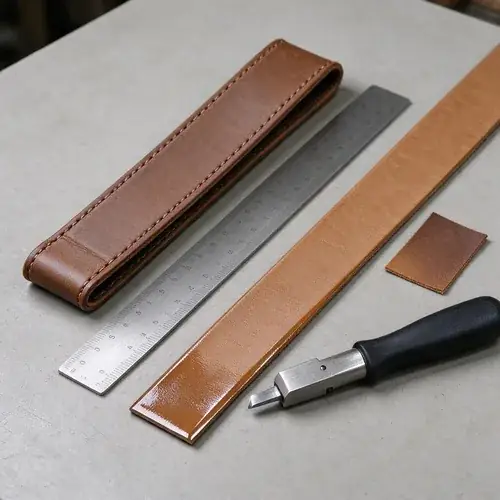
Oil edge leather bags are bags whose exposed leather edges are sealed with layered edge paint or coating rather than folded under or left raw. For a B2B buyer, choosing oil edge, folded edge, raw edge, or hybrid edge construction changes more than the look — it changes flex durability, sample-to-bulk consistency, return risk, labor intensity, repairability, and brand positioning. This guide compares each construction as a sourcing decision, then gives you the QC checkpoints and RFQ fields that prevent hidden edge failures.
Many edge failures show up after shipping, not during a quick sample review. A beautiful painted edge can crack at a handle attachment, flap crease, or corner after only a short period of daily use if the leather edge was not sanded properly, the coating was built too thick, or the factory changed operators between sample and bulk. Those failures become customer reviews, returns, warranty claims, and brand damage — not just a factory credit note.
Think of leather edge finishing as a structure decision, not a decoration decision. You should match the edge method to your leather type, stress zones, target market, and return-risk tolerance, then require measurable edge QC before approving production. The sections below give you the comparison framework, failure mechanisms, inspection checkpoints, and RFQ language to do that without relying on supplier storytelling.
What Is Oil Edge Finishing? The Buyer-Side Definition of Oil Edge Leather Bags
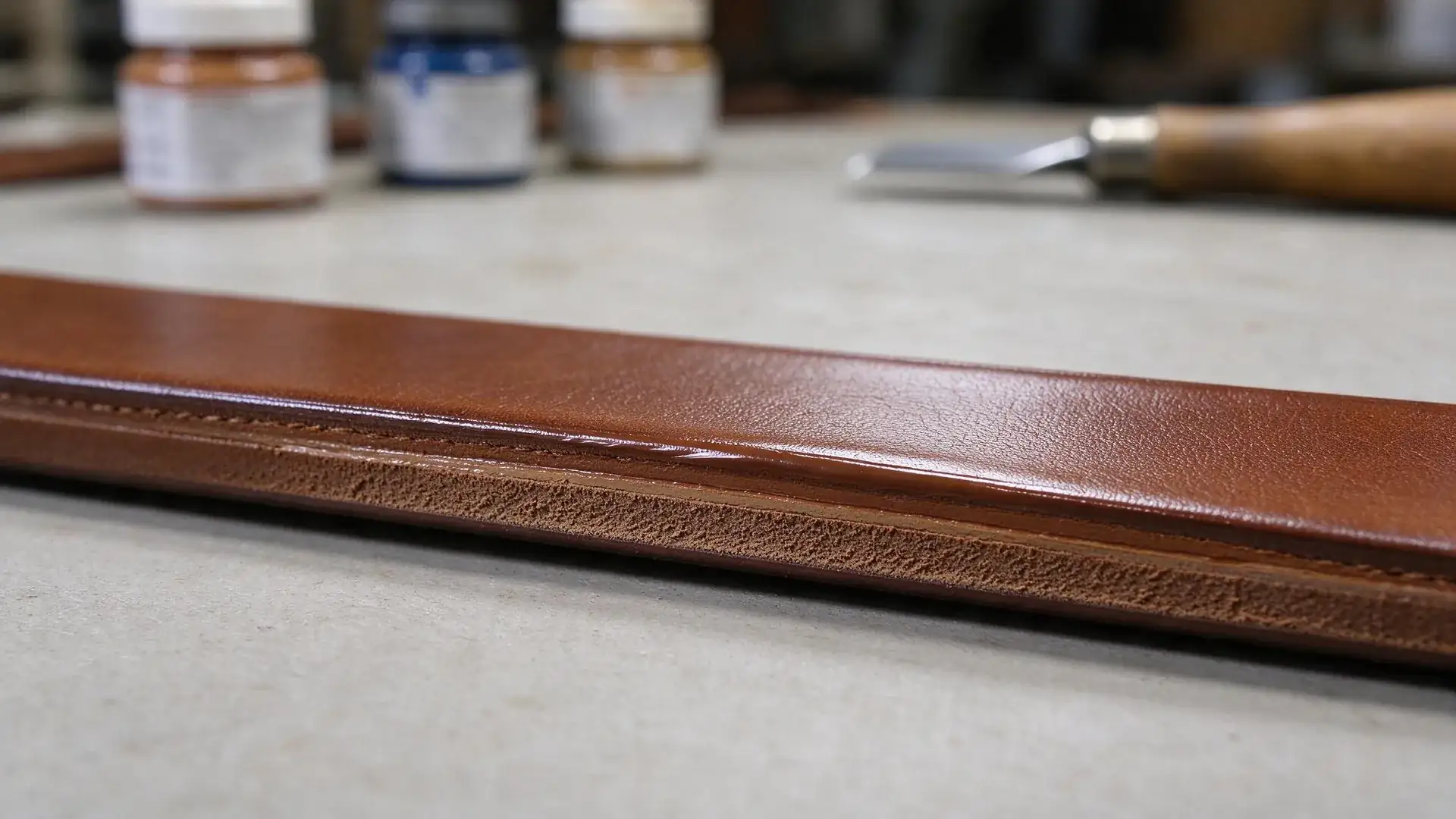
Oil edge is not one material; it is a sequence of edge preparation and coating steps. In practice, the supplier sanded or beveled the cut edge, applied primer or base coats, built up thin layers of flexible edge paint, and then heat-set or burnished the surface. Some workshops add a wax or topcoat for gloss or hand feel. The goal is to close the exposed leather fibers and create a smooth, controlled edge that resists fraying and everyday rubbing.
Buyers often use oil edge, painted edge leather, and "edge painted" interchangeably. That shorthand is acceptable in conversation, but never leave it at that in an RFQ. Ask the supplier to specify whether the edge is surface-coated with paint, dyed with a penetrating edge dye, or burnished with wax or water. Edge dye soaks into the leather and leaves a matte, more natural-looking edge; surface edge paint sits on top and can deliver stronger color coverage and consistency, but it behaves differently under repeated flex.
A common sourcing mistake is treating every "hand-painted edge" as premium. The result depends on sanding progression, beveling, coat thickness, drying conditions, and the flexibility of the coating system. A rushed low-coat paint job can look acceptable in a sample photo and still crack in use. That is why the next sections separate appearance from structural risk.
Oil Edge Leather Bags vs Folded Edge vs Raw Edge: What Changes for Buyers?
The right leather edge finishing method is the one that matches how the bag actually flexes and what failure you are willing to manage. Folded edges tend to tolerate repeated bending better in high-stress areas, but they add thickness and labor. Oil or painted edges support sharper modern profiles and cleaner color lines, but durability depends heavily on the person doing the sanding and coating. Raw edges can be an honest, premium choice for thick vegetable-tanned leather, but they darken and change with handling.
The table below is the working comparison I would use to shortlist edge construction before a sample. It is not a durability ranking, because "best" depends on where the edge sits and what your customer will do with the bag.
| Construction | What the buyer sees | Durability tendency | Flex resistance | Labor intensity | Repairability | Luxury positioning | Common failure risks |
|---|---|---|---|---|---|---|---|
| Oil edge / painted edge | Sharp modern line, controlled color, matte to glossy | Depends on edge prep and coating flexibility; thin multi-layer builds handle flex better | Moderate to good on well-prepared edges; poor if coating is too thick | Medium-high from sanding and multiple coats | Locally repairable, but color match after wear can be difficult | Strong for contemporary private label, but only when consistency is high | Coating cracking, corner separation, color mismatch, operator variance |
| Folded edge | Rounded or refined sewn edge, no cut edge exposed | Usually more forgiving under flex because no coated surface is flexing | Good in stress zones when skiving, glue, and stitch tension are correct | High from skiving, folding, gluing, and stitching | Repairable but requires skilled leather sewing | Conveys construction craft; can look cleaner or bulkier depending on leather thickness | Bulky corners, glue line shift, stitch tension issues, inconsistent fold width |
| Raw edge | Exposed leather fiber edge, natural or rustic | Depends on leather density; wears and darkens from contact | Moderate; exposed fiber abrades over time | Low to medium if no extra edge work | Can be refinished or waxed, but not fully reversed | Appeals to craft or rugged positioning; risky for smooth luxury image | Fraying, darkening, moisture pick-up, lint collection, uneven color |
| Hybrid | Folded edges in stress zones, painted edges elsewhere | Combines structural strength and clean profile where each works best | Best when stress zones are mapped correctly | Higher, because two systems must be controlled | Medium, depending on which area fails | Good for brands that want durability without losing a modern edge line | Inconsistency between zones, gloss/color mismatch at transitions |
Oil Edge / Painted Edge Construction
Oil edge is the default "clean modern" choice, and it is not automatically fragile. It fails when the edge was not sanded smooth, when too few coats were applied too thickly, or when the paint film is stiffer than the leather it sits on. If the bag has long handle edges or a wide flap with high flex, this method only works well when the coating system is flexible and the stress zones are controlled.
A matte, natural-looking edge is often achieved with edge dye, not paint. If the buyer wants to see the leather texture through the color, ask the supplier whether the finish is absorbent dye or surface paint. Dye does not build a thick film, so it will not crack like overbuilt paint, but it offers less edge coverage and can still wear unevenly.
Folded Edge Construction
Folded-edge construction hides the cut edge by folding the leather inward and stitching or gluing it down. That eliminates the primary "exposed edge" failure mode. In high-flex areas such as handle roots, flap creases, and strap attachment points, folded edges are often the more forgiving choice.
The trade-off is production complexity. Good folded edges require skiving to reduce bulk, controlled folding, adhesive that remains stable in heat, and consistent edge stitching. Get that wrong and the bag looks puffy or distorted, especially where three leather layers meet. In hot climates, glue lines can also shift or show through, so this is one method where the buyer should confirm the adhesive system, not just the stitch count.
Raw Edge Construction
Raw edge is a defect only when it was not specified. For thick, dense vegetable-tanned leather, a deliberately sanded, beveled, and burnished raw edge can read as premium craft rather than unfinished. It also exposes the edge to skin oils, friction, and moisture, so it will darken or develop a patina with use.
This is not the right choice for a smooth, light-colored luxury handbag. Raw edges show handling marks more quickly and can pick up lint from lining or packaging. If the brand wants a pristine product photo after several customer touches, raw edge is riskier than a sealed or folded alternative.
Hybrid Construction Approaches
Hybrid construction is the most underused edge strategy. Fold the handle roots and strap roots, paint the long body seams and flap edges. This maps edge construction to real stress instead of forcing one method across the whole bag.
Hybrid works reliably only when the sample spec clearly states where each method starts and stops. The most common bulk defect is a visible gloss or color shift at the transition between folded and painted zones. Buyers should photograph and flag those transition lines during sample approval, then keep the same photos for inline and final inspection.
Why Edge Paint Cracks — and Why Samples Often Hide the Risk
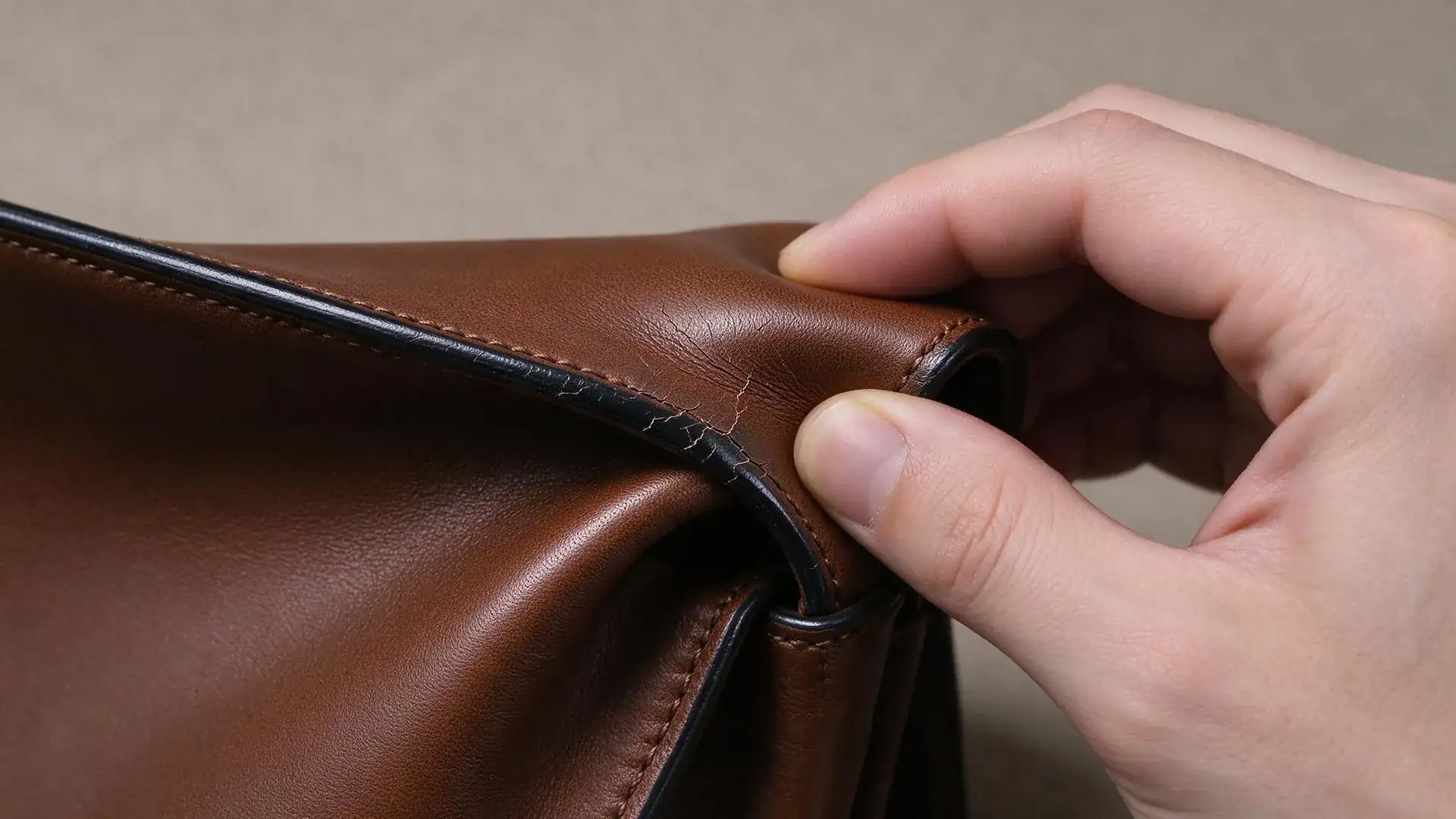
Edge paint cracking is usually a preparation or film-build problem, not a mystery material failure. The coating separates from the leather or develops micro-fractures because the edge was not sanded evenly, because the paint layer was laid on too thick in one pass, or because the leather under the finish moves more than the paint film can follow.
The common causes are specific enough that a buyer can ask about each one:
- Poor sanding or beveling. If the cut edge has steps, hard ridgelines, or loose fibers before coating, the paint cannot anchor uniformly.
- Overthick one-pass coating. A thick single coating film tends to crack under flex more than several thin, fully cured layers.
- Incompatible paint flexibility. A stiff coating on a soft, supple chrome-tanned leather creates a micro-flex mismatch at the surface.
- Incomplete drying or heat setting. If each layer does not cure before the next coat, the film can delaminate later.
- Ignored stress zones. Handle roots, flap creases, base corners, and magnetic closure contact points flex far more than straight body edges.
- Sample-to-bulk operator shift. A senior worker may edge the sample; a different operator on bulk may sand, coat, and dry differently.
Samples hide these risks because a freshly made sample is not worn, folded repeatedly, or shipped in heat and humidity. A quick visual check on a straight edge will not reveal the separation that appears after repeated bending.
Which Leather Types Work Best With Edge Painting?
Leather type is not a decoration footnote. Dense, firm vegetable-tanned leather responds well to edge paint and burnishing; softer, heavily oiled, or very supple chrome-tanned leather can feel more luxurious in hand but is often harder to coat with a long-lasting paint film. Before deciding on edge finish, first verify whether the material is real leather or a coated synthetic, because the surface chemistry changes. For the base material decision, review Faux Leather vs Real Leather Bags: Durability, Cost, Sourcing Risks & Brand Positioning.
| Leather type | Edge finishing behavior | Good edge options | Risks and supplier confirmations |
|---|---|---|---|
| Full-grain vegetable-tanned | Firm, dense fiber; burnishes and coats well | Oil edge, raw edge, burnished edge | Heavy oil or wax can resist paint adhesion; confirm with same leather lot |
| Chrome-tanned / soft temper | Supple, flexes more; needs flexible primer and coating | Oil edge with flexible multi-coat system, folded edge in stress zones | Paint can crack if coating film is too stiff; confirm flexibility of edge paint |
| Split or fiber-coated leather | Porous or less dense edge; frays quickly when untreated | Folded edge or heavy-primed painted edge | Exposed raw edge is not suitable for most uses |
| PU-coated or heavily finished leather | Surface coating can complicate edge adhesion | Folded edge often safer | Paint can peel along the coating boundary; request edge adhesion test |
| Pull-up / heavily oiled / waxed leather | Oils may migrate and interfere with edge coating | Burnished or waxed edge, or folded edge | Paint may not hold unless degreased and prepped correctly |
A practical rule: if the leather itself is soft and moves a lot, do not put a thick rigid paint film on its edge. Choose a waxed or burnished edge, a folded edge, or have the supplier prove the paint system on a flexing sample before you approve bulk.
How Edge Finishing Impacts Cost, MOQ, and Production Complexity
When two leather bags look similar in photos, edge construction is often why their manufacturing cost differs. The affected cost is labor time and rework rate, not raw material price. You cannot read a reliable price from the method alone, but you can rank the production drivers and ask the supplier to show them in the quote.
| Edge method | Main production driver | Impact on sampling and order | What to confirm with the supplier |
|---|---|---|---|
| Oil edge multi-coat | Sanding progression, multiple coats, curing between coats, crack rework | Longer sample and QC time; consistency depends on operator skill | Coating layers, drying/heat methods, approximate rework rate, who handles bulk edges |
| Folded edge | Skiving, folding, gluing, edge stitching, trimming | More labor and thicker structure; tolerances affect bulk consistency | Adhesive type, skive tolerance, stitch position, fold width |
| Raw edge | Cutting, sanding, beveling, optional burnish | Lower finishing labor, but surface consistency can vary | Sanding grade, edge sealing, color uniformity, whether edge is dyed |
| Hybrid | Two production systems plus transition control | Higher planning; sample must define each zone | Zone map, transition acceptance standard, operator training method |
Edge finishing rarely sets a fixed minimum order quantity by itself, but folded edges or multi-layer painted edges can make a small trial order less attractive to a factory because setup and handwork are time-consuming. A low-MOQ edge request may be feasible on selected stock models when the supplier accepts setup charges and confirms the operator/decoration capacity. Ask the supplier to confirm edge-method feasibility for your specific quantity instead of assuming every edge style is available at any volume.
The same logic applies to lead time. Painted edges need drying or curing between coats, and folded edges add sewing steps. Lead time is project-specific and supplier-confirmed, but you should ask the factory to state where edge processing sits in the production plan so it isn't compressed at the end.
QC Checkpoints Buyers Should Require During Sampling and Bulk Inspection
Edge finishing is one of the few bag features a buyer should not approve by looking at one straight edge in still photos. You need a small set of checks that can be repeated at the sample stage, during inline production, and at final random inspection. Broader bag checks — stitching, hardware, lining, logo, packaging — are outside this edge-only scope, but the full workflow is in How to Evaluate Bag Quality: Complete Inspection Checklist for Buyers.
Sample Approval Checks
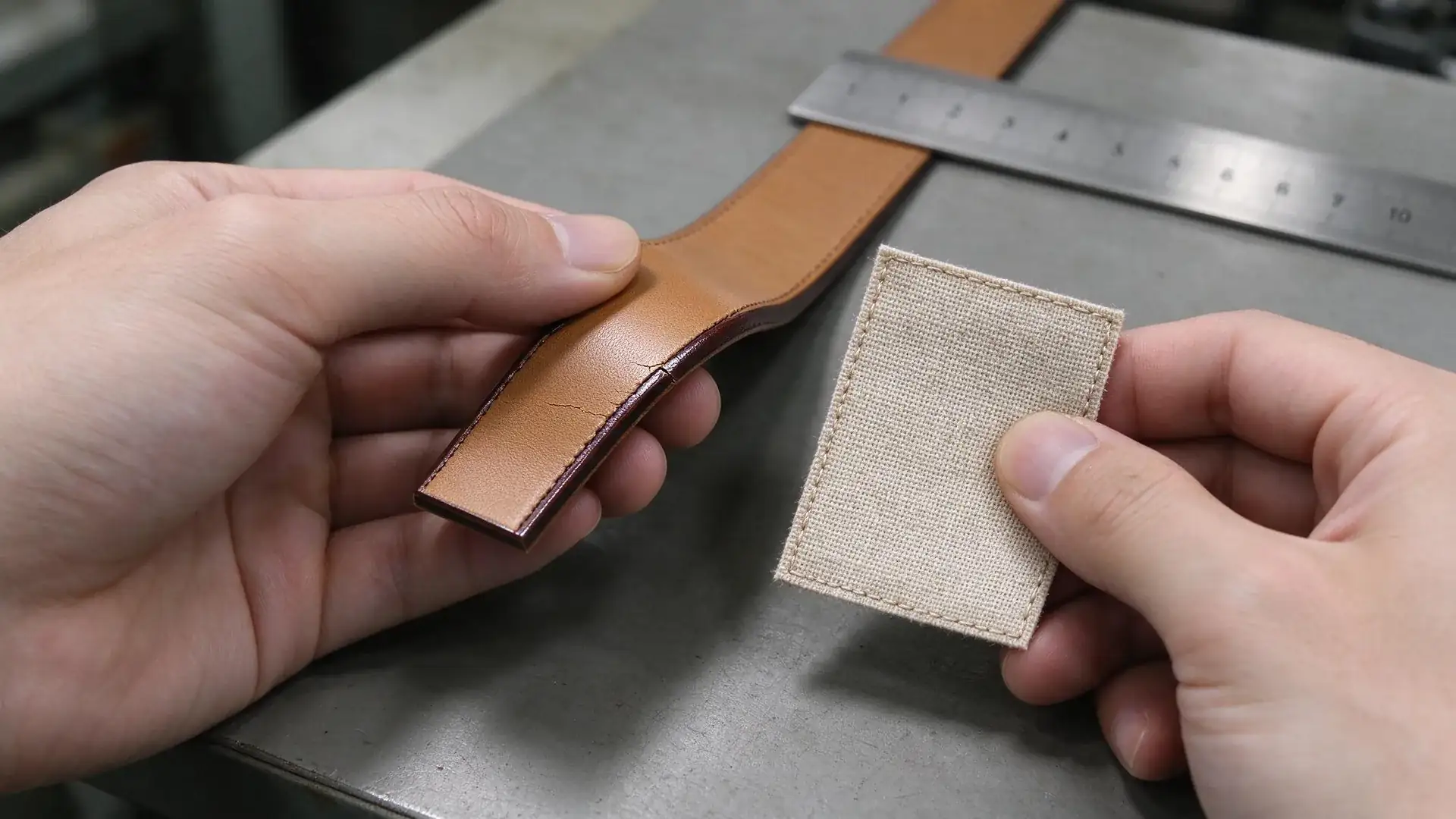
At sample stage, the goal is to catch the weaknesses that a single beauty shot will hide. Check the following before signing the golden sample:
- Confirm the edge map matches the spec: which panels are folded, painted, raw, or hybrid.
- Run a buyer-defined repeated flex observation on handle roots, flap creases, and corners, then look for hairline cracks, lifting, or white separation lines.
- Run a dry finger or a clean tool along each painted edge to feel for steps, pinholes, lumps, or sticky spots.
- Check color under two light sources: store lighting and daylight. Edge color can shift more than the face color.
- Confirm no dye or paint has bled onto the adjacent leather surface.
- Check edge thickness consistency across left/right and top/bottom, not just the front edge.
- Insist the sample be photographed next to the approved swatch, with the photos retained as the bulk reference.
Inline Production Inspection
Inline inspection is where you catch drift before the batch is finished. Ask the factory to keep the approved edge sample at the edge-finishing station and compare the first-run bulk edges against it. Stop production if color, gloss, fold width, or edge thickness diverges early.
Do not accept "the machine does it" as a blanket answer. Some edge operations still depend on hand sanding, hand coating, and hand burnishing. The important question is which steps are repeated by hand and how the factory maintains consistency across operators. If the supplier cannot explain that, treat edge consistency as a higher risk.
Final Random Inspection Priorities
At final inspection, the biggest risk is sampling too few units and missing a cosmetic edge defect that becomes a product review. Use an AQL-based sampling plan agreed in writing, and decide whether edge cracking, separation, or uneven paint is major or minor before the inspection starts. If the defect classification and release threshold are not aligned, use AQL Inspection for Bags: Sampling Levels to Reduce Shipment Risk.
| Inspection point | Risk detected | When to check | Buyer approval method |
|---|---|---|---|
| Edge smoothness / steps | Poor sanding or beveling | Sample, inline, final | Compare against golden sample; run a clean tool or finger along the edge |
| Hairline cracks at flex zones | Brittle paint, weak adhesion | Sample, final | Repeated buyer-defined flex observation on handle and flap |
| Coating separation or lifting | Poor primer or drying | Sample, final | Examine with slight lateral pressure; look for white peel line |
| Color/gloss mismatch | Batch or operator variance | Sample, inline, final | Paired comparison under two light sources |
| Edge thickness consistency | Uneven skive or coating | Sample, final | Measure with caliper at the same reference points as the golden sample |
| Stitch tension / fold width | Folded edge deviation | Sample, inline, final | Compare to approved folded-edge sample; check stitch placement |
| Drying / tackiness | Incomplete cure | Sample, final | Press a clean paper swatch against the edge; check for tack or transfer |
| Bulk-vs-sample drift | Operator or lot change | Inline, final | Side-by-side photo and physical comparison against retained sample |
RFQ Checklist for Leather Edge Finishing Projects
Most edge quality issues start in the RFQ because the buyer writes "leather edge: oil edge" and stops. That leaves the factory guessing about color, gloss, stress zones, and the rejection standard. Use the fields below as a working spec before samples. For the broader specification and sample approval mistakes that delay bulk, see Sample Order Mistakes in Bags and Luggage: What B2B Buyers Should Avoid Before Bulk Production.
| Field | Your input / options |
|---|---|
| Leather article / type | Full-grain vegetable-tanned, chrome-tanned, split, PU-finished, pull-up; confirm supplier article code |
| Edge method | Oil edge / painted edge / folded edge / raw edge / hybrid |
| Edge coverage | Which panels, straps, handles, flap, base, zipper tabs are finished |
| Edge color | Pantone or color code / physical swatch; state if edge should be darker or lighter than body |
| Gloss level | Matte, satin, glossy; confirm topcoat |
| Edge thickness preference | Match golden sample or confirm proportional to leather thickness |
| Stress-zone expectations | Handle roots, flap crease, base corners, magnetic closure contact points |
| Surface preparation | Sanding sequence, bevel, primer; request process summary |
| Coating system | Edge dye vs surface paint vs wax/burnish; request coating technical sheet |
| Drying / heat setting | Request drying and curing method and final dryness check |
| Golden sample | Approved sample retained at factory, signed and photographed |
| Acceptance / QC | Flex observation method, AQL level, defect classification, inspection photography |
| Repair / return | Who repairs cracked edges, color-match responsibility, after-sales capability |
Also state your target quantity and whether this is a stock-model decoration, a small test order, a semi-custom production run, or a full OEM development. That tells the supplier whether folded-edge or multi-coat edge work is realistic before they quote.
FAQ
These are the edge finishing questions B2B buyers ask most before finalizing a leather bag spec or approving a sample. The answers are the same ones I would use to qualify a supplier during RFQ.
Is folded edge universally more durable than oil edge?
No. Folded edge tends to tolerate repeated bending better at stress points because there is no coated surface flexing, but poor skiving, thick leather buildup, weak stitching, or shifted glue lines can create their own failures. A well-prepared oil edge leather bag with a flexible multi-coat finish can hold up well in normal use. The real difference is which failure mode you are willing to manage.
Can cracked edge paint be repaired after shipment?
Locally, sometimes — if the damage is limited and the factory or repair partner can color-match the original paint. A full recoat on a returned unit is often not cost-effective for retail. Before bulk, ask the supplier whether edge repair is included, who owns the color-matching responsibility, and whether a local repair kit or spare edge paint can be supplied.
Are oil edge leather bags suitable for heavy daily use?
They can be, but suitability comes from leather type, coating flexibility, and stress-zone mapping, not the label "oil edge." If heavy daily use means repeated handle flexing, frequent flap opening, and side abrasion, do not rely on edge paint alone. Specify folded or reinforced edges in the stress zones, or use a hybrid construction to protect the high-wear areas.
Why do luxury brands still use painted edges?
Painted edges allow very clean, precise, contemporary lines and controlled color continuity. The luxury result comes from layered thin coats, careful sanding, consistent heat setting, and strict QC — not from the paint itself. Edge painting is precision handwork. If the factory does not control the process, the edge will not read as luxury no matter what the sample photo suggests.
Should buyers request flex testing during sampling?
Yes, but define what "flex testing" means in your specific case. You do not necessarily need a formal test name with fixed cycles. Ask the supplier to bend the handle root, flap, and corner a buyer-defined number of times and then show what happens. A supplier saying "passed flex test" without a definition is not a verification. Request a video or an in-person sample check if you cannot agree on the method.
Does edge finishing affect production lead time?
It can. Multi-layer painted edges need drying or curing between coats, and folded-edge construction adds skiving, gluing, and stitching steps. Lead time is project-specific and supplier-confirmed, so include the edge process in the RFQ and ask the supplier to show where edge work sits in the production schedule.
Official Sources and Compliance References
This page does not cite a single fixed industry standard because edge paint systems and leather types vary widely. The documents you should request before production are supplier-specific, not universal:
- Edge coating/finish technical sheet from the coating supplier, including application, drying, curing, and flexibility information.
- Supplier internal edge finishing process sheet covering sanding, beveling, coating layers, heat setting, and finish topcoat.
- Target-market restricted-substance confirmation if your leather or edge coating is sold in markets with leather product chemical restrictions. Confirm the latest requirement with your supplier and, where required, request a documented test report from a designated lab.
- Buyer-defined inspection reference, including photos and a signed golden sample, so bulk is compared against the same physical standard.
Always confirm the exact coating system, edge process, and compliance documents with your supplier in writing. The method names in this article are procurement categories, not a substitute for the supplier's process sheet.
Conclusion
Oil edge leather bags are a good choice when you want a precise modern edge, but only if you control the substrate preparation and coating build. Folded edge is a better structural choice at high-flex stress zones. Raw edge can be premium on dense vegetable-tanned leather if the brand accepts natural wear. Hybrid is often the right tool for bags that combine clean lines with hard daily use.
Your job is not to choose the "best" edge method. It is to match edge construction to the actual failure risk, then make the factory prove consistency from sample to bulk. Define the edge map, reject overbuilt single-pass paint, require flex observation on stress zones, and keep the signed golden sample as the final inspection reference.
At OMASKA, edge construction is treated as a procurement control point, not a sample footnote. The same principle applies to any supplier you shortlist: if they cannot explain sanding, coating, curing, stress zones, and bulk QC, you have not finished qualifying them.
Get A Quote

Get A Quote
0 Comments