
Negotiate With Chinese Bag Manufacturers: MOQ, Pricing & Payment Terms
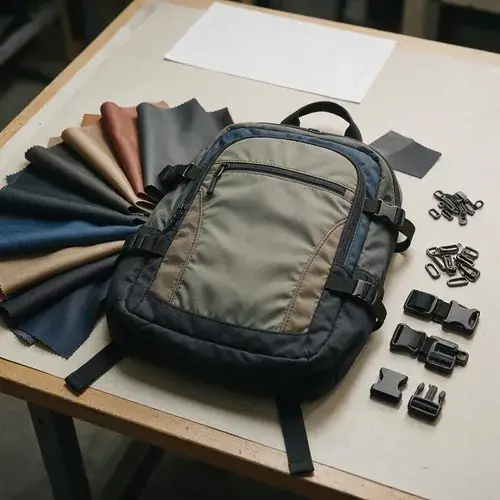
Successful negotiation with Chinese bag manufacturers is a trade-off exercise, not a price war. The real leverage is in reducing production complexity: stock fabric instead of custom dyeing, a simpler logo process, fewer sewing steps, standardized packaging, and flexible delivery timing. When you structure your RFQ around those variables, MOQ, unit price, sample fees, and payment risk become negotiable within a range the factory can actually deliver.
For bag importers, brands, marketplace sellers, and online retailers, the commercial terms you negotiate before production determine landed cost, return risk, and review risk. A small unit-price saving isn't a saving if it arrives as weaker lining, zipper failures, resewn seams, late cartons, or chargebacks. This guide gives you a procurement-focused negotiation framework: what to prepare, what to ask, what to confirm in writing, and what to refuse when a supplier's promise looks too easy.
By the end, you should be able to send a negotiation-ready RFQ, separate realistic MOQ asks from destructive ones, approve samples correctly, structure payment and Incoterm terms, and verify supplier accountability before the deposit leaves your account.
Quick Answer: What Actually Works When You Negotiate With Chinese Bag Manufacturers
When you negotiate with Chinese bag manufacturers, the first move is not a lower offer. The first move is making the order easier to produce. Suppliers respond to buyers who reduce material risk, decoration complexity, packaging labor, and schedule uncertainty because those changes reduce real production cost without forcing the factory to cut corners. It sounds basic, but most buyers skip ahead to price before fixing the specification.
The negotiation levers that actually work, in priority order:
- Simplify the bag before you simplify the price. Remove complexity from panel shapes, internal binding, padding, logo method, and packaging. A simpler product gives the supplier less reason to add margin for rework and inspection failures.
- Make volume look real and repeatable. Share a first-order plan plus a credible repeat forecast. Factories price differently when the order looks like a relationship, not a one-time bid.
- Move from custom materials to stock materials. Custom-dyed fabric, custom zipper pulls, and private packaging have setup thresholds that don't disappear just because you order fewer pieces.
- Accept flexible production timing. If the factory can choose a production slot instead of forcing an urgent line change, you gain room to negotiate.
- Put trade-offs on the table before discussing percentage discounts. This keeps the negotiation factual and prevents the supplier from silently protecting margin through material substitution.
What usually doesn't work: demanding the lowest possible unit price while keeping every custom feature, asking for low MOQ plus custom fabric plus custom packaging, or treating MOQ as a number the supplier invented to annoy you.
Scope of This Guide
This guide is written for procurement managers, brand owners, product developers, and marketplace or online retail buyers who are preparing to negotiate with a Chinese bag supplier before sampling or bulk production. It covers commercial negotiation strategy, MOQ logic, OEM pricing structure, sample fee and approval control, payment milestones, Incoterms, tooling ownership, supplier verification, and communication risk.
It does not cover general import procedures, beginner-level factory sourcing tutorials, deep QC inspection SOPs, or consumer-level product comparisons. It also does not promise a fixed price, MOQ, lead time, or payment formula because those terms are quote-dependent and must be confirmed with the supplier against a defined product specification.
Why Bag Manufacturers Set MOQ Requirements
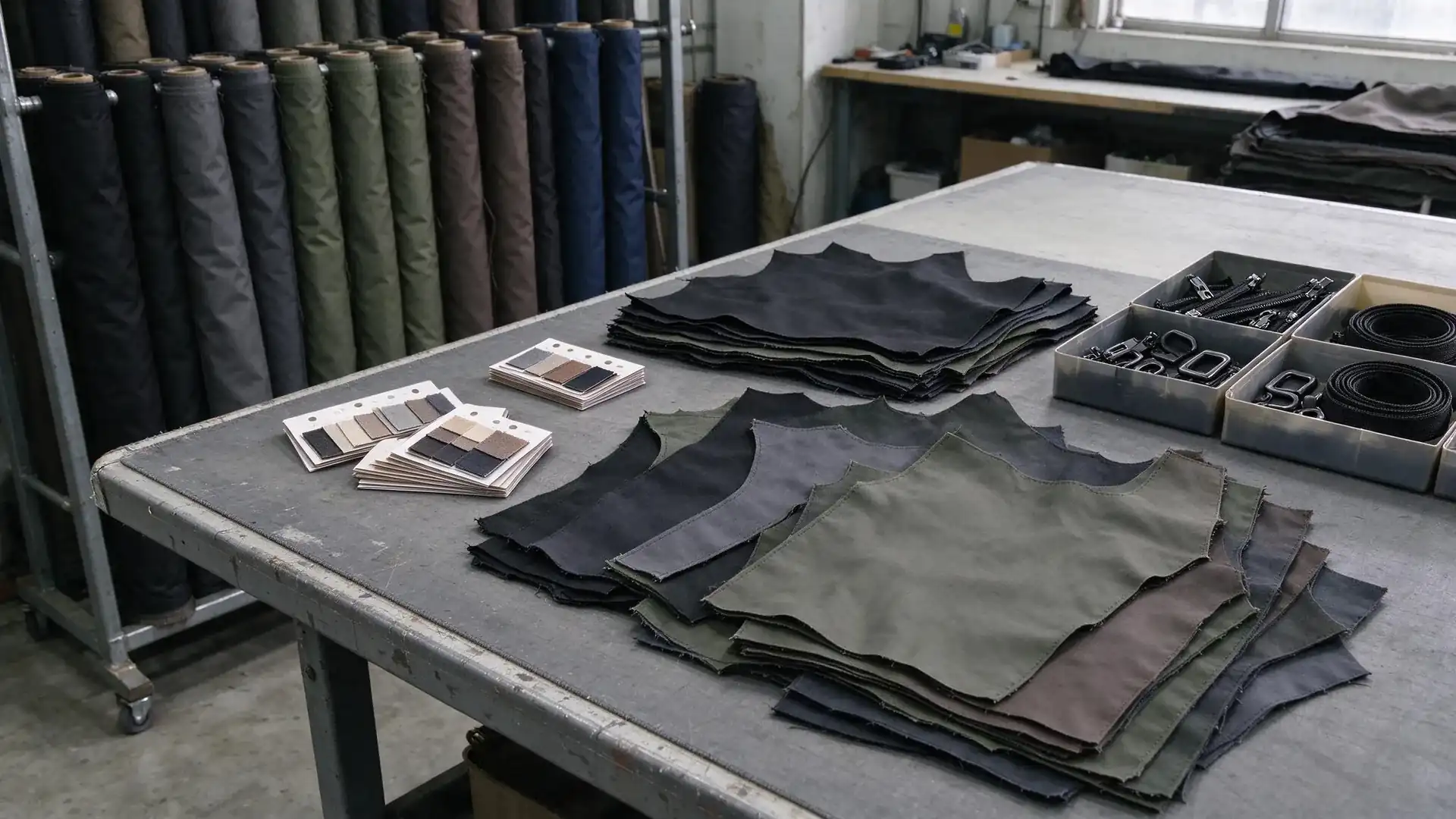
MOQ exists because fabric mills, printing or decoration setup, cutting efficiency, sewing line scheduling, and packaging each have a minimum viable run. A factory-side MOQ is usually not one number attached to a finished bag; it can apply separately to fabric color, logo process, packaging, hardware, or finished-product assembly.
The better you understand those drivers, the easier it is to argue for a lower MOQ through specification changes rather than empty negotiation pressure. Don't fight the number; change what feeds it.
| Driver | Why factories care | Buyer negotiation option | Risk if ignored |
|---|---|---|---|
| Custom fabric color | Fabric mills may require a minimum run per color or dye lot | Use a stock color, combine multiple SKUs into one color, or accept a supplier-approved alternative | Color mismatch across batches or elevated material cost |
| Logo or decoration setup | Heat transfer, embroidery, woven label, and metal logo each carry setup or plate/tooling work | Choose a supplier-standard decoration process, consolidate placements, or approve a simplified logo version | Hidden setup charges or delayed pre-production approval |
| Component sourcing | Zipper chain, sliders, buckles, and webbing often have supplier batch or pack minimums | Use supplier-stock components; avoid custom hardware unless volume justifies it | Component shortage or expensive partial batches |
| Cutting and sewing line change | Production lines lose output during changeover and benefit from longer runs | Combine similar SKUs, accept a flexible production window, or order one construction family | Delay or reprioritization against larger orders |
| Packaging print and carton setup | Printed polybags, hangtags, barcodes, and export cartons have print or die-cut setup | Use stock packaging first, print labels separately, or phase private-label packaging into a later reorder | Packaging mismatch or chargeback risk |
| OEM pattern, mold, or tooling | New patterns, custom zipper pulls, and logo plates require development and amortization | Ask for tooling cost, ownership, and reorder terms in writing | Tooling dispute or inability to reorder elsewhere |
MOQ Drivers by Product Type and Customization Level
The type of order changes MOQ pressure more than the supplier's general policy does.
- Stock bag plus logo: A supplier using an existing construction and stock fabric can often support small trial orders more easily, provided the decoration method is workable and setup is accepted. This is stock-model decoration, not the same as direct OEM development.
- Semi-custom production: Changing fabric color, lining, logo method, or packaging on an existing pattern raises MOQ and delivery risk because the order moves closer to production customization.
- Full OEM development: A new pattern, new hardware, custom zipper pulls, and private cartons create the highest MOQ and tooling pressure. Low volume is possible only when the buyer accepts higher unit cost, longer sampling, and clearer written ownership terms.
A supplier that reduces MOQ aggressively without asking about material, logo, or packaging constraints may not control manufacturing directly. That is a red flag, not a favor.
When Lower MOQ Requests Are More Likely to Be Accepted
Lower MOQ requests are more likely to work when at least one of these conditions is true:
- The order is explicitly framed as a trial order for an existing style, not a full custom program.
- The buyer accepts a flexible production or delivery window.
- The product uses materials and components already in the supplier's stock.
- Two or more SKUs can share the same fabric color, base panel, zipper set, or packaging format.
- The buyer presents a repeat-order plan, a previous order history, or a credible channel trajectory.
For a deeper look at small-batch tradeoffs, see Custom Backpacks No Minimum: What Buyers Should Know About MOQ, Samples, and Real Factory Costs.
Prepare Your RFQ Before You Start Negotiating
A negotiation-ready RFQ is your strongest commercial control because it eliminates the blank assumptions a supplier uses to pad a quotation. When you leave out dimensions, material weight, logo method, packaging structure, or inspection expectations, the supplier has to guess. Some factories guess high. Some guess low and later recover the difference through change requests.
The RFQ fields below directly affect pricing and MOQ. A complete RFQ lets you compare quotes fairly and ask sharper follow-up questions.
| RFQ field | What to specify | Why it affects pricing or MOQ |
|---|---|---|
| Bag type and construction | Backpack, laptop backpack, duffel, trolley bag, luggage; panel count and closure type | Sets pattern and sewing complexity |
| Quantity plan | First order and projected reorders | Helps supplier separate setup amortization from repeat production |
| Material requirements | Fabric type, denier or GSM, weave, backing, coating, lining | Material grade changes cost, lead time, and MOQ |
| Logo and decoration | Method, size, location, thread or film color, approval standard | Setup, durability, and placement limits affect unit cost |
| Color plan | Number of colors, custom vs stock, lab-dip expectation | Custom color can create fabric minimums |
| Hardware | Zipper chain, slider, puller, buckle, webbing, D-ring, wheel/trolley for luggage | Stock vs custom component sourcing changes cost and MOQ |
| Packaging | Polybag, hangtag, barcode label, export carton, inner divider, platform fulfillment requirements | Print setup, labor, and carton strength affect landed cost and review risk |
| Compliance needs | Target market, user age, product contact with food or liquids, claim requirements | May add testing, material restrictions, and document review |
| Delivery goal | Pre-production sample date and bulk shipment window | Flexible timing may improve negotiation position |
| Incoterms and destination | FOB, EXW, CIF, named port, destination country | Determines freight, risk transfer, and true landed cost |
RFQ Information That Directly Affects Pricing and MOQ
The easiest way to lower quotation variance is to state the performance requirement, not just the material name. For example, "600D polyester" is incomplete without backing, coating, weave, color, and abrasion expectation. "Water-resistant backpack" is incomplete without defining splash resistance, lining seam tape, closure design, and whether free liquid will ever sit inside the bag.
Similarly, "custom logo" is not a complete specification. The supplier needs to know whether the logo is heat transfer, embroidery, woven, silicone patch, metal plate, or printed lining, and whether the placement crosses a curved seam or a padded panel. That detail can change setup requirements even when the bag silhouette stays the same.
Questions Buyers Should Ask Before Approving a Quote
Before accepting any OEM quote, ask the supplier to confirm:
- Is this based on stock material or custom material?
- Does the MOQ apply to total order quantity, per color, per SKU, or per logo version?
- Which line items include setup, tooling, or sample amortization?
- What inspection standard is assumed at this price?
- Which packaging, carton, barcode, and marking assumptions are included?
- What is excluded from the unit price?
- How should packaging or shipping-term changes alter the quote?
- What material, component, or decoration changes would lower MOQ without weakening the bag's main user benefit?
How to Negotiate OEM Pricing Without Triggering Quality Problems
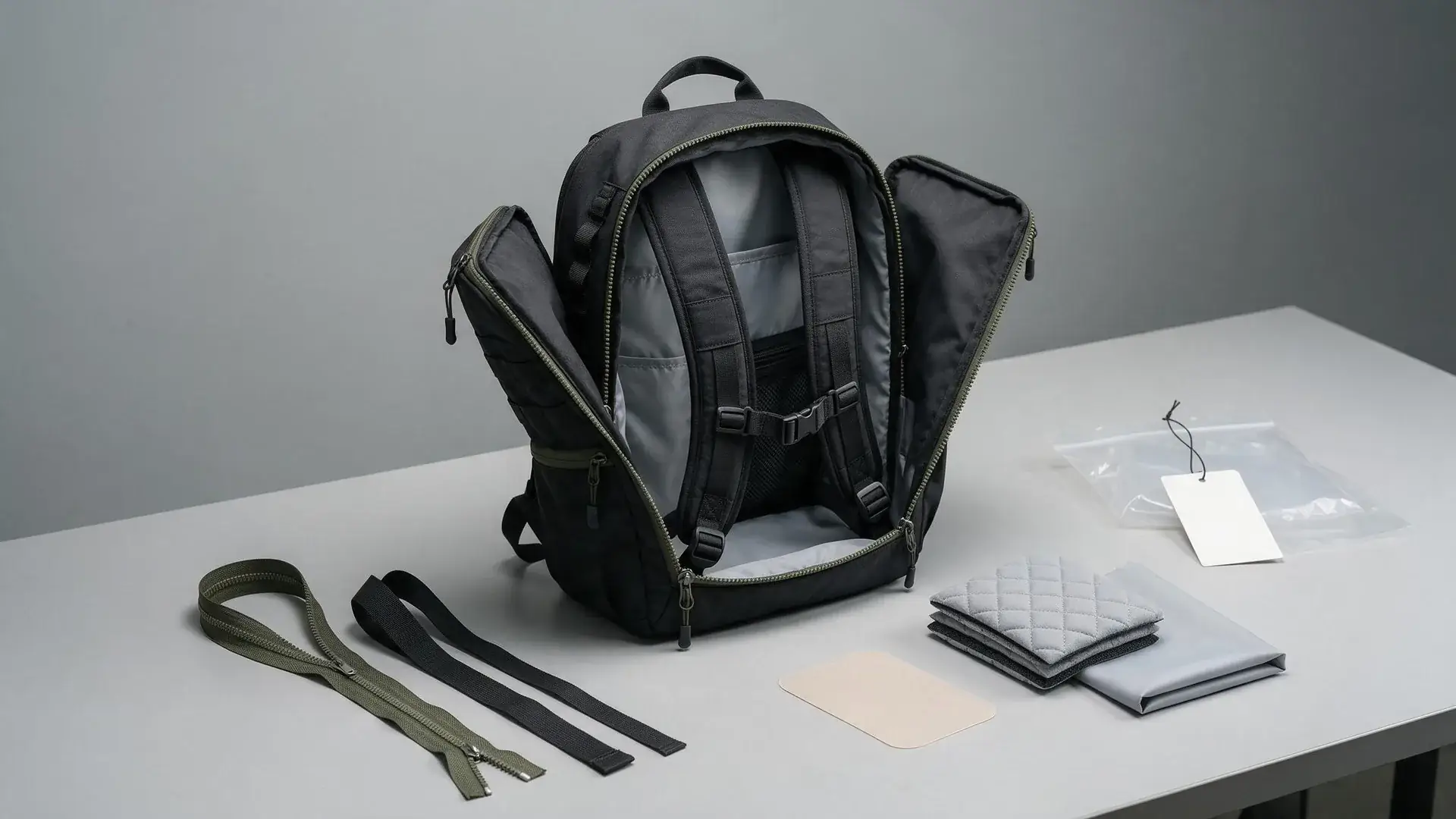
The safer way to reduce OEM unit price is to remove cost from the product or process, not to force a margin cut that changes production behavior. When a buyer demands an arbitrary discount without changing anything, a factory may protect its margin by switching fabric backing, using a thinner lining, simplifying seam allowances, skipping an inspection step, or approving faster production with more variation.
| Negotiation move | What it lowers | Factory risk if done badly | How to verify |
|---|---|---|---|
| Use stock fabric instead of custom dye | Material minimum and development time | Color may not match target market exactly | Request a cutting or swatch approval before bulk |
| Simplify internal construction | Sewing time and rejection risk | Bag may feel less structured or premium | Compare pre-production sample against approved reference |
| Reduce trims or logo processes | Setup and labor | Logo may wear faster on some materials | Request supplier-recommended decoration and a durability check |
| Standardize packaging | Print setup, carton, and packing labor | Platform compliance or transit damage risk | Approve packaging spec separately from product spec |
| Accept flexible shipment timing | Line scheduling and rush cost | Delay risk if order needs a hard deadline | Confirm committed shipment window in writing |
| Show repeat-order potential | Better unit amortization | Over-commitment or unrealistic forecast | State forecast as planning only, not binding order volume |
Cost Drivers Buyers Should Discuss Instead of Only Asking for Discounts
Instead of saying "your price is too high," ask the supplier to show alternative costs for these changes:
- Fabric weight, weave, backing, and coating
- Lining material and internal pocket construction
- Foam thickness or padding placement
- Stitch density and seam finishing
- Zipper chain size, slider type, and puller material
- Webbing, binding, and edge finishing
- Logo application method and placement
- Packaging format and carton count per box
A supplier that can discuss those trade-offs is giving you OEM pricing negotiation. A supplier that only says "discount for good customer" is not giving you a cost conversation.
Red Flags During Price Negotiation
Watch for these patterns during OEM pricing negotiation:
- The supplier accepts a large reduction without changing a single specification.
- The quote does not list material grade, component type, or packaging assumptions.
- The supplier promises "same quality" verbally but will not write the revised material into the RFQ.
- The price changes sharply after packaging, shipping, or barcode requirements are discussed.
- The supplier pushes for deposit before the sample or material specification is approved.
- The supplier cannot explain which component or material option would be cheaper.
Sample Fees, Revisions, and Golden Sample Approval
Sample negotiation is not about getting a free sample. It is about locking the standard that bulk production must match. The sample stage is where you test whether the supplier can follow a specification, not just whether the bag looks acceptable.
What Buyers Should Clarify About Sample Charges
Every supplier has different rules, so clarify the following before sample work begins:
- What sample type is being quoted: stock sample, counter sample, pre-production sample, or golden sample.
- Whether the sample fee applies to the bulk order and under what conditions.
- What the sample fee covers: one material, one color, one logo placement, or multiple variations.
- How many revision rounds are included and how additional revisions are charged.
- Which party pays courier and import charges.
- Who retains the duplicate approved sample after confirmation.
- Whether the bulk deposit can be paid only after golden sample approval.
For a full breakdown of sample-stage mistakes and how to avoid them, review Sample Order Mistakes in Bags and Luggage: What B2B Buyers Should Avoid Before Bulk Production.
Why Golden Samples Matter in Bulk Production Disputes
A golden sample is the approved physical reference that production must replicate. It only protects you if it's recorded correctly. Keep the golden sample together with a written approval record that includes fabric swatches, logo proof, zipper length, measurement points, packaging reference, and any approved deviations.
When a bulk production dispute happens, the conversation should not be "I don't like the bags." It should be "This bulk piece measured X while the approved golden sample measured Y at the same point." That is a commercial claim based on evidence, not taste. Ask the supplier to confirm how they will store their matching reference sample and how they will handle a batch that deviates from the approved standard.
Payment Terms, Incoterms, and Commercial Risk Control
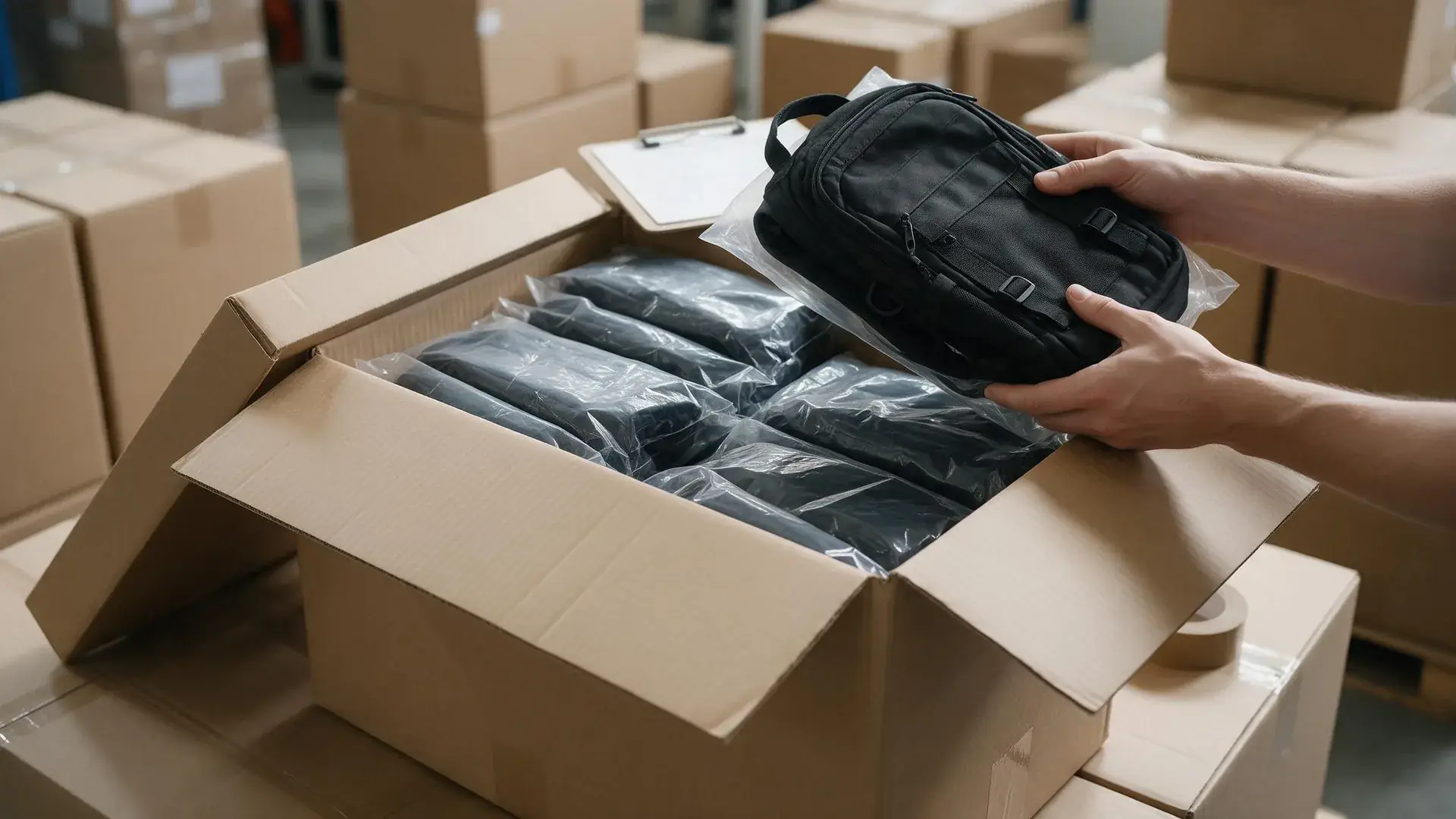
Payment structure and Incoterms can control sourcing risk more effectively than pushing for another small unit-price reduction. The goal is to tie money to confirmed milestones: approved specification, approved pre-production sample, passed final inspection, and correctly packed shipment.
| Item | Must confirm in writing | Risk if unclear | Responsible party |
|---|---|---|---|
| Deposit and balance split | Trigger points for each payment stage | Deposit released before production is locked | Buyer and supplier agree in proforma invoice |
| Price validity and currency | Quote expiry, currency basis, material/component assumptions | Repriced order or unexpected loss | Supplier states in quotation |
| Incoterm | Named rule and place, e.g., FOB port | Buyer or supplier may assume the other arranges export or freight | Both parties confirm named port/place |
| Inspection gate | Pre-shipment inspection timing and defect handling | Balance paid before defect review | Buyer or third-party inspection party |
| Packaging and carton | Polybag, hangtag, barcode, carton strength, gross weight | Chargeback or transit damage | Supplier executes; buyer approves proof |
| Tooling and pattern ownership | Owner, repair responsibility, reorder rights | Later reorder locked to one supplier | Supplier and buyer state ownership |
| Delay or rework responsibility | What happens if bulk fails inspection or misses window | No agreed remedy | Buyer and supplier define before PO |
What Buyers Should Confirm Before Paying Deposits
Before any deposit is paid, confirm these items in one document set:
- Product specification is complete and quoted without blank fields.
- Material, component, logo method, and color are written into the quote or BOM.
- The pre-production sample or golden sample status is clear.
- The MOQ definition covers total order, per-color, per-SKU, and per-logo rules.
- The packaging, carton, barcode, and marking specification is included.
- The payment account name matches the business license and the proforma invoice company.
- The Incoterm and named place match the logistics plan.
- The inspection standard and defect/rework process are documented.
- Tooling ownership and reorder rights are stated.
- The schedule has a committed shipment window, not just a production estimate.
How Incoterms Affect Real Procurement Cost
Incoterms do not set the product price. They define which party arranges and pays for transport, insurance, export/import clearance, and the point where risk transfers. A lower EXW quote can create a higher landed cost once export handling, trucking, forwarding, duties, and local delivery are added. FOB moves export clearance and port delivery responsibility to the supplier, but the buyer still controls the main carriage and destination costs. CIF or similar supplier-arranged terms give the buyer less operational control over carrier choice and may hide freight margin.
Before comparing quotes, ask for the same Incoterm, same named port, and the same packaging assumption. Then calculate landed cost with your forwarder using the destination country's duty and VAT rules. Confirm any Incoterm interpretation against the latest official ICC Incoterms rules and your freight forwarder, not against a supplier's short verbal translation.
Tooling, Mold Ownership, and Intellectual Property Discussions
Custom patterns, zipper pulls, metal logo plates, heat-transfer plates, embossed hardware, and woven label templates are all forms of tooling or proprietary setup. The development cost, ownership, reorder rights, storage, and repair responsibility should be confirmed before you pay for tooling.
Clarify four ownership questions in the proforma invoice or a separate tooling confirmation:
- Who owns the pattern, mold, or tooling after payment?
- If the buyer owns tooling, can it be removed, and under what conditions?
- What reorder continuity does the supplier offer if the tooling stays in place?
- Who pays for repair or replacement if the tooling wears or breaks?
Tooling ownership is often negotiable when the buyer funds the full development cost. If the supplier offers "free tooling" or hides tooling inside the unit price, you may be getting a lower visible setup cost in exchange for ambiguous ownership and reorder leverage. Do not assume you own a pattern just because you paid for samples.
Communication and Cultural Issues During Negotiation
Most negotiation disputes in bag sourcing come from loose wording and unsupported assumptions, not from cultural mystery. The supplier may interpret "good quality" as market-acceptable production standard, while the buyer means "must look like my reference sample at every seam." Those gaps can be controlled.
Practical controls:
- Use one master specification thread: quotation, tech pack, pre-production sample, golden sample, proforma invoice, and production comment log should reference the same version.
- Keep changes in writing. A verbal confirmation followed by a new email with "please confirm this replaces the previous version" is safer than a chat-only approval.
- Ask binary questions. "Please confirm the logo is 6 cm wide, placed 2 cm below the top zipper seam" gets a better answer than "please confirm logo looks good."
- Respect relationship continuity. Chinese bag suppliers often prioritize repeat customers and stable programs because line planning and material buying improve over multiple orders. A buyer who negotiates as if every order is the last one loses that goodwill.
- Separate relationship issues from production issues. If a sample is late or wrong, document the technical deviation and ask for root cause, not just an apology.
For the full communication workflow that reduces production disputes, see How to Communicate with a Chinese Bag Manufacturer Effectively: The Ultimate B2B Buyer’s Guide.
Supplier Verification Before Finalizing Commercial Terms
Negotiation without supplier verification is just agreeing to terms with an unverified counterparty. Before you finalize commercial terms or pay a deposit, verify who is legally responsible for the order and who actually controls production, decoration, packaging, and QC.
A trading company may have excellent communication but limited control over the factory. A decorator may handle stock bags but not own the sewing line. A direct OEM factory may be less flexible on color or packaging but more directly accountable for construction. None of these is automatically better; the risk changes with your product.
| Verification item | What to request | What it helps support |
|---|---|---|
| Business entity | Business license, company name, registered scope | Legal counterparty and payment alignment |
| Factory identity | Video tour or live call showing production floor, cutting, sewing, QC area | Whether production is controlled in-house or outsourced |
| Product capability | Samples from the same category and similar construction | Supplier has made the product family before |
| Quotation transparency | Itemized quotation or BOM-level explanation | Supplier understands cost drivers and can discuss trade-offs |
| Payment account | Bank account matching the business license and PI company | Avoids personal-account or mismatched-entity risk |
| Inspection history | Previous inspection report format, defect categories, acceptance standard used | Whether QC language is already defined |
| Audit or visit | Third-party audit or buyer visit before large orders | Evidence beyond rating badges and sales chat |
The strongest verification is a supplier who can explain why a specification costs what it does, show a comparable production sample, and agree to a written acceptance standard. For broader risk controls, see Top 12 Mistakes to Avoid When Sourcing Bags from China: A Decision-Maker’s Guide to Quality and Risk Control.
Negotiation Checklist Before You Pay a Bag Supplier Deposit
Use this checklist as the final gate before a deposit payment. Not every item applies to a stock trial order, but the supplier should still be able to confirm each relevant line in writing.
| Item to confirm | Supplier's written answer or document |
|---|---|
| RFQ and tech pack complete | Quoted spec without blank assumptions |
| Material and component specification written | Quote, BOM, or material confirmation |
| Logo method and placement approved | Approved proof or sample photo |
| Color approval status | Swatch, lab dip, or stock color code confirmed |
| MOQ definition clear | Total order, per color, per SKU, per logo |
| Sample or golden sample status | Approved reference retained and documented |
| Tooling or pattern ownership | Written ownership and reorder terms |
| Packaging and barcode spec | Polybag, hangtag, carton, marking proof |
| Payment milestone | Deposit trigger and balance release condition |
| Incoterm and named place | Proforma invoice states exact rule and place |
| Inspection and defect responsibility | AQL or buyer-defined acceptance criteria |
| Bank account verification | Account name matches business license and PI |
| Shipment window | Committed delivery window in writing |
Common Negotiation Mistakes That Increase Sourcing Risk
Some negotiation tactics feel aggressive but actually transfer risk into the product. Avoid these patterns:
- Chasing a target price without changing the specification. The supplier may reach the price by changing materials, not by improving efficiency.
- Hiding true volume to get a lower MOQ or price. You may lock terms that cannot survive a real reorder.
- Skipping sample approval to save time. Bulk production then has no enforceable reference standard.
- Negotiating only unit price and ignoring packaging, freight, duties, and return costs. Landed cost and review risk can erase the saving.
- Accepting "same quality" verbally after a cost reduction. If it is not in the revised quote, it is not a commercial term.
- Treating platform ratings or badges as due diligence. They narrow the supplier list but do not replace factory verification, sample performance, and written acceptance standards.
- Believing "no minimum" equals direct OEM development. Low-MOQ decoration is often a stock-model service with different responsibility boundaries.
- Paying the balance before inspecting the shipment. Once final payment is released, your negotiating position weakens.
FAQ: Negotiating MOQ, Pricing, Samples, and Payment Terms With Bag Suppliers
These are the questions bag buyers most often ask before starting a commercial negotiation with a Chinese bag manufacturer.
Can MOQ universally be negotiated with Chinese bag manufacturers?
No universal rule applies. MOQ is usually negotiable, but the feasible reduction depends on materials, decoration, hardware, packaging, and whether the order uses stock or custom inputs. A lower MOQ is more attainable when the buyer accepts a stock color, simpler logo process, standardized packaging, flexible delivery timing, or a shared production run. Ask the supplier to explain which specific driver creates the MOQ and what specification change would reduce it.
Should buyers ask for free samples?
Free samples may be available for simple stock bags or existing styles, but pre-production or custom samples are usually quote-dependent services. The more useful negotiation goal is not avoiding all sample costs; it is clarifying what the sample fee covers, how many revisions are included, and whether the fee offsets the bulk order. A supplier that cannot explain the sample process is a bigger risk than a supplier that charges for development work.
Is a lower price usually linked to lower material quality?
Not always directly, but indirect quality risk is real. A lower price may come from a genuinely simpler construction, stock materials, fewer trims, or a longer production window. It may also come from a thinner fabric backing, weaker foam, smaller zipper chain, simplified seam finishing, or less QC margin. The safe way to negotiate is to ask the supplier to specify what changed between the first quote and the reduced quote. If no technical detail changes, assume the risk moved somewhere.
What payment method is safer for first orders?
No payment method is universally safest for every order. A lower-risk structure ties payment to documented milestones: an initial deposit only after the specification and sample reference are clear, and the balance released only after final inspection and shipment confirmation. Direct transfers to personal accounts or mismatched entity names are generally higher risk. If the order runs through a B2B sourcing platform, read the platform escrow or buyer protection terms carefully to understand coverage limits, claim windows, and excluded risks before relying on it.
Can buyers combine colors or SKUs to meet MOQ?
Sometimes. Combining colors or SKUs is most workable when the products share the same base fabric, panel family, zipper set, construction, and packaging. If each color requires custom dyeing or each SKU has different dimensions and hardware, the combination may not lower MOQ significantly. Ask the supplier to confirm the MOQ basis: total pieces, per color, per SKU, per logo, or per material lot.
What should be included in a sample approval record?
A useful sample approval record includes the sample version, material swatches, color reference, logo method and placement measurements, stitch and seam notes, zipper and hardware confirmation, packaging reference, any approved deviations, and dated confirmation from both parties. It should also state which physical sample becomes the golden standard for bulk production. The record should be detailed enough that a third-party inspector can compare bulk pieces against it without needing the buyer present.
Official Sources and Compliance References
Use these official or authoritative references to verify commercial and compliance details before finalizing terms:
- ICC Incoterms 2020 rules: Confirm the precise responsibility, cost, and risk-transfer point for FOB, EXW, CIF, and other Incoterms. The official ICC rules should guide contract language, not a supplier's shorthand translation.
- Sourcing platform buyer protection or escrow documentation: If payment runs through a marketplace platform, read the actual terms for eligibility, claim limits, evidence requirements, and deadlines.
- Destination-country customs and tax authority guidance: Confirm import duties, valuation rules, VAT, and product classification for your bag product.
- Target-market product compliance regulations: Regulations such as CPSIA, EN 71, REACH, or food-contact requirements may apply depending on user age, product use, and material contact. Confirm applicability with a qualified compliance adviser; promotional use alone does not automatically trigger toy or food-contact requirements.
Conclusion: Negotiate Like a Buyer, Not a Bidder
The winning negotiation with Chinese bag manufacturers is the one that leaves the supplier able to make money at the agreed quality level. Buyers who negotiate only price tend to receive hidden material changes. Buyers who negotiate production complexity, MOQ structure, sample approval, payment milestones, and written accountability tend to receive a workable cost with lower operational risk.
From the OMASKA side, the RFQs that run smoothest are the ones where the buyer knows the material and component trade-offs, approves a clear reference sample, states the packaging and inspection rules early, and verifies the commercial entity before paying. That buyer tends to get faster quotations, fewer disputes, and a supplier relationship that improves on the second order instead of collapsing after the first.
Get A Quote

Get A Quote
0 Comments