
How to Measure Backpack Volume: B2B Guide to Liters & Capacity Testing
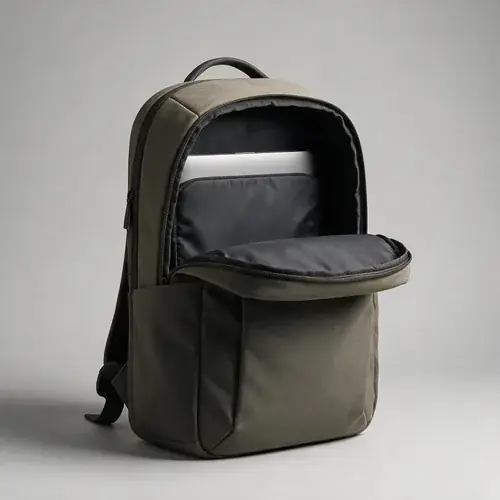
How to measure backpack volume is a supply-chain verification question before it is a consumer sizing question. For a B2B buyer, a backpack's liter rating should be a measured internal carrying capacity, not a marketing estimate taken from external dimensions. If the supplier hasn't confirmed the test method, included compartments, expanded state, and production tolerance, a "30L" sample can turn into a noticeably smaller production bag. That gap creates airline-fit failures, marketplace returns, and QC disputes.
This guide explains what backpack liters actually mean, how factories calculate capacity, why padding and dividers reduce usable space, and how to write a specification that survives sampling and bulk QC. It's written for brand owners, online retailers, importers, wholesalers, distributors, and product managers who need to compare suppliers on technical evidence, not just numbers on a hangtag.
By the end, you should be able to ask the right verification questions, set a buyer-defined tolerance, and approve a golden sample with recorded measurements — before production quantities are locked.
Quick Answer: The 30-Second Buyer Decision
Backpack volume is not backpack dimensions. A true capacity measurement tells you how much fill material fits inside the closed main packing space and any compartments the supplier defines as included. External height × width × depth gives a rough rectangular envelope, not a real liter value.
For sourcing, don't accept a capacity claim without five pieces of information:
- The measurement method the supplier used
- The dimension order, in cm or inches, for empty and packed states
- Whether the bag was measured expanded or unexpanded
- Which compartments are included in the liter figure
- The tolerance you'll accept between sample and bulk production
If any of those is missing from the RFQ or sample approval record, you're buying a number, not a verified product specification.
Scope of This Guide
This page focuses on backpack capacity and size verification from a procurement and QC standpoint. It covers liter definitions, factory measurement logic, ASTM-style fill testing, usable-storage loss from padding and dividers, carry-on and school sizing risks, production tolerance, supplier verification, and RFQ language.
It does not cover consumer fit recommendations, hiking gear reviews, fashion trends, or general travel packing advice. It also does not repeat airline policy deep dives beyond what is needed to explain why dimensions matter more than liters for compliance.
What Does Backpack Volume Actually Mean?
A backpack's volume in liters should describe internal carrying capacity. One liter equals 1,000 cubic centimeters, so a 30L backpack should hold an internal volume equivalent to 30,000 cm³ under a stated measurement method.
That sounds clean, but factories don't arrive at the number the same way. Some use a repeatable fill test. Others calculate from panel dimensions and depth. A few still misuse the external-dimension estimate, which is why the same "30L" bag can behave differently across two suppliers.
The buyer's job is to separate three concepts that often get mixed up in listings and RFQs.
| Measurement Type | What It Measures | Why Buyers Use It | Common Risk |
|---|---|---|---|
| Volume / liters | Internal fill capacity under a stated test method | Product positioning, capacity class, consumer comparison | Method differences, included/excluded pockets, foam and lining loss |
| External dimensions | Physical shell size, usually H × W × D | Airline sizers, school fit, carton planning | Packed dimensions exceed empty dimensions and sizer limits |
| Usable storage | Accessible space after padding, dividers, frame sheets, and shape losses | Return risk, review risk, functional product fit | Cannot be reliably inferred from liters alone |
Backpack Volume vs Backpack Dimensions
Two backpacks can both be marked 30L and still fit a laptop, a school locker, or an airline sizer very differently. Liters describe internal capacity. Dimensions describe the physical envelope.
A slim travel daypack may compress gear into a relatively narrow shell, while a boxy school backpack with thick foam and many dividers may need more external depth to hold the same calculated 30L. Airline gates and sizer bins check physical dimensions, not marketing liters. Locker openings, school-bag fit requirements, and even store shelf plans care about the outside shape.
The practical rule: if you're sourcing a commuter backpack for a 15.6-inch laptop, request both the laptop compartment's internal size and the external packed depth with the laptop inserted. Don't assume a 30L label solves either requirement.
How Factories Measure Backpack Capacity
When a supplier quotes a liter figure, the useful buyer reaction is simple: ask how they arrived at it. There are two broad approaches — standardized fill testing and pattern-volume calculation.
Fill testing is more repeatable when the method and compartment list are defined. Pattern calculation is useful in early product development, but it can overstate capacity if seam allowances, lining thickness, corner radii, and shaped panels aren't subtracted. A raw external box calculation — height × width × depth ÷ 1,000 — is only a rough geometric envelope and often overstates real internal volume.
| Method | Repeatability | Risk Level | Suitable for OEM Verification | Common Supplier Issue |
|---|---|---|---|---|
| ASTM F2153-style fill test using solid fill media and a calibrated measuring cylinder | High when the closed compartment is defined | Low for closed compartments | Yes, if method and pocket list are documented | Supplier cites the standard but does not document assumptions |
| Pattern-volume calculation from panel area and depth | Medium | Medium | For pre-production and design only | May overstate capacity by using external envelope |
| Loose hand-fill or visual estimate | Low | High | No | Result depends on how tightly someone stuffs the bag |
| External H × W × D / 1000 box volume | High repeatability but misleading | High | Only as a rough dimensional envelope | Buyers mistake it for actual backpack capacity |
ASTM Capacity Testing Explained for OEM Buyers
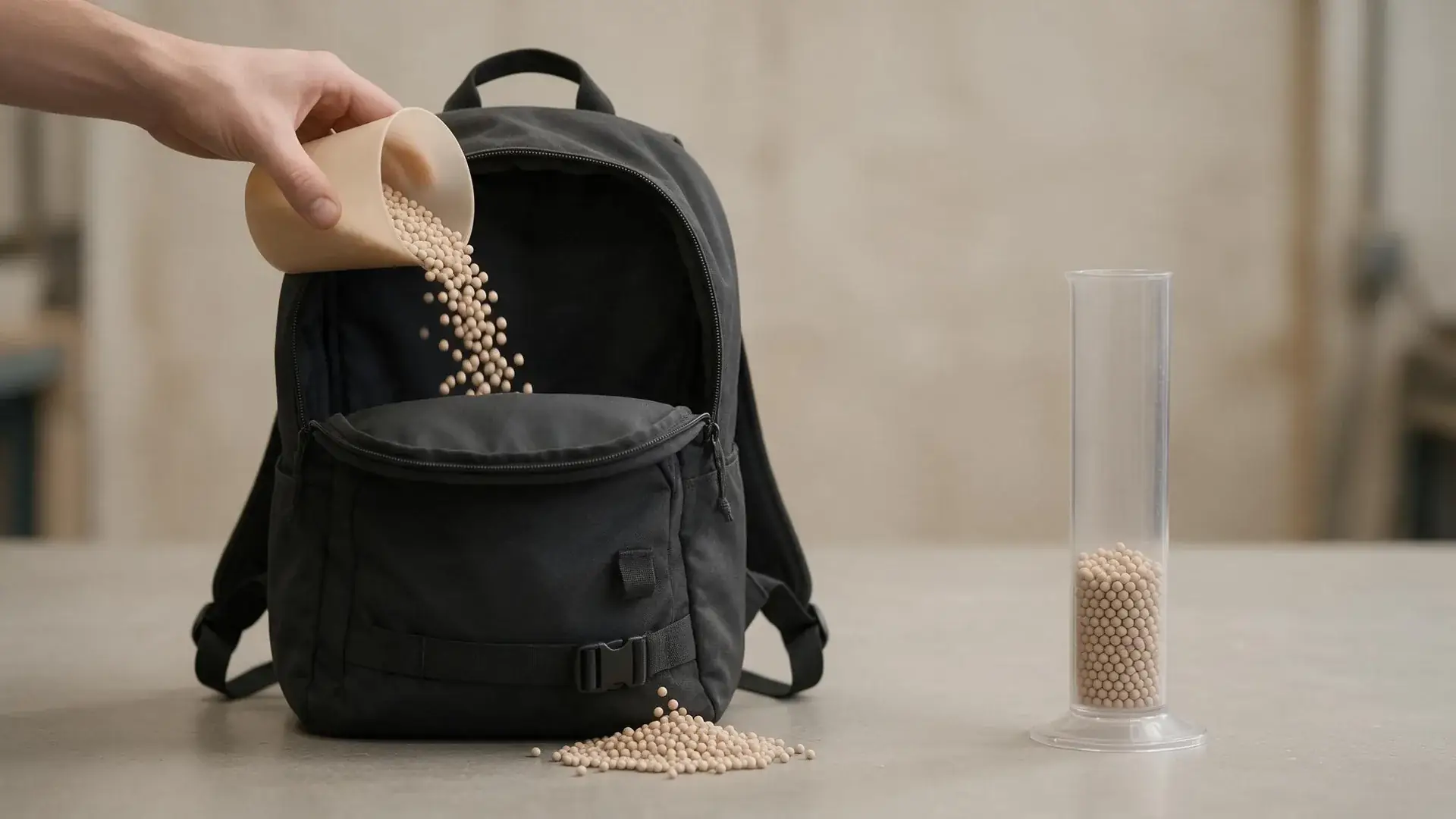
A standard commonly referenced in serious backpack spec sheets is ASTM F2153-07(2018). It describes a repeatable fill-based method for measuring backpack capacity under defined test conditions. If you're specifying a non-backpack item, confirm that the supplier has selected an applicable method rather than assuming this reference covers every bag category.
The core logic is straightforward: fill the bag's defined compartments with a solid fill medium, then transfer that fill into a calibrated container to read the volume. The result is only as useful as the test setup, because the value changes when expansion zippers are open, when stretch mesh pockets are included, or when the fill operator doesn't close the bag consistently.
ASTM F2153 isn't a product certification. It doesn't mean a bag is better, airline-compliant, or defect-free. It means the capacity was measured under a repeatable procedure — assuming the supplier actually followed it.
When a supplier says a backpack is "tested to ASTM," push for a written confirmation of these points:
- Which test method and revision was used
- Which compartments were filled
- Which compartments were excluded
- Whether the bag was expanded or unexpanded
- Whether the test was in-house or third-party
- Whether production units will use the same pattern as the tested sample
A buyer shouldn't need the full standard to enforce this. You need the supplier's method declaration, not the regulatory clause number. In practice, a weak answer usually shows up within the first two questions.
Why Backpack Liters Do Not Equal Usable Storage
Here's the commercial problem in one line: a backpack can test at 30 liters but feel like 24 liters when filled with real objects, because padding, dividers, frame sheets, curved back panels, and narrow openings all consume volume and make the remaining space harder to use.
Fill testing measures continuous loose-fill capacity. Real users pack a rigid laptop, books, pouches, shoes, and a water bottle. Those objects don't flow into the same corners and curves. The gap between tested volume and usable storage is a common reason online listings generate "smaller than expected" reviews.
| Structure Element | Effect on Usable Storage | What Buyers Should Check |
|---|---|---|
| Padded laptop sleeve | Reduces main packing volume, especially for 15–17-inch sleeves | Measure sleeve internal width, height, and depth; test with the target laptop |
| Thick EVA or foam back panel | Eats depth and creates a curved back shape | Confirm foam thickness and packed depth when filled |
| Internal dividers or organizer panel | Creates many small pockets but less continuous volume | Decide whether organizer space counts toward liters |
| Internal frame sheet | Adds stiffness and wall thickness | Confirm sheet thickness and whether it is removable |
| Stretch mesh outer pockets | Stretch and accessible, but sometimes inflated into capacity claims | Ask whether side or stash pockets are included |
| Expansion zipper | Adds volume only when open and changes external dimensions | Require extended and unextended figures separately |
A 30L hiking pack with one large top-loading compartment often feels bigger than a 30L laptop backpack with four zippered dividers. Neither number is wrong, but the intended use should decide which structure is acceptable.
Carry-On, School, and Retail Sizing Implications
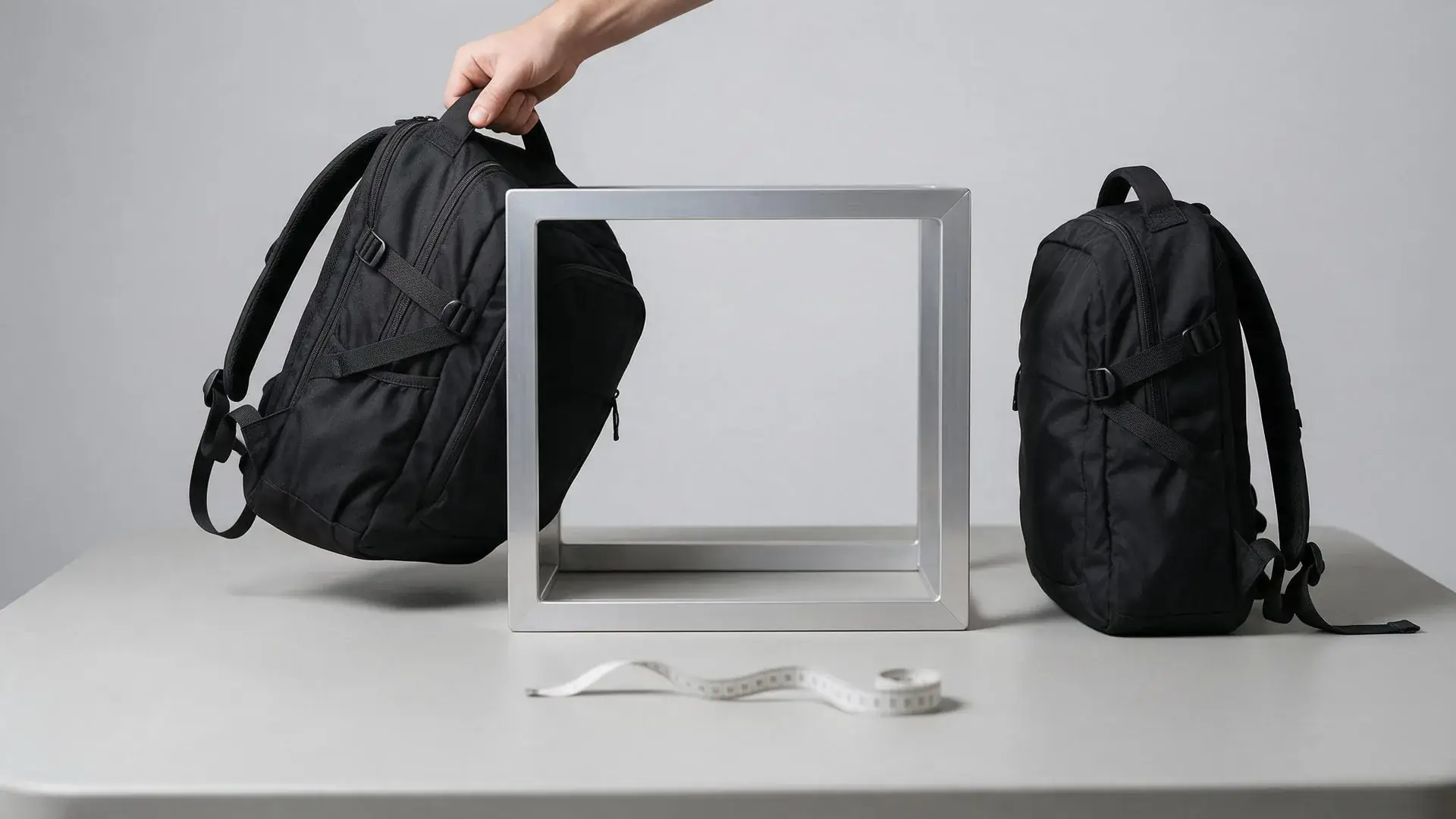
For most compliance decisions, dimensions matter more than liters. Airlines check physical envelope size at the gate, not the pack's listed volume. Schools and distributors usually specify acceptable height, width, or back-panel length by age group. A backpack can be marketed as 35L and still fail a carry-on sizer because it's too deep or too wide when packed.
Use a carry-on backpack size guide to verify packed dimensions against airline and personal-item requirements before finalizing a travel or commuter product. That check should happen during sampling, not after goods arrive.
| Channel / Use Case | Primary Measurement That Matters | Why |
|---|---|---|
| Airline carry-on or personal item | Packed external dimensions | Sizer bins care about physical envelope |
| School bag or bulk distribution | Age-appropriate height and back-panel length | Fit and ergonomics matter more than liter claims |
| Online marketplace listing | Liters, internal dimensions, external dimensions, packed photos | Mismatched claims trigger returns and complaints |
| Carton and warehouse planning | Unpacked and packed dimensions, master carton cube | Freight, storage, and packaging cost depend on physical size |
Why Marketplace and Online Retailers Should Verify Packed Dimensions
Online listings create sizing disputes for a predictable reason: photos can make a bag look bigger than its measured shell, while the product data repeats the supplier's marketing liters instead of showing the dimensions that matter when filled.
Even an accurate sample measurement can shift when the bag is stuffed, compressed into a polybag, or photographed with a soft fill that hides the true shape. The same backpack can look 40 liters in a studio and arrive feeling like 28 liters in the customer's hands.
Before publishing a listing, request dimension photos with a measuring tape and a filled pack, then use the following process:
- Confirm the bag was measured empty and packed
- State whether the listed dimensions include expansion
- Publish an internal laptop sleeve size, not just a total volume
- Keep the approved pre-production sample as the photography reference
- Verify the polybag or compression method does not create a misleading listing image
This is return-risk control. Whether a sizing complaint becomes a material cost depends on the product value, shipping model, marketplace return policy, and target market. For cross-border or high-return listings, one dimension-check round is often far cheaper than resolving a preventable sizing dispute.
Production Tolerance and QC Risks in Backpack Size Testing
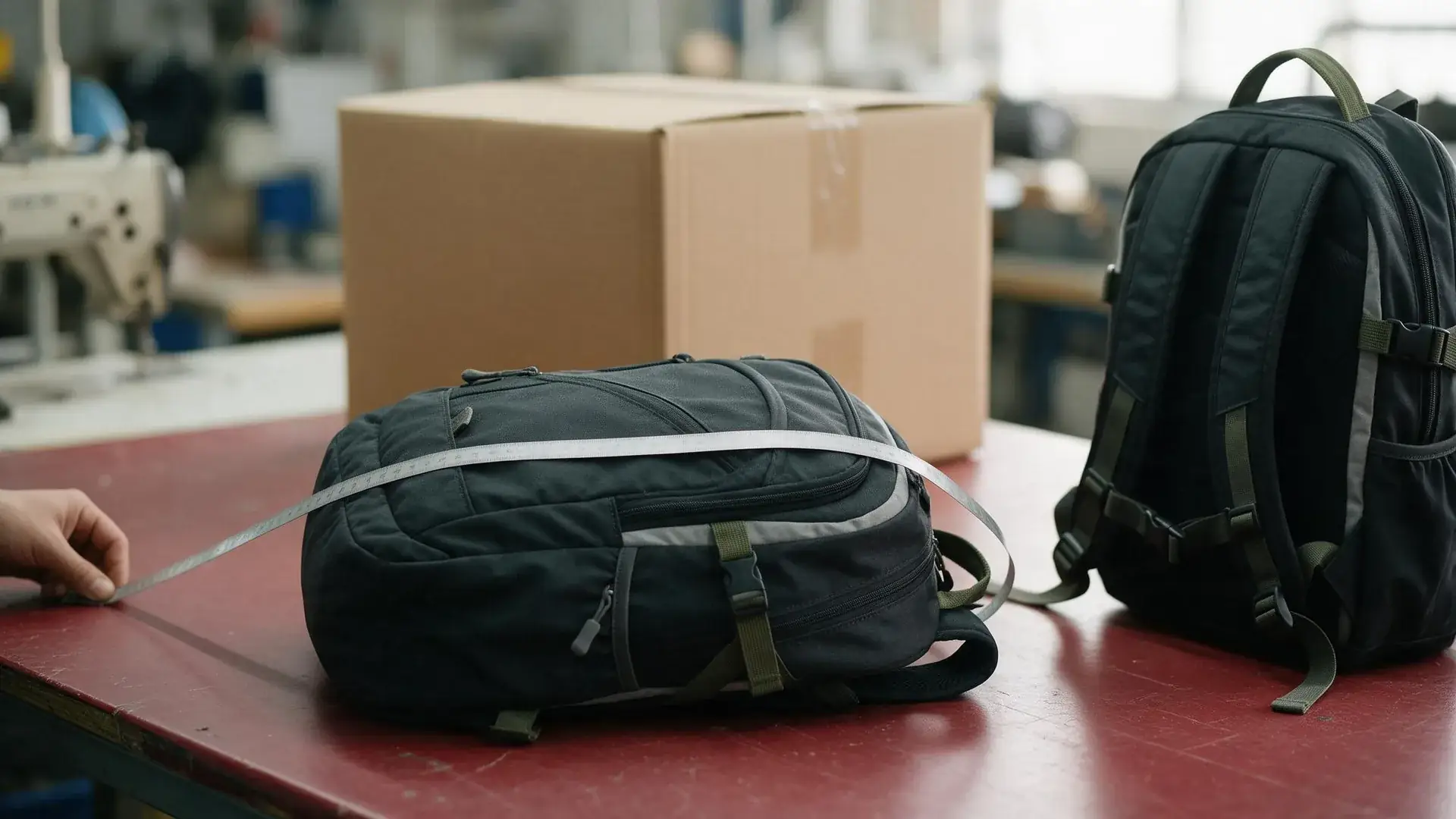
Most cut-and-sew production runs don't match the approved sample dimension exactly. Fabric stretch, foam compression, seam allowance variation, marker cutting shifts, lining thickness, and operator practice can move a backpack's external dimensions by a measurable amount. A few millimeters of extra depth can push a personal item over an airline sizer limit.
That's why the tolerance should be written into the spec before bulk starts, not discovered during final inspection. I'd rather set a tolerance band that's slightly wider than fight a final-inspection dispute. Use a backpack quality control checklist to define measurable inspection points and tie them to the approved golden sample.
| QC Checkpoint | What to Verify | Acceptable Approach |
|---|---|---|
| Pre-production sample | Empty and filled dimensions, laptop compartment size, compression | Approve before bulk, keep photo and measurement records |
| Inline inspection | Pattern alignment, padding placement, zipper opening, seam allowance | Compare random units against the golden sample |
| Final inspection | External dimensions on multiple units, packed depth, main compartment access | Apply a buyer-defined AQL level and tolerance band |
| Packaging check | Single-unit polybag compression, master carton dimensions | Confirm packed units still meet size and appearance expectations |
Common Supplier Misrepresentation Risks
Capacity mismatches are often caused by mismatched definitions rather than deliberate fraud. A supplier may test the bag with the expansion zipper open, include external stretch pockets, or calculate from panel dimensions without subtracting seam allowances and corner losses. The number on the quote looks fine, but the assumptions are hidden.
Watch for these specific risks before approving a capacity spec:
- Extended-only measurement: the quoted liters apply only when the expansion zipper is open
- Mesh pocket inflation: side water-bottle pockets are included in the marketed volume
- Loose hand-fill: the result depends on how tightly an operator stuffs the bag
- Hidden tolerance omission: the sample fits the sizer, but bulk units drift
- Dimension-order confusion: height, width, and depth are swapped in the listing or carton data
These are exactly the kind of issues covered in the common QC mistakes buyers ignore before shipment guide. The correct response isn't more negotiation pressure; it's a written method declaration and a golden-sample approval.
Supplier Verification: What to Confirm Before Sampling
Before you approve a pre-production sample for a new backpack or a stock-model customization with a capacity claim, send a short written verification request. You're not asking for proprietary pattern files. You're checking whether the supplier's number is based on a repeatable, defined method that matches your listing and logistics needs. In practice, I'd ask for this before approving the pre-production sample, not after.
The confirmation should cover six points.
| Confirmation Point | What to Ask |
|---|---|
| Capacity method | Which standard or method was used, and which compartments were included |
| Dimension order | Confirm H × W × D, plus empty versus packed measurements |
| Expansion state | Is the bag measured extended, unextended, or both? |
| Laptop fit | Internal sleeve dimensions for the target laptop size |
| Production tolerance | What dimensional and capacity deviation is accepted? |
| Reference approval | Will bulk production match the approved golden sample? |
A supplier that can't answer these questions isn't necessarily a bad factory, but it's not yet ready for a high-value listing or a compliance-sensitive order.
RFQ Checklist for Backpack Volume Verification
This is the part to block into every RFQ before quoting custom backpacks or stock-model decoration. It forces the supplier to answer the questions that cause disputes before they happen. If you don't yet have a requirement, write "to confirm" in the field rather than leaving it blank.
Use this two-column format when sending the enquiry:
| Field | Your input / options |
|---|---|
| Backpack type and target market | Commuter backpack, school bag, travel daypack, promotional bag |
| Target carry-on or school constraint | Airline sizer dimension, personal item, age group |
| Liter target | e.g., 25–30L unexpanded |
| External dimensions | H × W × D in cm or inches, empty and packed |
| Expanded/unexpanded definition | Expansion zipper closed or open |
| Laptop compartment requirement | Device size and internal sleeve dimensions |
| Structure elements affecting volume | Padding thickness, frame sheet, dividers, side pockets |
| Capacity testing method requested | ASTM F2153-style fill test or supplier-confirmed equivalent |
| Included and excluded pockets | Which compartments count toward liters |
| Production tolerance | Buyer-defined dimension and capacity deviation |
| Packaging requirement | Polybag, carton, barcode, shipping mark |
| Inspection requirement | Pre-production, inline, final inspection, photo evidence |
| Retail listing deliverables | Dimension sheet, what-fits reference, packed photos |
Before sending the RFQ, complete this shorter internal check:
- Testing method is stated in writing
- Dimension order is confirmed
- Expanded state is defined
- Laptop fit is measured with a target sample
- Golden sample is approved with photos
- Production tolerance is written into the order
- Retail packaging dimensions are verified
For the supply side of this conversation, the sample-order workflow matters as much as the RFQ itself. Review the common sample order mistakes in bags and luggage so the pre-production round doesn't become the point where capacity assumptions quietly change.
FAQ: Backpack Volume and B2B Sourcing
Most sourcing disputes start when the buyer's assumed capacity definition is different from the supplier's testing assumptions. These questions cover the points most often missed in RFQs and sample approvals.
Is backpack volume measured with pockets included?
Only if the specification says so. There's no safe universal assumption. A defensible capacity statement should say whether the value includes the main compartment only, the main compartment plus fixed internal organization, or the main compartment plus outer mesh pockets.
For product comparison and carry-on decisions, a stricter definition is more useful: main packing compartment plus fixed internal sleeves, with stretch water-bottle pockets excluded. If the supplier includes external mesh, confirm it in writing and keep that figure separate.
What is the difference between extended and unextended capacity?
The unextended figure is the closed-bag capacity. The extended figure is the capacity when an expansion zipper or panel is open. A travel daypack, for example, might have one capacity closed and a larger one expanded.
If a supplier quotes only the extended number, the listing can misrepresent the closed-bag size customers receive on a normal day. Ask for both capacities, plus both external dimensions, on the same pre-production sample.
Can two backpacks with the same liters feel very different?
Yes. This is normal, not a defect. A 30L pack with one large open compartment will feel much more forgiving than a 30L pack divided into four padded pockets, a rigid laptop sleeve, and a thick foam back panel.
The fill test may return the same number, but real packing performance depends on compartment shape, opening width, divider placement, and how much rigid padding intrudes into the cavity. The buyer's product decision should be based on the intended load type — clothes, books, laptops, or mixed everyday gear.
How should buyers verify supplier testing claims?
Ask for the method declaration first, then the supporting evidence. A written statement should confirm the test method, the included compartments, the expansion state, and whether the measurement was performed in-house or by a third party.
Then verify on a physical pre-production sample: measure the external dimensions empty and packed, insert the target laptop, and compare the result with the supplier's stated values. If the sample and the declared capacity don't match, resolve it before bulk production, not during container inspection.
Are airline carry-on limits based on liters or dimensions?
Airline carry-on limits are based on physical dimensions and often weight, not backpack volume. The gate agent checks whether the bag fits the sizer frame; the tag on the bag saying "40L" doesn't matter.
That's why a carry-on backpack needs a published external dimension that stays within the target airline's size limit when packed. For detailed personal-item and cabin-bag rules, check the current carry-on sizing guide for the target market and airline.
Official Sources and Compliance References
One technical reference commonly cited in backpack specification discussions is ASTM F2153-07(2018). It describes a fill-based measurement procedure that can support repeatable backpack capacity measurement, but it's not a product approval, a safety certification, or an airline compliance guarantee.
Here's how the reference should be treated in sourcing:
- ASTM F2153-07(2018) provides one standardized method for measuring backpack capacity under defined test conditions. Suppliers and buyers should confirm that the method is applicable to the specific item before treating it as the correct test.
- It should not be cited as proof that a bag is "ASTM certified" unless the test documentation confirms the actual measurement.
- Buyers should access the current edition of the standard for precise clause-level requirements if they need full technical conformance.
- Airline dimension rules are not part of the standard. They must be verified against each carrier's current published cabin baggage policy.
When a buyer asks OMASKA to confirm a capacity figure, the useful question isn't "Is the volume accurate?" but "Which method, which compartments, and which state did you measure?" That written answer becomes part of the technical order file.
Conclusion
Don't let a marketing "40L" be the only capacity language in a purchase order. Define liters, external dimensions, included compartments, expansion state, tolerance, and QC checkpoint before bulk. That small step separates a listing that survives a sizing complaint from one that creates a return wave.
B2B buyers should follow this order of work:
- Put the capacity measurement method into the RFQ.
- Approve a golden sample with dimension and laptop-fit records.
- Add final inspection checks for empty and packed dimensions.
How to measure backpack volume becomes much easier once you stop treating liters as a single universal number. Treat it as a test result with assumptions attached. Confirm the assumptions, and the rest of the sourcing decision — fit, packaging, carton planning, and marketplace listings — aligns around evidence rather than guesswork.
Get A Quote

Get A Quote
0 Comments