
Bag Manufacturing Lead Time: How to Prevent Delays in Bag Production
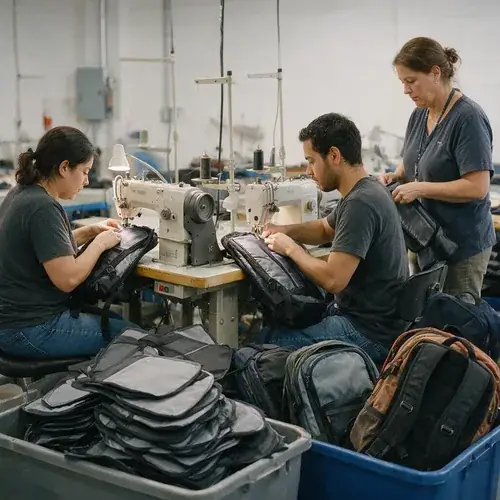
Most bag manufacturing lead time is not lost on the sewing line. It is lost in approvals, material sourcing, color confirmation, packaging decisions, and production-slot allocation — the steps that happen before and around bulk production. A supplier may quote a "production time," but the schedule that matters to your launch is the cumulative lead time from confirmed specification to ex-factory shipment. If you only push the factory to sew faster while your own team keeps changing details or sits on approvals, you can still miss the date even when the factory works efficiently. This guide maps the main delay points, who controls each one, and what to lock in writing before you issue a purchase order or reserve capacity.
Missing a retail or marketplace launch window is rarely just a production problem. It is a coordination problem with a cash cost attached: stockouts, penalty risk, emergency air freight, or a season lost. The purpose here is not to explain how bags are stitched. It is to give procurement teams a repeatable delay-prevention method — the same discipline to apply whether you are ordering a first OEM project, a reorder, or a private-label batch.
Use the stage map and checklists below as your working document. Read once for the logic, then keep the RFQ checklist and approval ownership table in front of you when you run the next order.
Quick Answer: Where Bag Manufacturing Lead Time Really Comes From
Bag manufacturing lead time is the cumulative duration from confirmed buyer input to goods ready at the factory door. It includes sample development, material procurement, pre-production approval, bulk production, inspection, packaging, and shipment preparation. The pre-production stages — specification alignment, material reservation, and sample sign-off — create disproportionate schedule risk, because a factory cannot reliably hold a production slot or order fabric until those items are confirmed.
A practical way to think about responsibility: the factory controls what happens after it has an approved BOM, confirmed material inventory, and a released pre-production sample. The buyer mostly controls how fast that input becomes final. The shared risk sits in the middle: material availability, color approval, hardware substitution, and production calendar conflicts.
The single highest-value action is to shorten the cumulative lead time by controlling the approval chain, not by demanding a shorter sewing schedule. A supplier can often do the sewing on time; what makes orders slip is the gap between "we need a sample" and "we approve this exact build."
The table below gives you the working vocabulary before we go stage by stage.
| Lead time term | What it includes | Who mainly controls it | Why it matters |
|---|---|---|---|
| Sample lead time | Pattern work, sourcing sample materials, assembling a first or revised sample | Factory / sample room, but speed depends on buyer feedback loops | Determines how long until you can approve a physical reference |
| Material lead time | Fabric dyeing or stock availability, zipper and puller supply, webbing, foam, molded hardware | Mills, trim suppliers, hardware suppliers; factory coordinates | A shortage here stalls bulk production even if sampling is done |
| Bulk lead time | Cutting, sewing, assembly, finishing after PP approval | Factory production planning and line allocation | The number most suppliers quote, but it is only one part of the timeline |
| Cumulative lead time | Everything from confirmed spec to ex-factory, including approvals and material waits | Shared: buyer approval speed + supplier coordination + external material availability | The number that actually determines whether you hit a market date |
More detail on how capacity, seasonality, and machine allocation shape that first number is covered in the deeper lead-time explanation, but the operational part — the part you can control — is what this page focuses on.
Scope of This Guide
This article covers delay prevention for OEM/ODM bags, custom backpacks, luggage, school bags, duffels, cooler bags, and similar soft-goods categories. It does not cover sea or air freight transit time in depth, and it is not a consumer guide to buying luggage. The scope is the factory-side and buyer-side workflow from RFQ through shipment readiness.
You'll get the most from this if you are comparing suppliers, preparing an RFQ, running sampling, or trying to protect a launch date. If you are still deciding whether to go OEM or use an existing stock model, the stage map still applies — it just compresses some steps. A stock-model ODM project may move faster than a full OEM development because the base pattern and construction already exist, but approval gates still control the final date.
What Does Bag Manufacturing Lead Time Actually Include?
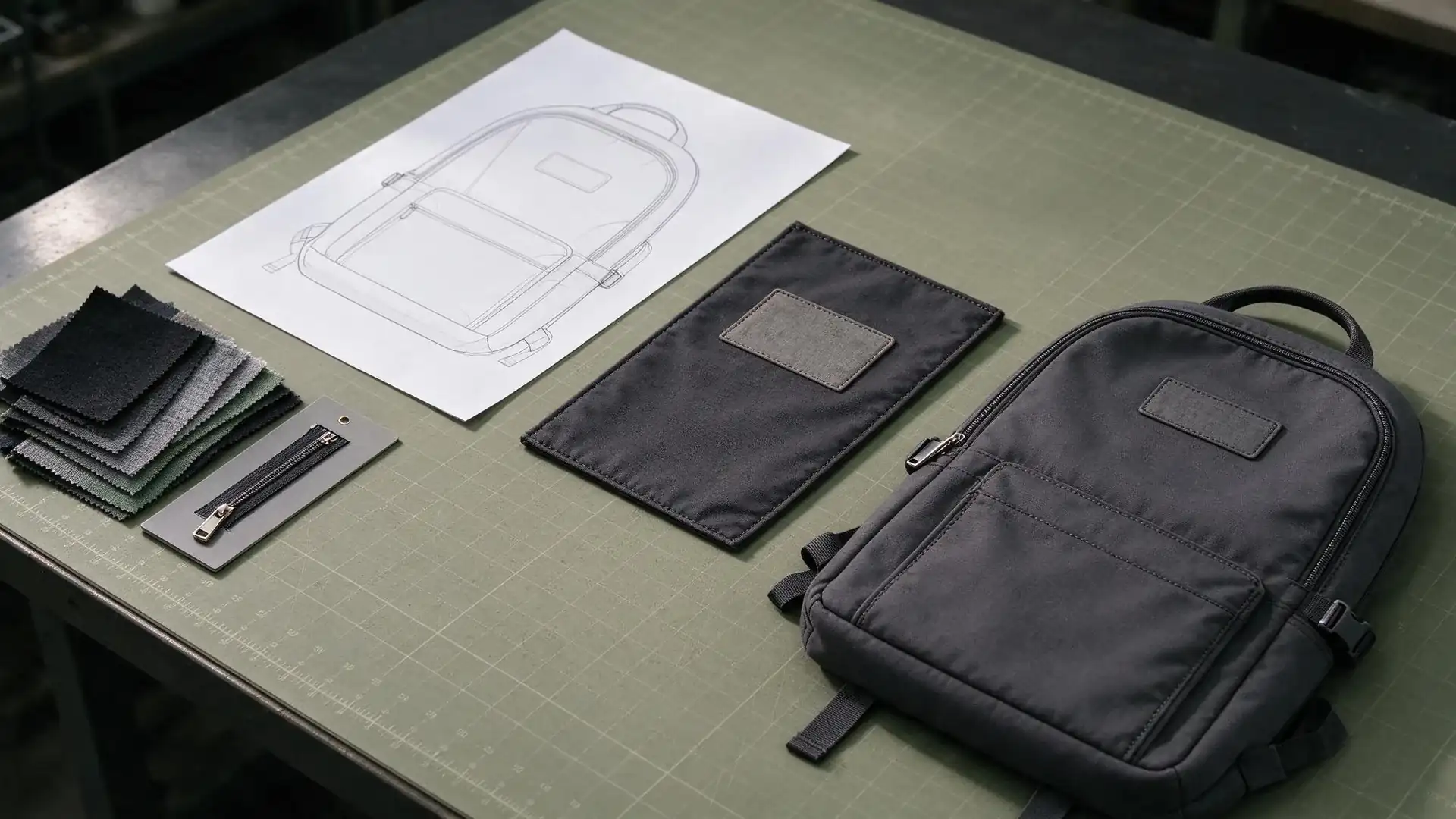
The lead time a supplier quotes is rarely the whole answer. Buyers often compare one supplier's quoted calendar figure with another's as if the two figures describe the same work. They do not. One may be quoting only bulk sewing time, and another may be quoting cumulative time including materials and sample approval. Any such figures are illustrative and project-dependent, not standard market lead times. That difference alone creates scheduling surprises.
Bag manufacturing lead time is best treated as a chain of dependent lead times. Sample development cannot start without a usable specification. Material procurement should start only after the BOM is reasonably stable. In the standard low-risk OEM workflow, bulk production should not normally start before the pre-production sample is approved in writing; a conditional start may be possible when buyer and supplier document the remaining risk and agree on how late corrections will be handled. Inspection, packaging, and shipment preparation cannot be squeezed into zero days at the end.
The factory normally cannot commit to ex-factory dates until it knows three things: the confirmed BOM, the availability date of each critical material, and a released sample or approved construction. A supplier that promises otherwise may be planning around stock materials or assuming items it does not yet control.
A good practice is to ask the supplier to break the quote into four calendar blocks: sample lead time, material lead time, bulk lead time, and shipment preparation. Even if the dates shift, the block view shows where the risk sits.
Where Do Production Delays in Bag Manufacturing Usually Start?
Most production delays in bag manufacturing start before bulk sewing begins. Across factories, the pattern is common: a buyer sends an incomplete spec, the supplier waits for clarification, material sourcing is delayed, sampling reveals a fit or color issue, the buyer revises once or twice, and by the time everything is approved, the production slot that was available may be gone.
The delays that feel like factory problems are often buyer-side problems that became visible late. The table below separates the main delay sources so you can attack them one at a time.
| Delay source | Typical trigger | Prevention action |
|---|---|---|
| Artwork and logo approval | Unreleased artwork, wrong file type, unclear placement | Approve vector artwork and placement before PP sample; lock a sign-off owner |
| Color confirmation | Pantone or lab-dip mismatch, approval spread across teams | Confirm target color and accept tolerance before fabric is ordered |
| Material sourcing | Custom dye lot, out-of-stock fabric, imported zipper | Ask which materials are stock vs custom; reserve stock early |
| Hardware substitution | Specified zipper/puller unavailable | Approve alternates in writing before sampling |
| Packaging revision | Carton marks, barcode, hangtag text not fixed | Confirm packaging layout before bulk finishing |
| Slow buyer feedback | No single approval owner inside the buyer's team | Assign one deadline owner per approval stage |
| Peak-season scheduling | Factory lines full, forecast late | Confirm production slot timing and holiday impact before PO |
| Missing inspection criteria | AQL, pull tests, carton checks not defined | State acceptance criteria in the RFQ, not at shipment |
The common thread is that most of these delay points can be resolved earlier if the buyer treats approvals as production tasks with actual deadlines. If you wait until the factory asks, the schedule has often already moved.
Stage-by-Stage Bag Manufacturing Timeline and Risk Map
This section maps the operational dependencies and buyer approval gates in the order a real order moves. Each H3 below is a gate. If a gate is skipped or left loose, the next stage often inherits the unknown and turns it into time.
RFQ and Specification Alignment
The first gate is where most lost weeks hide: the gap between "please quote our backpack" and "this specification is complete enough to plan against." A complete RFQ shortens the bag sourcing timeline because it lets the supplier check material availability, pattern complexity, and capacity requirements in one pass instead of multiple email rounds.
Before quoting, the buyer should confirm the bag type, target market, intended use, dimensions, material direction, logo method, color, lining, hardware preferences, packaging requirements, inspection standard, order quantity, and delivery window. You do not need a finished tech pack, but you do need enough to prevent the supplier from guessing.
The trick is to distinguish between what must be fixed before quoting and what can be developed during sampling. Dimensions, carry method, compartment structure, and material class should be fixed early. Exact logo placement and packaging text can usually be confirmed during sampling, but only if a deadline owner is assigned to them.
Material Procurement and Supplier Coordination
Material procurement is the quietest schedule killer in bag manufacturing. A fabric that is normally in stock can disappear during a busy season. A custom color requires dyeing time. A specified zipper puller may be imported with its own lead time. None of this is visible on a sewing schedule.
The buyer should ask the supplier to mark every material on the BOM as any of the following: stock material, stock material with custom color, or custom-developed material. Each category carries a different risk profile. Stock gray polyester in a common denier tends to be more schedule-safe. Custom dyed nylon or a molded logo hardware piece depends on an external supplier's queue.
Two practical defenses: first, request a material reservation date — the point at which the factory actually locks fabric and trims for your order. Second, ask whether the supplier can hold a critical material based on confirmed BOM instead of waiting for the PP sample, when the material choice is already stable and the buyer accepts the usual trade-off risk. This is not always possible, but it is worth asking.
Material selection mistakes can also extend timelines invisibly. For example, switching from a stock polyester to a custom PU-coated fabric late in the process resets the fabric lead time and may change how the bag sews. The article on bag material sourcing mistakes buyers must avoid covers the material-level risks that flow directly into schedule risk.
Sampling, Revisions, and PP Approval
Sampling is where buyer feedback becomes either a schedule asset or a schedule liability. A first prototype can confirm construction, dimension, and basic function. Revisions are normal. The problem is uncontrolled revision loops: a new person adds a comment each round, the supplier changes one thing at a time, and the PP sample never becomes final.
The control is an approval chain with a hard revision limit. First sample: confirm shape, size, pocket logic, and carry comfort. Revised sample: confirm the corrections and the logo placement. Pre-production sample: confirm the exact production reference with final material, final color, final logo, final hardware, and final packaging labels. After PP approval, spec changes should be treated as change orders with schedule and cost consequences.
A sealed or golden sample is the buyer's strongest tool. Once PP is approved, the buyer should seal or photograph the reference sample and attach those images to the PO. Bulk production then has a single physical standard, which can reduce argument later and lower the risk of unapproved substitution of a similar-but-different zipper or lining. A sealed sample is a reference-control tool, not a guarantee; it must be supported by final inspection and a written rework-control rule.
For buyers still learning where sample rounds go wrong, the sample order mistakes in bags and luggage guide walks through the approval risks that most B2B buyers miss.
Bulk Production Scheduling and Capacity Allocation
A factory usually does not start your order the moment you approve the PP sample. It starts your order when a sewing line, the required machines, and trained operators become available, and when all confirming conditions are in place. That is the production slot.
Production capacity is shared. The factory may be running several customer programs across its lines. If your material arrives late or your PP approval is delayed, the slot that was held for you can be reassigned to another order that is fully ready. You cannot usually see this happening until the delivery date slips.
The buyer's leverage is timing. Ask the supplier to confirm the earliest production slot associated with a realistic approval date, and ask what happens to the slot if approval is delayed by a given number of days. You will not always get a precise answer, but the question tells you whether the supplier is managing capacity or just quoting loosely.
Peak season and local holidays also shift scheduling. A mid- or late-season order can compete with many other customers for the same machines. Understanding machine allocation and seasonality is exactly the subject of the page on why lead time differs in bag manufacturing, so use that when you need to judge whether a quoted production window is plausible.
Inspection, Packaging, and Shipment Preparation
Finished goods still get delayed. The most common late-stage causes are inspection findings that trigger rework, packaging that does not match the approved layout, barcode or carton mark errors, and shipment booking started too late.
Inspection should not be the first time the buyer states acceptance criteria. AQL level, defect definitions, zipper function checks, stitching tolerances, colorfastness requirements, load or pull tests, and packaging checks should be written into the RFQ or PO annex. If the buyer only defines "good quality" at final inspection, disagreements and rework often appear after the goods are already made.
Packaging has its own approval path. Polybag type, hangtag content, barcode placement, carton marks, inner quantity, and carton dimensions all affect shipment readiness. Marketplace sellers in particular should confirm that labels and carton-level barcodes meet the platform and inbound requirements they have accepted, because a retailer or marketplace carton error can stop goods from moving even after factory QC passes.
For the several QC and packaging failure modes that routinely block shipment, the guide on common QC mistakes buyers ignore before shipment is worth keeping in the same workflow folder.
Buyer Mistakes That Extend Bag Manufacturing Lead Time
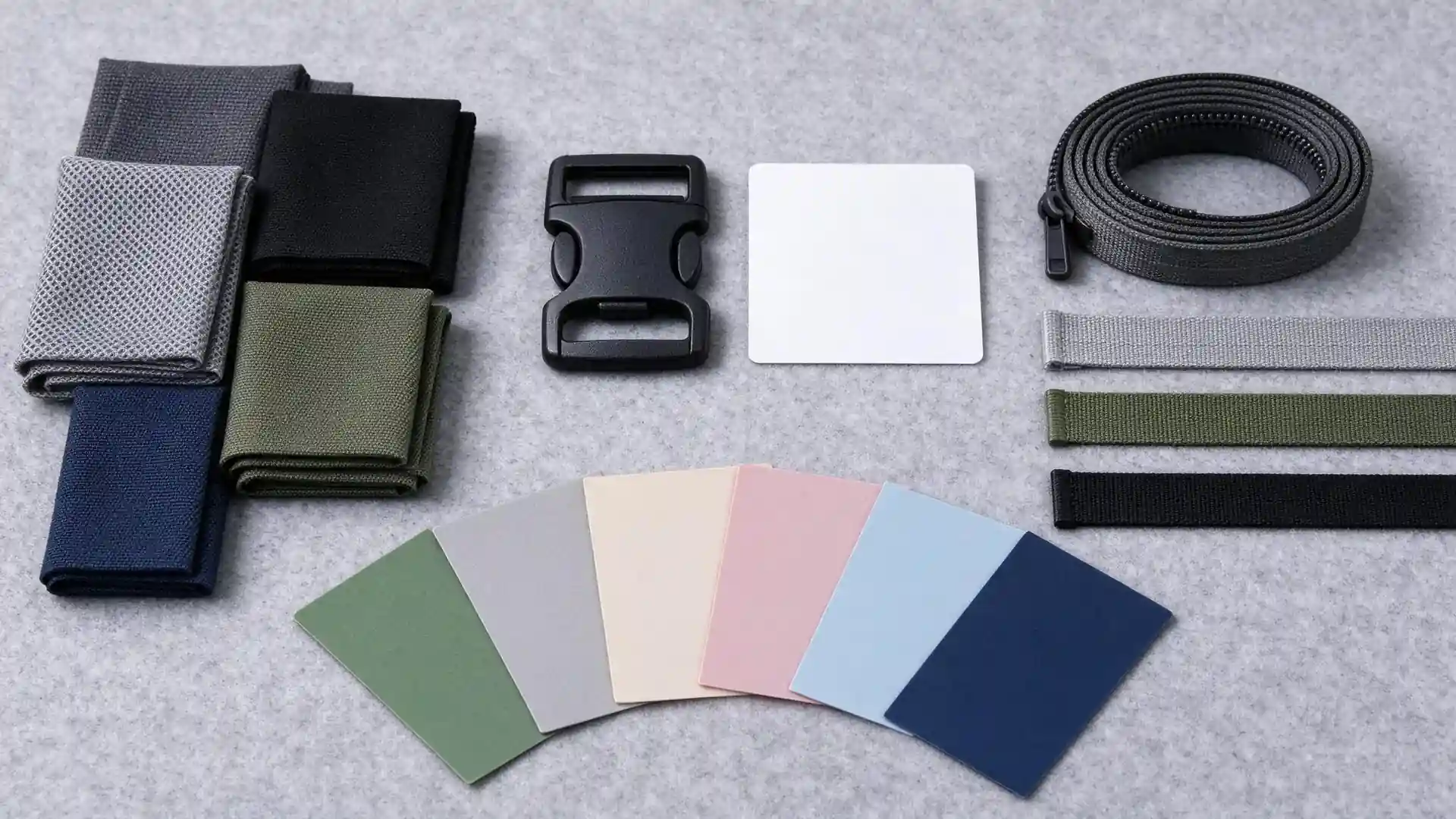
Supplier scheduling problems get the blame, but a meaningful share of delays is buyer-created. They are usually polite, incremental, and invisible until the cumulative lead time has grown beyond the launch window.
| Buyer mistake | How it extends lead time | Better behavior |
|---|---|---|
| Sending an incomplete tech pack or RFQ | Supplier pauses quoting to request missing dimensions, materials, or logo intent | Send a complete RFQ with one owner per unresolved item |
| Changing material after approval | Fabric order and cutting plan reset | Freeze BOM before PP; treat later changes as change orders |
| Delayed feedback on samples | Sample room and production slot cannot proceed | Assign a single internal approver and a deadline |
| Approving logo in parts | Placement, color, and file version decided in separate emails | Approve final artwork file and placement in one sign-off |
| Unclear packaging specs | Carton, barcode, and hangtag work done late | Confirm packaging layout before bulk finishing |
| Comparing quotes without BOM alignment | Different materials and trims make the lead-time comparison meaningless | Compare after normalizing BOM, construction, and QC scope |
| Starting too close to launch | No buffer for one normal revision or material wait | Plan backward from launch date with buffer at approval gates |
Avoiding these mistakes is mostly an internal discipline problem, not a sourcing skill problem. The buyer who assigns one deadline owner per gate and treats every approval as a production task usually beats the buyer who is more experienced but slower to reply.
For a broader view of first-batch failures — including the mistakes that surface after ordering — see the biggest mistakes first-time bag buyers make before bulk orders.
How Procurement Teams Can Reduce OEM Production Delays
The fix is not "find a faster factory." The fix is to run the order as a controlled project with defined gates, owners, and fallback positions. OEM production planning only works when the buyer side and factory side operate from the same confirmed inputs.
Practical controls that reduce delay risk:
- Approval matrix: define who inside your company approves artwork, material swatch, color, PP sample, packaging proof, and inspection criteria.
- Deadline ownership: every approval gate gets a named owner and a due date in calendar terms, not "next week."
- Material reservation: ask the supplier to confirm which materials can be reserved early and which depend on final approvals.
- Revision limit: agree before sampling how many revision rounds are included and what happens after that.
- Weekly production tracking: request a short status line each week once material or bulk production starts.
- Inspection scheduling: book inspection against the ex-factory forecast, not after goods are packed.
- Backup material strategy: confirm at least one acceptable alternate fabric or trim in case the first choice cannot arrive in time.
- Written change-order rule: state in the PO that spec changes after PP approval are subject to schedule review.
The table below turns these controls into a daily working format.
| Approval item | Deadline owner | Due date | Status |
|---|---|---|---|
| Artwork / logo file | Buyer product lead | ||
| Material swatch approval | Buyer materials lead | ||
| Color / lab-dip approval | Buyer quality lead | ||
| PP sample approval | Buyer merchandising lead | ||
| Packaging proof approval | Buyer packaging lead | ||
| Inspection criteria confirmation | Buyer QC lead | ||
| Shipment booking request | Buyer logistics lead |
You do not need a complicated project tool for this. A shared sheet or even a single email thread with updated status lines is enough, as long as each row has one owner and one date.
Supplier Verification: What to Confirm in Writing Before You Reserve the Order
Before you commit a purchase order or allow the factory to reserve a production slot, confirm the following items in writing. The point is not paperwork for its own sake. It is to remove the assumptions that turn into argument and delay later.
Ask the supplier to confirm:
- The cumulative ex-factory estimate, shown as sample, material, bulk, inspection, packaging, and shipment-prep blocks.
- Which materials and trims are stock items and which are custom or imported, with the expected availability for each custom item.
- The exact PP sample reference number, date, and photo file used as the bulk production standard.
- The earliest production slot associated with current approval status, and what delay would cause the slot to move.
- The accepted AQL level and the defect categories that trigger rework before shipment.
- The final artwork, artwork file type, logo placement, and packaging layout.
- The carton marks, barcode format, inner polybag count, and labeling requirements for the agreed sales channel.
- Who pays for and controls any rework caused by spec changes after PP approval.
- The buyer-change-of-spec process and when it affects schedule.
If the supplier cannot confirm some of those items, that is not automatically a red flag — some points depend on order quantity, material availability, or production calendar. But you should receive a clear "to be confirmed" note with a date, not silence.
RFQ Checklist Before Starting Bag Production
Use this checklist as the final RFQ gate before you ask for a committed production timeline. Left column is the field; right column is your input to complete or the options to specify.
| Field | Your input / options |
|---|---|
| Bag type | Backpack / laptop backpack / school bag / travel backpack / luggage / duffel / cooler bag / diaper bag / other |
| Target market | Country, retail channel, marketplace platform, end user |
| Quantity | Estimated quantity per SKU and per color |
| Target delivery window | Buyer-defined launch date and required ex-factory date |
| Dimensions and capacity | Length, width, height or liter capacity |
| Material | Fabric type, denier or grade, coating, lining preference |
| Color | Target color, Pantone reference if known, tolerance expectation |
| Logo method | Embroidery / woven label / heat transfer / rubber patch / metal badge / screen print / hangtag |
| Logo placement | Exact position and size reference |
| Hardware | Zipper type, puller preference, buckles, webbing, hooks |
| Packaging | Polybag, hangtag, barcode placement, carton marks, inner quantity |
| Inspection standard | AQL level, defect definitions, test checks required |
| Compliance / test requirements | Buyer-confirmed requirements based on target market and age group |
| Sample stages | First sample, revised sample, PP sample, golden sample |
| Approval owner | Buyer-side name or role per approval gate |
| Shipment / Incoterm | Ex-factory, FOB, or other agreed terms and booking responsibility |
FAQ
These answers cover the sourcing misunderstandings that most often turn bag production lead time into a late delivery.
How long does custom bag manufacturing usually take?
There is no reliable universal number, because the time depends on construction depth, material availability, order quantity, season, sampling rounds, and approval speed. A simple logo or color change on an existing stock model may move in a much shorter window than a fully new OEM pattern with custom fabric and hardware, which can extend across multiple sampling and material stages. Treat any single quoted number as project-dependent and ask the supplier to break it into sample, material, bulk, inspection, and shipment-preparation blocks.
Why do material procurement delays affect production schedules?
Fabric, zippers, webbing, foam, and molded hardware often come from separate external suppliers with their own availability. A custom-dyed fabric or an imported zipper puller may not be ready just because the factory's sewing line is free. If the factory starts only after every material is confirmed, any late item shifts the whole start. That is why the BOM should identify stock materials versus custom or imported materials before production planning.
Can buyers change specifications after bulk production starts?
Technically not easily, and in most cases not without schedule and cost consequences. Once cutting and sewing begin, changing fabric, color, logo, dimensions, or packaging may require re-cutting, rework, or a separate run. Treat PP approval as the production freeze point. After that, changes should be handled as a written change order that resets the schedule.
What is the difference between sample lead time and bulk lead time?
Sample lead time is the time to develop and approve a physical reference sample. Bulk lead time is the time to cut, sew, finish, inspect, and pack the approved product at scale. The two do not automatically overlap with material procurement, and a short bulk lead time does not mean the cumulative project timeline is short.
How should marketplace sellers plan around bag production lead time?
Marketplace sellers should plan backward from the latest inbound date that protects their inventory position, then add buffer at approval gates rather than only at the end. Lock packaging, barcode, carton mark, and labeling requirements early, because those items can hold a shipment after physical production is complete. Treat the supplier's ex-factory estimate as one link in a longer chain, not as the arrival date.
Are reorders faster than first-time OEM projects?
Usually lower-risk and often shorter, but only when a sealed or golden sample, confirmed BOM, and approved packaging still exist. If the reorder changes fabric, hardware, size, or packaging supplier, the project returns to the same material and approval dependency as a new order. Reorders are faster mainly when the reference standard is frozen and materials remain available.
Conclusion
Bag manufacturing lead time is a coordination metric, not a factory-speed metric. The fastest sewing line in the world cannot make up for a buyer who sits on a color approval for too long, a custom zipper that arrives late, or a packaging proof that is still pending when the cartons need to close. The buyer's job is not to push the supplier harder; it is to remove the unknowns that push the supplier later.
Start with the approval chain inside your own company. Assign one owner and one date per gate. Freeze specifications at the right point. Require the supplier to show you the block-level timeline and the material risk. Seal the PP sample and attach it to the PO. State inspection criteria before production, not at shipment. These are small, unglamorous controls, but together they are often the difference between an order that ships on time and one that slides silently week by week.
Run your next bag order through the RFQ checklist and the approval ownership table in this guide before you ask the supplier for a date. You're likely to get a more honest timeline, fewer emergency air-freight conversations, and a production plan you can actually hold people to.
Get A Quote

Get A Quote
0 Comments