
RPET vs Virgin Polyester Bags: Cost, Durability & B2B Sourcing Trade-Offs
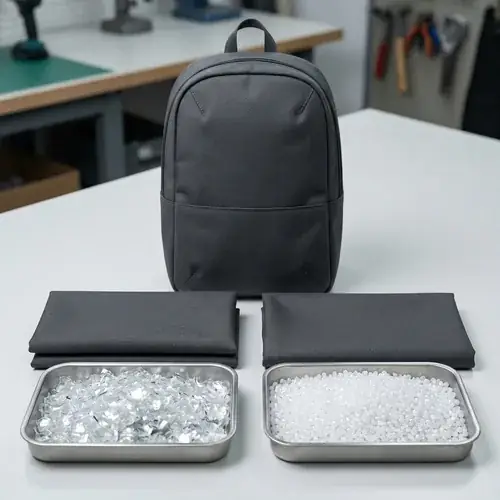
The practical answer to RPET vs virgin polyester bags is usually not ᄀᄚwhich material is stronger?ᄀᄆ but ᄀᄚwhere will traceability, color control, and true landed cost hurt me first?ᄀᄆ In most mid-weight backpack, tote, and softside luggage applications, RPET can be close enough to virgin polyester in tensile and abrasion performance to avoid becoming the main quality risk, but only when same-denier, same-backing supplier test reports confirm comparable results. The bigger procurement risks are usually cost, documentation, and color: a raw-fabric premium that must be supplier-quoted against your exact denier, backing, recycled content, and quantity, plus GRS chain-of-custody and dye-lot consistency.
If you are sourcing recycled polyester fabric bags, the material itself will rarely be the reason a product fails. In practice, failures usually come from three common patterns: the buyer assumes certified, then receives fabric without a Transaction Certificate; the buyer approves a soft digital mockup, then finds the bulk RPET color is warmer or duller than the virgin sample; or the buyer compares fabric cost instead of total finished-bag cost and overreacts to a supplier-confirmed premium. That is the comparison this article helps you make so you can decide when RPET is worth it, when virgin polyester is the safer buying decision, and what to demand before you commit to a bulk order.
For brands and Amazon sellers, the decision is commercial, not environmental. Use RPET when sustainability is part of the sellable product story and your selling price can absorb a modest landed-cost increase. Use virgin polyester when price, exact color matching, and low-quantity flexibility matter more than recycled content.
Quick Answer: Should You Choose RPET or Virgin Polyester Bags?
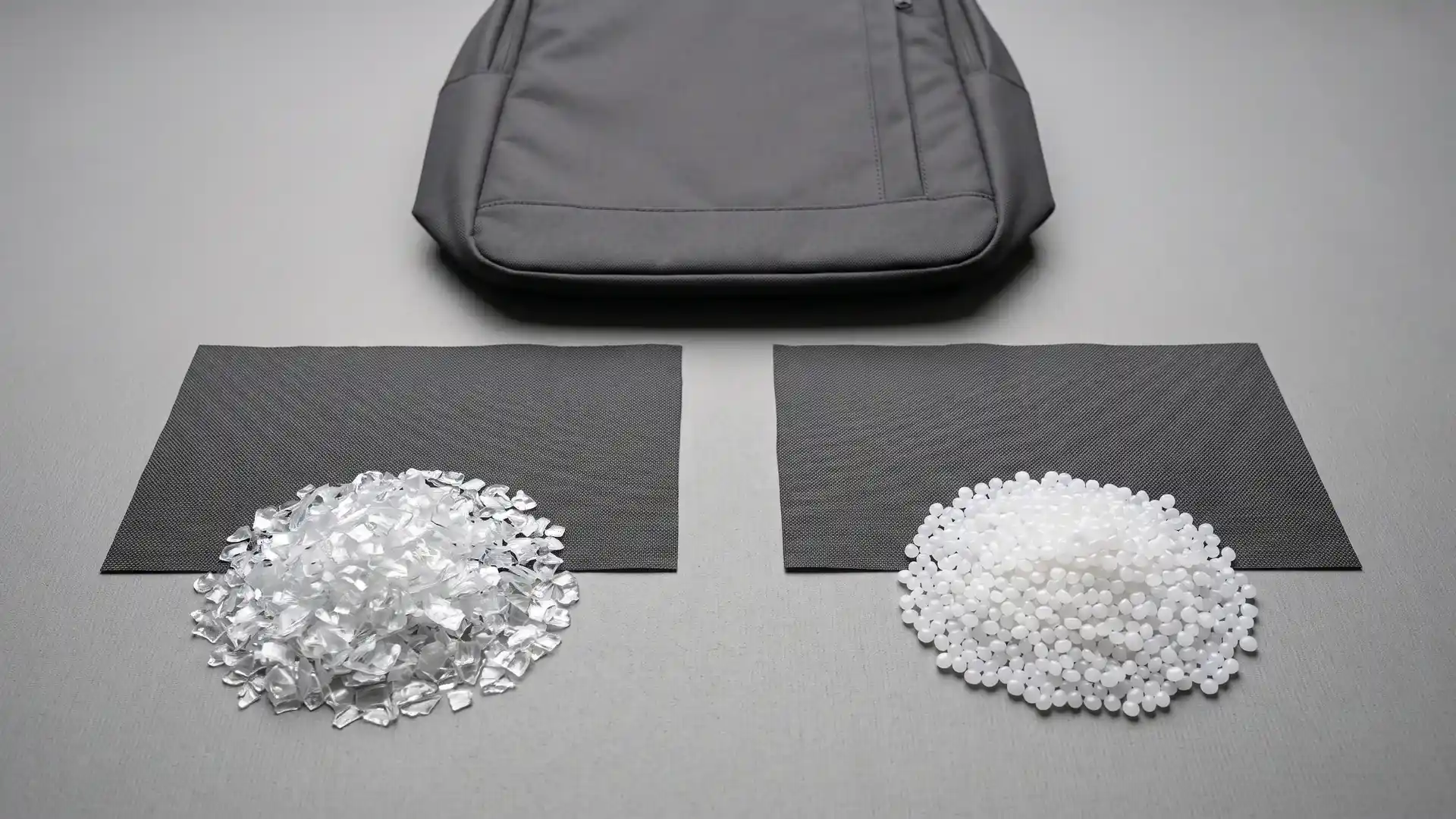
Choose RPET when the recycled claim is part of your brand positioning, your target customers will pay for it, and you are willing to manage certification paperwork and a supplier-confirmed raw-fabric premium. Choose virgin polyester when the project needs the cleanest possible color path, lower dye-lot minimums, or a more stable quoted unit cost, but confirm these advantages with the supplier for your exact denier, backing, color, and program volume.
This is not a ᄀᄚrecycled good, virgin badᄀᄆ decision. Both are polyester. Both can be woven into 210D, 420D, 600D, 900D, or 1680D bag fabric. Both accept PU, PVC, or TPE backings. Both can be used for laptop backpacks, school bags, tote bags, duffels, and softside luggage shells. The difference is what you must verify before production.
If you are still deciding between broader sustainable bag sourcing options such as recycled nylon, cork, or bio-based fabrics, start with the sustainable bag materials guide before locking onto RPET. Once you know polyester is the right fiber, this comparison gives you the sourcing trade-offs.
Scope: What This Comparison Does and Does Not Cover
This guide compares RPET vs virgin polyester bags from a B2B procurement position: cost, durability, color consistency, MOQ behavior, certification, supplier verification, and RFQ structure. It is not a general essay on plastic recycling, and it is not a nylon-versus-polyester guide.
The article stays focused on polyester-to-polyester comparison because that is the decision most bag buyers actually face. It does not cover cotton canvas, recycled nylon, TPU, EVA, or ABS/PC luggage shells in depth. It also does not provide universal prices, because real bag pricing depends on denier, backing, color, quantity, logo method, packaging, destination, and supplier cost structure.
How RPET and Virgin Polyester Actually Differ
RPET, or Recycled Polyethylene Terephthalate, is polyester fiber made from post-consumer PET ᄀᆰ mostly beverage bottles, sometimes post-industrial PET waste ᄀᆰ that is collected, sorted, washed, shredded into flakes, melted, filtered, and extruded into fiber. Virgin polyester is synthesized from petroleum-derived PTA and MEG, then melt-spun into fiber. After extrusion, both materials can be drawn into continuous filaments or staple fibers, then woven or knitted into bag fabric.
Some brands use bottle-count storytelling, but it must not appear on a product listing unless the supplier can support it with a Transaction Certificate mass balance for the exact fabric lot and finished bag. Bottle-to-fiber yield varies with flake quality, washing loss, extrusion yield, and fabric finishing, so a fixed ᄀᄚX bottles per bagᄀᄆ formula is not a compliance document. The actual recycled input must be confirmed by the supplierᄀᆵs certified recycled-content weight and order-specific Transaction Certificate.
The key sourcing point is that RPET and virgin polyester are chemically the same polymer family. That is why most physical performance differences are small. The differences that do exist come from feedstock purity, recycling process variability, and dye behavior ᄀᆰ not from a fundamentally weaker polymer.
Durability Comparison: Tensile Strength, Tear Resistance & Abrasion
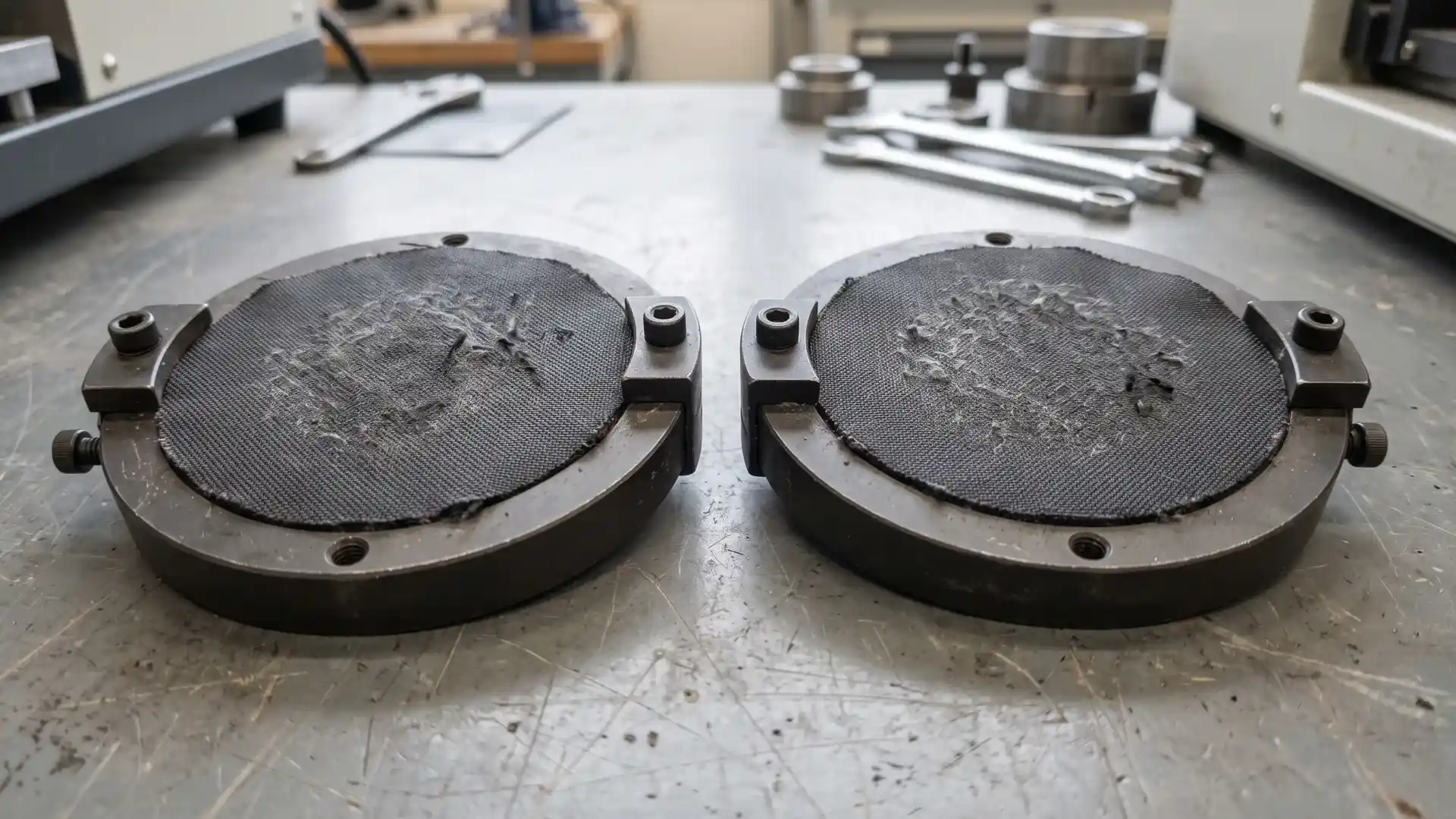
For polyester bag durability, the practical question is not whether RPET is ᄀᄚas strong as virgin polyesterᄀᄆ in a generic product sheet. The question is whether the exact RPET fabric you are buying meets your bagᄀᆵs required performance once denier, weave, backing, and recycled content are fixed.
The table below is a comparison map, not a quality guarantee. Do not accept a supplier statement such as ᄀᄚsame as virginᄀᄆ or ᄀᄚclose enough.ᄀᄆ Ask for test reports for the exact fabric lot and a same-test virgin control.
| Test / Property | What to Require from the Supplier | Why It Matters for Bag Quality |
|---|---|---|
| Tensile strength | Same-test report for RPET and virgin control at your exact denier, weave, backing, and recycled content | Shows whether the RPET shell loses enough strength to affect your specific design |
| Tear strength | Same-test report comparing both materials in the same method | Tear propagation often depends as much on seam construction and bar-tacking as on fabric |
| Martindale abrasion resistance | Supplier report for the exact face fabric and coating | Predicts pilling and surface wear on high-contact panels |
| Coating compatibility | Confirm PU, PVC, or TPE backing and seam sealing spec | Water resistance comes from backings and seams, not from fiber origin |
Use standard reference methods when you request data: ISO 13934 for tensile strength, ISO 12947 for Martindale abrasion, and a clearly named tear test from the mill. Require the supplier to state the recycled content percentage, denier, weave, backing, and whether the claim is from the exact fabric and construction being quoted.
What this means in practice: the main durability risk is not the recycled fiber itself. It is cutting corners on stitching, not adding enough reinforcement at high-stress points, or specifying a fabric weight too light for the product. If your bag is a heavy-load tactical pack or an extreme abrasion application, polyester may not be the right material at all ᄀᆰ you may need to compare nylon vs polyester bags before deciding.
Cost Analysis: How Much More Does RPET Actually Cost?
This is where B2B buyers make the most expensive mistake: comparing raw fabric cost instead of finished-bag cost. RPET backpack material is usually quoted above virgin polyester at the fabric stage, but the amount is not a stable market percentage. The exact premium is quote-dependent. It changes with feedstock pricing, recycled content, denier, backing, color, supplier source, and order quantity.
A backpack has shell fabric, lining, foam, webbing, zippers, buckles, thread, labels, and packaging. Direct labor and most hardware are broadly similar whether the shell is RPET or virgin polyester, but GRS-certified RPET can add overhead beyond the fabric premium. Certified material segregation, document control, mass-balance accounting, and supplier audits may be charged separately or absorbed into the unit price. If the shell fabric is only a portion of total direct materials, a supplier-confirmed raw-fabric premium may dilute into a smaller finished-bag increase, but certification overhead still has to be priced into the landed-cost forecast.
The table below is a decision map, not a price sheet. Use it to structure the quote request, then ask the mill or bag supplier to price the exact specification.
| Recycled Content Target | Cost Risk to Verify | Typical Buyer Fit |
|---|---|---|
| Virgin/no recycled claim | Baseline quote; use a same-spec virgin control | Budget or price-driven programs with tight color requirements |
| Low recycled content | Lower recycled-input option; premium must be supplier-quoted | Basic promotional bags or first-step recycled story |
| Balanced recycled content | Mid-level recycled content; premium varies by feedstock and color | Mid-tier retail backpacks and totes |
| High recycled content | Highest recycled-input and traceability requirement; price the exact fabric | Premium eco-brands or certified product lines |
This is also why partial recycled content exists. It lets a brand make a reduced recycled claim while keeping the fabric cost closer to virgin. The trade-off is that the marketing claim is weaker, and buyers must state the exact percentage accurately. Vague claims like ᄀᄚeco-friendly materialᄀᄆ are a compliance and review risk.
Textile-to-textile RPET, made from used garments and fabric waste rather than bottles, is a different cost conversation. T2T feedstocks are less mature, and the unit cost can differ widely from bottle-to-textile RPET depending on fiber source, process yield, and availability. Do not use a general market multiple. Get a current supplier quote for the exact recycled content, denier, backing, and projected quantity before building a product around T2T.
Do not let raw fabric math push you into a sourcing mistake. If you are cost-cutting by swapping lining, hardware, or reinforcing the wrong panels, the savings can create reliability problems later. The bag material sourcing mistakes guide explains how BOM errors snowball from fabric-level decisions.
Dyeing Consistency, Color Tolerance & MOQ Risks
The most invisible risk with RPET is color. Recycled PET flakes can carry a slight yellow, gray, or green tint depending on the original bottle stream. That base tone usually matters less for black, navy, charcoal, or dark greens. It becomes a bigger problem when you want pure white, bright red, cool gray, or light pastels.
Virgin polyester often starts with a cleaner base tint, so custom Pantone dyeing in low quantities is typically easier to control, but this is still supplier-dependent and may vary by denier, backing, and color target. RPET may need more aggressive base-color correction, especially for light shades. That can mean a supplier quotes a higher custom dye minimum, or tells you the selected stock RPET color is close but not exact. Do not accept ᄀᄚcloseᄀᄆ without a physical lab dip. In practice, I would rather approve a slightly warmer recycled pastel than chase a Pantone swatch the mill cannot repeat across lots.
Your process should be: request physical lab dips, approve the exact fabric swatch, and set an agreed color tolerance under a defined light source before production. Digital Pantone simulations are not fabric. An RPET color can look different under D65 daylight, store lighting, and Amazon product photography. If your product has multiple fabric panels ᄀᆰ shell, front pocket, side pocket, webbing ᄀᆰ confirm whether each component is RPET or virgin, because they may take dye differently.
MOQ behavior differs by supplier and coating. Virgin polyester may have more stock colors available at shorter dye runs, but this is not universal; confirm the supplierᄀᆵs current color library and minimum dye-run requirement for both virgin and RPET. Some suppliers now stock selected RPET colors, but availability is supplier-specific and may be limited to dark or mid-tone colors. Custom-dyed RPET may force a larger fabric lot or yarn minimum. The exact number is supplier-confirmed and project-specific. If you are making a small test order, ask for existing stock RPET colors instead of a custom match. If custom color is non-negotiable, ask the mill for the minimum fabric length, the number of lab dips included, and how many lots your order will use.
GRS Certification: How to Avoid Greenwashing in Bag Sourcing
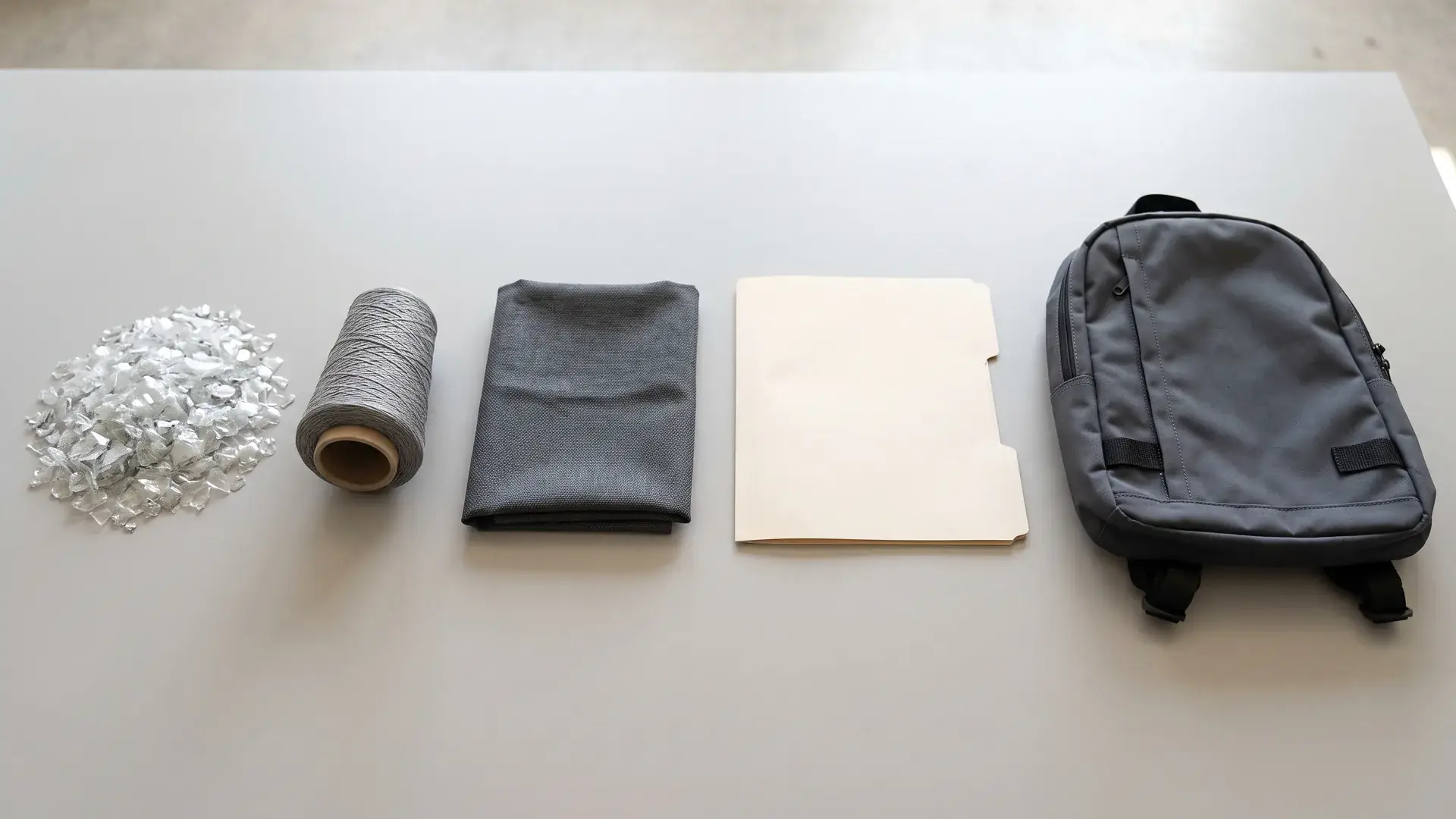
A recycled claim without documentation is a liability. For GRS recycled fabric, the critical distinction is between a factoryᄀᆵs Scope Certificate and the order-specific Transaction Certificate.
A Scope Certificate confirms that a facility is certified to handle recycled material under the Global Recycled Standard. It does not prove your order used recycled content. The Transaction Certificate ᄀᆰ or TC ᄀᆰ traces the actual mass of GRS-certified material through each supplier in the chain. If your bag supplier claims the shell fabric is GRS-certified recycled polyester, they should be able to show a TC that connects the certified fiber input to your finished bags.
Before making any public recycled claim, ask for:
- The supplierᄀᆵs valid GRS Scope Certificate, and verify the facility name and scope match your product.
- The Transaction Certificate covering your specific fabric or finished bag order.
- Written confirmation of the recycled-content percentage in the final bag shell, lining, or total textile weight ᄀᆰ not just ᄀᄚcontains recycled polyester.ᄀᄆ
- The chain of custody from bottle flake or recycled chip to yarn, fabric, and finished bag.
A supplier with a GRS logo on a website is not enough. If the TC cannot be produced because the fabric mill sold uncertified RPET or mixed recycled and virgin fiber without tracking, the order is not certifiable. You then have a green claim that can be challenged by a marketplace, a retail buyer, or a consumer protection regulator.
For a deeper explanation of how Scope Certificates and Transaction Certificates work, see the verify GRS certification for bags guide.
One more note: GRS compliance is a traceability standard, not a performance test. A GRS-certified fabric can still fail color, abrasion, or construction requirements. Do not treat the certificate as a substitute for sample approval and QC.
Supplier Verification Before You Commit
When comparing RPET suppliers, treat the conversation like a product development audit, not a fabric order. You are mapping who controls the recycled yarn, who weaves the fabric, who dyes it, who constructs the bag, and who is responsible if the certificate does not match the order.
Ask these things before sampling:
- Does the bag factory buy certified RPET fabric directly, or does it outsource fabric sourcing? If outsourced, who holds the Transaction Certificate?
- Does the supplier have both virgin and RPET production capability, or is RPET just a marketing add-on?
- Can they give the exact recycled-content percentage by weight in the finished bag, not the fabric roll?
- Will they send a cutting of the actual RPET fabric, not a generic recycled material sample?
- What is their procedure when the bulk dye lot differs from the approved lab dip?
- Will they show the same TC documentation for repeat orders when recycled content percentage changes?
If the supplier cannot answer the chain-of-custody questions clearly, that is a red flag even if the price looks good. The failure often appears later, after the inventory arrives and the product listing is live.
RFQ Checklist for Polyester Bags
Use this checklist when requesting a quote for RPET or virgin polyester bags. Do not send a vague request such as ᄀᄚplease quote recycled backpack.ᄀᄆ A complete RFQ reduces cost surprises and makes supplier responses comparable.
| Field | Your Input / Options |
|---|---|
| Bag type | Backpack, tote, duffel, school bag, laptop bag, promotional bag |
| Target market | Country, retail channel, Amazon/online, wholesale |
| Order quantity | Project-specific; confirm if stock colors or custom dye apply |
| Recycled content | Virgin, low/balanced/high RPET target, or TBD |
| GRS Transaction Certificate | Required / preferred / not required |
| Shell denier | 210D, 420D, 600D, 900D, 1680D, TBD |
| Weave | Plain, twill, ripstop |
| Backing / coating | PU, PVC, TPE, none, or TBD |
| Color target | Pantone, approved lab dip, black, navy, pastel, multiple colors |
| Lining | 210D, 230D, 420D, RPET lining, non-woven, TBD |
| Hardware / zipper | Supplier-recommended coil, reverse coil, metal, water-resistant zipper option |
| Packaging | Polybag, carton, barcode, Amazon/FBA label, hangtag, private label |
| Product claims | ᄀᄚMade with X% certified recycled polyester,ᄀᄆ no claim, or customer-defined |
| Sample deadline | Buyer-defined date |
| Bulk delivery | Buyer-defined port date and incoterm |
| Inspection standard | AQL level, critical / major / minor classification, lab test requirements |
If you are sending this to OMASKA, attach your target price or cost ceiling only if you are comfortable doing so. A target price can help the supplier propose the right fabric grade, recycled content, and hardware mix instead of returning a quote that is structurally wrong for your retail channel.
Common Mistakes Buyers Make with RPET vs Virgin Polyester
Buyers do not necessarily choose the wrong material. They choose the right material with the wrong documentation or cost assumption. These are the mistakes I see most often.
- Mistake 1: Comparing fabric price instead of finished bag cost. A raw-fabric premium is not the same as an equal FOB increase. Ask for the landed-cost impact, including any certification and segregation overhead, not just the fabric upcharge.
- Mistake 2: Buying a ᄀᄚrecycledᄀᄆ claim without a Transaction Certificate. A website logo, QR code, or supplier promise does not prove your order used certified recycled polyester.
- Mistake 3: Expecting every bag component to be recycled. If the shell is RPET but the lining, webbing, and zipper tape are virgin polyester, clarify which part the recycled claim refers to.
- Mistake 4: Approving digital color and skipping lab dips. RPETᄀᆵs base tint can shift light colors. Without a physical approved swatch, bulk color becomes a return risk.
- Mistake 5: Assuming RPET is waterproof. RPET and virgin polyester are not waterproof by fiber type. Water resistance comes from PU, PVC, or TPE backings and seam treatment. If you need water resistance, specify the coating and test method.
- Mistake 6: Selecting high-percentage RPET for a price-driven promotional program. The premium and documentation burden may be too much for the target price. A partial recycled blend can be the commercially survivable middle path.
FAQ: RPET vs Virgin Polyester Bags
These are the long-tail questions B2B buyers ask when they are already in supplier shortlist mode and need quick answers before preparing an RFQ.
Is RPET as durable as virgin polyester for bags?
In practical bag applications, yes. RPET and virgin polyester are usually close in tensile and abrasion performance when denier, weave, and backing are matched, but the exact result must come from supplier test reports for the exact fabric specification. Construction, stitching, and reinforcement usually affect real-world durability more than the fiber source.
Does RPET cost more than virgin polyester?
Usually, yes at the raw-fabric level, but the exact premium is supplier-quoted and fact-dependent. It varies with recycled content, denier, backing, color, feedstock cost, and order quantity. The finished bag premium is smaller because direct labor and most hardware do not change in the same proportion, but GRS certification, material segregation, and documentation can add overhead that must be quoted separately.
Is RPET fabric waterproof?
Not automatically. RPET polyester is not waterproof because of the recycled fiber. Water resistance depends on the backing and construction. Ask the supplier to specify PU, PVC, or TPE backing, seam construction, and whether the product should be described as water-resistant or leak-resistant rather than waterproof.
Can buyers see the difference between RPET and virgin polyester?
Not in a well-made fabric. RPET and virgin polyester can look and feel nearly identical once woven, coated, and finished. The visible difference appears when RPET has poor base-color control, especially in whites and pale colors. The proof should come from documentation, not appearance.
What does a GRS Transaction Certificate prove?
It proves the certified recycled material was tracked through a specific supply chain for a specific transaction. It supports the claim that your order used GRS-certified recycled polyester. A Scope Certificate alone only confirms the facility is certified; it does not certify your specific order.
Can RPET bags be dyed in bright or pastel colors?
Yes, but bright and pastel colors are more sensitive to RPETᄀᆵs base tint. Pure white and some cool pastels can be harder to match than on virgin polyester. Physical lab dips and a defined color tolerance are essential for those shades.
Official Sources and Compliance References
These references help you frame supplier requests accurately. They do not make any fabric lot automatically compliant, and the supplier still needs to provide the test report, certificate, and sample evidence tied to your exact order.
- ISO 13934 supports tensile strength and elongation testing of textiles. Use it when comparing RPET and virgin polyester tensile data rather than accepting a supplierᄀᆵs verbal ᄀᄚsame strengthᄀᄆ statement.
- ISO 12947 supports Martindale abrasion testing for woven bag fabrics. It helps verify that a specific RPET or virgin polyester fabric will withstand surface wear in real use.
- Global Recycled Standard provides chain-of-custody and recycled-content requirements. GRS Scope Certificates and Transaction Certificates are the documents buyers must review before making recycled-material claims for bags.
- Recycled Claim Standard may be another chain-of-custody option depending on the customer and market. Confirm with the supplier whether GRS, RCS, or a customer-specified standard is needed for the final product claim.
Conclusion
The buyer decision between RPET vs virgin polyester bags is not about material performance. It is about cost allocation, color tolerance, and documentation. RPET works when you can pay a supplier-confirmed raw-fabric premium, manage GRS chain of custody, and set realistic color approval standards. Virgin polyester works when you need the cleanest possible color path, the simplest low-quantity dye program, and the most stable quoted unit cost, provided the supplier confirms those advantages for your exact specification.
Donᄀᆵt choose based on a single strength number. Choose based on the total landed cost, the shelf-price positioning, and whether the claimed recycled content survives supplier verification. If you are ready to move forward, prepare the RFQ checklist above, confirm recycled-content percentage, and ask OMASKA for the exact fabric spec, certificate path, and sample plan for your bag program.
Get A Quote

Get A Quote
0 Comments