
Event Swag Bags & Conference Bags: Fixed-Deadline B2B Sourcing Guide
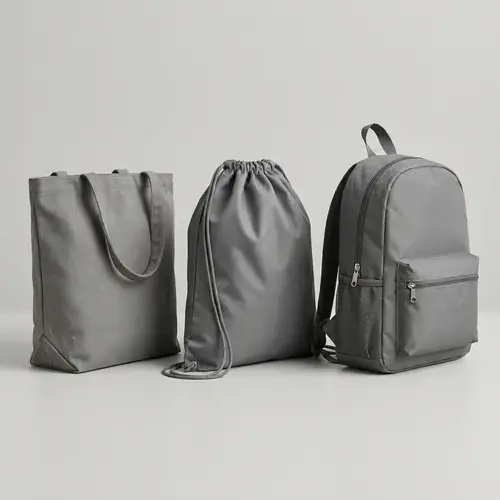
The right event swag bags decision is not about finding the cheapest tote. It’s about working backward from a fixed event date, then locking bag format, material, handle reinforcement, branding method, and carton packing before anything goes into production. A bag that arrives late, tears at the handle, or places a sponsor logo wrong has usually already failed commercially—even if the unit cost looked attractive on the quote.
Event bag sourcing differs from retail replenishment or open-ended promotional purchasing. There is no restock date. The goods must be physically in the venue or warehouse before the doors open, and the bags need to carry a mixed kit—catalog, agenda, notebook, water bottle, sponsor inserts—without the handles breaking or sponsor logos peeling during day one. This guide covers the procurement path, not generic event-planning advice.
By the end, you’ll know how to choose the right silhouette for different attendee tiers, what to ask about fabric weight instead of accepting a vague “tote bag” quote, how to specify logo application for sponsor visibility, what packing specification speeds up on-site kitting, and how to write an RFQ that returns comparable quotes. If you already have a confirmed attendee count and event date, the RFQ checklist near the end is your fastest next step.
Quick Answer: What Makes Event Swag Bags Sourcing Successful?
Successful event swag bags sourcing comes down to five locked decisions. If any one of them stays vague, the risk shifts to you.
- Fixed in-hands date. Work from the date the goods must arrive, not the date the supplier says they can ship. Production, final inspection, transit, and customs all operate backward from that one drop-dead date.
- Bag format matched to attendee profile and insert weight. A drawstring bag cannot carry what a structured tote carries. Decide by what goes inside, not just by what looks good in a mockup.
- Fabric identified by exact weight. Two “nonwoven totes” can differ substantially once you compare grams per square meter. Ask for gsm or denier, not just the fiber name.
- Handle reinforcement as a written spec. One of the most visible failure points is a loaded tote where the handle stitching gives way. Specify folded webbing ends, multiple stitch lines, or cross-stitching at attachment points.
- Packing and sample approval defined before production. Flat-packed bags arrive ready for fast manual stuffing; badly folded bags create permanent creases and slow down your volunteer line.
The first question is not “What is the best event bag?” It is “What will attendees carry, and when does the bag absolutely need to be in hand?” Answer those two first, and the rest of the buying decision becomes mechanical.
Scope: What This Guide Covers—and Where It Stops
This guide focuses on conference bags, attendee gift bags, promotional event bags, and corporate giveaway bags as procurement objects. It covers bag format selection, material trade-offs, logo application methods, handle and seam quality control, carton packing workflow, supplier verification, and the RFQ details that matter for high-volume event distribution.
It deliberately does not cover what promotional items to put inside the bag, and it does not treat event bags as B2C retail fashion accessories. That boundary matters because event budgets often split between the bag itself and the inserts; if you spend all your planning energy on giveaways and treat the bag as an afterthought, the entire kit can collapse at the handle or arrive in a condition that embarrasses the sponsor.
Think of this as a sourcing and risk-control guide, not a shopping list. The actionable outcome is a supplier-ready specification, a QC acceptance plan, and a packing instruction set.
Choosing the Right Bag Format by Attendee Profile
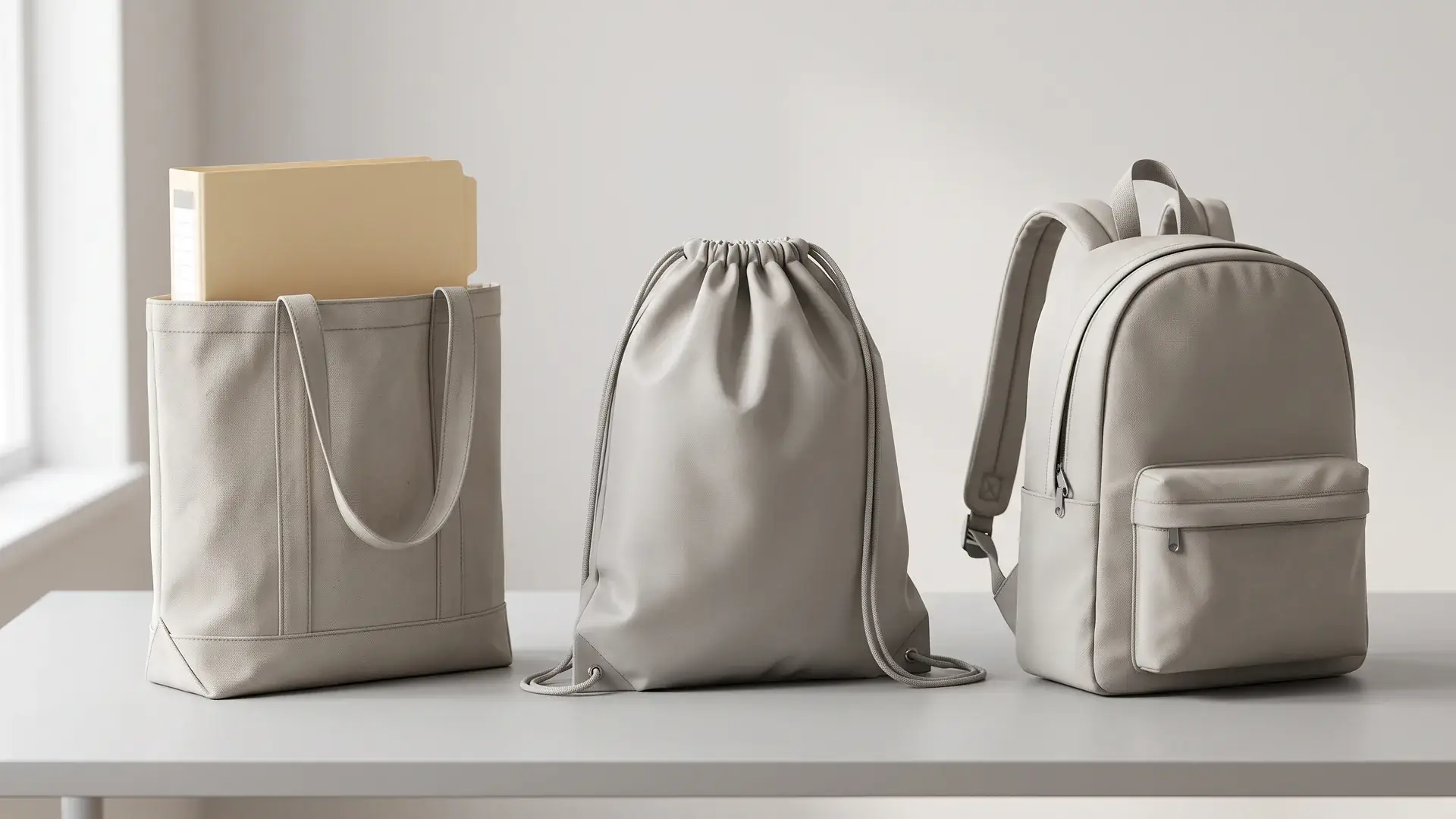
The fastest way to mis-spec an event bag order is to buy one silhouette for everyone. A speaker’s kit, a general attendee bag, and a youth sports handout are three different procurement problems because they carry different loads and create different brand impressions.
Start with the heaviest realistic insert. It’s common to plan around five to seven items, but one heavy catalog, a glass water bottle, or a hard-shell notebook changes the load requirement. Once you know the worst-case weight, you can choose the structure that survives it.
- Standard tote is the workhorse for trade shows, association conferences, dealer days, and general registration kits. An open top speeds stuffing, a broad print panel gives sponsors visibility, and a bottom gusset allows the bag to stand and hold flat documents. Ask about gusset depth and handle stitching early.
- Drawstring bag fits youth events, sports courtside giveaways, walk-up booths, outdoor festivals, and very high-volume handouts where speed and low unit cost matter more than long-term reuse. It has a smaller printable area and less load control, so confirm the drawcord, barrel lock, and corner reinforcement rather than assuming it will hold heavy inserts.
- VIP or staff backpack works for speakers, executives, paid attendees, premium sponsors, and internal staff gifts. This is a different quality tier with zippers, padding, and structured compartments. If your event needs that tier, work through the deeper decision path in the corporate branded backpacks guide before finalizing specs.
The table below is a quick selection map, but keep one rule in mind: the bag has to fit the heaviest insert, not just the average attendee.
| Bag Format | Best For (Attendee Profile / Use Case) | Common Baseline Dimensions (Confirm Before Quote) | Cost & Perception Tier | What to Confirm with Supplier |
|---|---|---|---|---|
| Standard tote | Trade show attendees, conference delegates, registration kits | Medium, commonly around 13 x 15 in with 3–4 in bottom gusset | Low-to-mid unit cost; broad printable area | Fabric gsm, handle style and stitch, gusset depth, bottom reinforcement, inner pocket if needed |
| Large tote / sponsor kit | Heavy catalogs, multi-sponsor kits, premium pass holders | Commonly around 15 x 18 in with 4–5 in gusset | Mid tier; larger print panel | Handle load test with actual catalog stack, seam reinforcement, fabric stiffness |
| Drawstring bag | Youth, sports, outdoor, high-volume walk-up | Smaller operating body, often unstructured | Usually the lowest unit cost tier | Drawcord type, barrel lock durability, corner stitching, fabric weight |
| VIP / corporate backpack | Speakers, executives, premium sponsors, staff gifts | Standard daypack geometry; laptop sleeve if required | Higher perceived value; heavier product | Zipper type and smoothness, strap padding, laptop size, lining, logo placement area |
Here’s the practical approach: segment your attendee list into two or three tiers, buy the cheapest functional bag for the broad handout tier, and reserve the better format for speakers, sponsors, and paid VIPs. Mixing formats may split production MOQs, so confirm quantity by SKU with the supplier instead of sending one combined number.
Material Selection: Balancing Budget, Durability, and Sustainability
For event swag bags, material choice is not just a look decision. It drives unit cost, print compatibility, load capacity, carton weight, freight cost, and the sustainability story your marketing team may want to tell.
The core mistake is quoting “a nonwoven bag” or “a polyester tote” without the fabric weight. Nonwoven polypropylene, for example, can be supplied at very different grams per square meter. A lighter version may feel fine in a sample but tear under a thick catalog. The same logic applies to polyester and nylon, where denier or gsm tell you more than the fiber name ever will.
Here is where the materials separate in practice:
- Nonwoven PP suits massive trade show handouts where the bag may be used once or twice. It is lightweight and screen-printable, but it can develop creases, and wet/outdoor performance is not the same across every nonwoven construction—strength when wet depends on the exact gsm, any coating or lamination, and the seam and construction details. Confirm those variables with the supplier if the event is outdoors or if the bag is likely to get wet.
- Virgin polyester is often the safer general-purpose choice for conference bags that need to survive the event, get folded into a suitcase, and still look presentable. It resists folding damage better, holds screen printing and many heat transfers, and ships lighter than canvas. Confirm denier or gsm and whether a coating is applied.
- Nylon can build a strong, technical-feeling bag, usually at a higher material cost than polyester. It is not automatically the right choice for a general handout; reserve it for premium attendee or staff kits where the tactile and visual difference justifies the spend.
- Canvas/cotton creates a natural, premium feel and a strong brand impression, but it is heavier, adds freight cost, and may shrink if washed. It works well for VIP bags and corporate programs where the tactile quality supports the brand, not for untargeted mass distribution.
- RPET carries the corporate ESG story while performing close to polyester. But recycled-content claims need documentation; don’t let the marketing copy outrun the supplier’s traceability evidence. If ESG is part of the program, compare the cost and documentation logic in the RPET vs virgin polyester bags guide.
One deeper cost point: lighter material lowers freight, but making it too light raises the chance of handle-area tearing and visible creasing. Landed cost and event-day failure risk belong in the same calculation.
| Material | Durability / Load Capacity | Eco & Brand Profile | Typical Branding Methods | What to Confirm with Supplier |
|---|---|---|---|---|
| Nonwoven PP | Light loads; can crease; wet/outdoor performance depends on exact gsm, coating, lamination, and construction | Seen as trade show or reusable handout tier | Screen printing; some heat transfer | Exact gsm, virgin/recycled content, wet/outdoor suitability, seam and handle attention |
| Virgin polyester | Strong for weight; fold-resistant; good all-around load | Standard promotional / reusable conference bag | Screen print, heat transfer, dye sublimation on light fabric | Denier or gsm, coating, print surface, colorfastness |
| Nylon | High strength-to-weight; technical feel | Premium technical perception; higher material cost | Screen print, heat transfer with adhesion check | Denier, weave, coating, print adhesion on finished fabric |
| Canvas / cotton | Heavy-duty feel but structural sag under very heavy load | Natural premium look; heavier carton and freight | Screen print, embroidery, limited full-coverage heat transfer | Fabric weight, color consistency, shrinkage, carton gross weight |
| RPET | Similar to polyester, governed by fabric construction | ESG positioning; claims require traceable documentation | Similar to polyester; screen or sublimation | Recycled content percentage, supporting documents, print compatibility, cost difference |
Use the table as a shortlist, then require fabric weight and print-sample confirmation before locking the quote. If the supplier cannot name the gsm or denier, you’re likely getting a vague quote rather than a controlled spec.
Logo & Branding Methods for Sponsor Visibility
Branding is the point of most promotional event bags, and sponsors care about placement as much as the event organizer cares about unit cost. A sponsor logo that cracks, peels, or prints off-register is a commercial problem long after the event ends.
The order of decision should be: artwork first, material second, method third. When a specific material and method are confirmed together, the supplier can tell you whether the design will hold.
- Screen printing is the default for simple, high-volume logos on totes and drawstrings. It produces repeatable results at quantity and works well on nonwoven and polyester, but it is less sharp for very fine text, gradients, or multi-color registration. Ask for Pantone references and check edge definition on a pre-production sample.
- Heat transfer extends the design range to full color, gradients, and complex art, but the adhesive and finish vary by material. Texture and flex matter; a transfer that looks fine flat may behave differently on a gusset or folded handle area. Confirm wash and rub performance only if the event bag is intended for reuse.
- Dye sublimation handles full-color all-over designs on white or light polyester and works best when the entire panel is the graphic. It is not a cotton or nonwoven solution. Ask the supplier whether the fabric is coated or finished in a way that affects color migration.
- Embroidery or woven patches move a VIP bag up a tier, but the backing and density must suit thin material. On a lightweight tote, a heavy embroidery area can distort the fabric. Reserve it for structured bags.
MOQ and setup costs are method-specific and supplier-specific. Do not assume that a little logo on a stock bag is automatically cheap to decorate. Low-quantity branding may be feasible on selected stock models when the supplier or decorator accepts the setup charge and placement limits.
The deeper technical comparison is in the fabric bag printing methods guide. The short version for event buyers: get the pre-production sample with the real artwork, real fabric, real logo position, and real color reference, then sign off only after seeing it loaded with inserts.
Logistics & Packing Workflow: What Buyers Often Forget
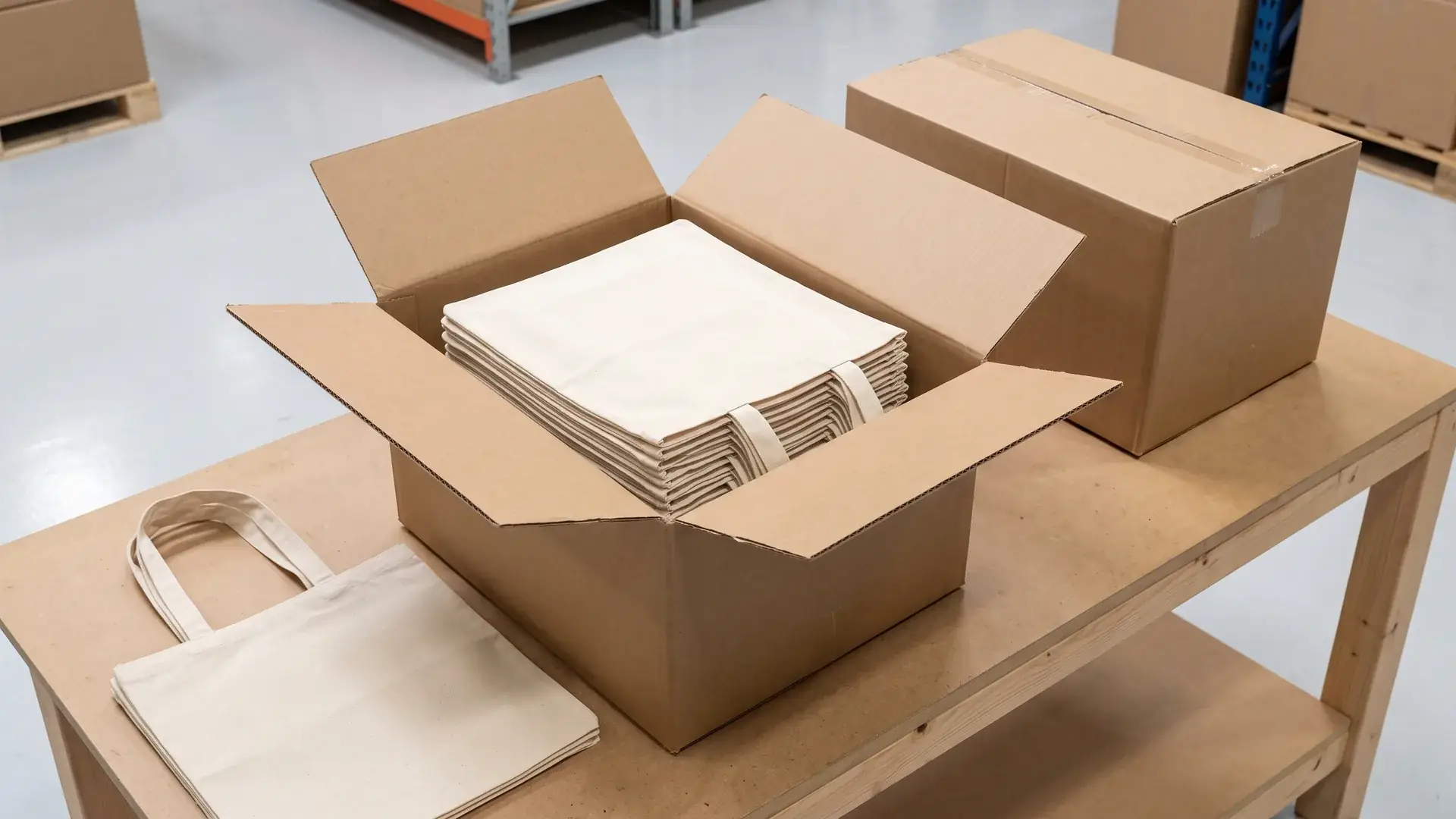
The delivery plan for event swag bags is a fixed-deadline operation. “Ships on time” is not the same as “arrives on time.” You’re buying a physical asset that must clear production and transit before a public event starts.
First, decide the final receiving location. Delivering to a warehouse with receiving staff is different from delivering to a hotel, convention center, or pop-up venue with no dock manager. Give the supplier the exact delivery address, whether a loading dock exists, and the window during which the venue will accept cartons. Don’t leave this to event week.
Second, specify how the bags should be packed. For manual kitting at the venue, flat-packed bags in consistent master cartons are the most practical format. They should not be folded in a way that creases the main printed panel, and handles should be untangled or loosely tucked to speed stuffing. Individual polybags help protect light-colored bags from dust and handling marks but add cost and on-site unwrapping time.
Third, decide whether the supplier pre-stuffs the bags or your team does it on site. Pre-stuffing adds labor and shipping weight but removes the venue bottleneck. On-site stuffing saves unit cost but consumes volunteer or staff hours and exposes the program to late insert deliveries. Whichever you choose, assign one owner for the packing list and insert sequence.
The final layer is the shipping buffer. Customs inspection, bad weather, port delays, or a mislabeled carton can consume days that the event does not have. Confirm the production cut-off, inspection date, and transit timeline with the supplier in writing, then add a buyer-defined buffer. The buffer is not a luxury; it is the difference between a manageable delay and a public failure.
Quality Control (QC) Checks for High-Volume Event Bags
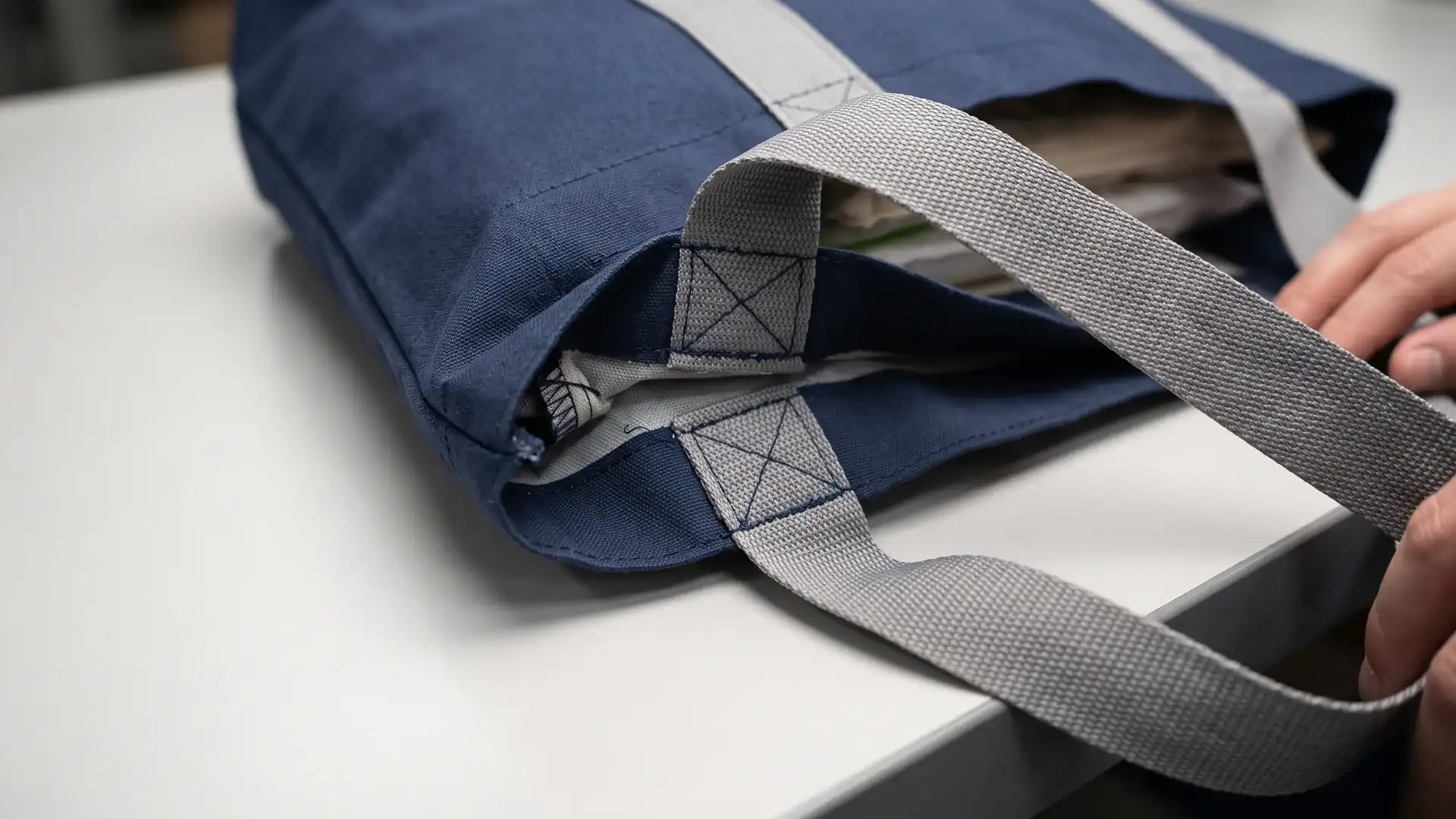
QC for high-volume event swag bags starts at the handle attachment and works outward. The failures buyers notice fastest are usually handles or straps that rip out under load because the attachment was never specified, not zipper failures that otherwise look evenly stitched.
The most useful QC plan is a buyer-defined acceptance test, not a vague promise of “good quality.” Here’s what to specify and verify before the bulk run:
- Handle load test. Fill a pre-production sample with the actual heaviest event kit—catalog, full water bottle, notebook, hard shell insert—plus an agreed safety margin, then lift and lower the bag a defined number of times. Inspect the attachment area afterward for thread breaks, fabric elongation, or seam opening. This test should be reproducible and documented, not improvised.
- Stress-point seam inspection. Look at the seam allowance and stitch consistency where the handle webbing enters the bag body. Cross-stitching or a bar-tack spreads load over more fabric than a single straight stitch line. Ask the supplier to show the bulk reinforcement detail, not just a carefully made sample.
- Dimensional check. Confirm the bag fits the largest insert, especially an A4 or US letter folder and magazine-size catalog. Check gusset depth and internal height, not just the printed outside dimensions.
- Logo color and placement. Specify Pantone references or color acceptance limits on paper, then compare the pre-production sample and bulk sample under the same lighting. Small color drift can be acceptable; wrong placement or off-register sponsor marks are not.
- Bulk final inspection. Use an AQL-based final inspection or a supplier inspection report that records defect counts and shipment photos. Keep the standard practical for a promotional item, but never skip the handle and seam categories.
Most bulk-production disasters trace back to skipped pre-production approval. Before you sign off, review the common failure points in the sample order mistakes guide. A golden sample that never gets loaded with real event items is not really a golden sample.
Don’t overbuy certification for a standard adult conference tote that carries paper and an agenda. Some compliance requirements may apply depending on target market, age group, intended use, and direct material contact—such as restrictions for youth-targeted events or food-contact scenarios—but don’t default to expensive testing without first confirming the buyer’s latest compliance requirements.
Supplier Verification: Know Who Actually Makes and Decorates the Bags
Every event bag order sits somewhere on a chain: the factory that cuts and sews, the decorator that applies the logo to stock bags, and the trading or sourcing partner who coordinates both. Different responsibilities create different failure modes, so understand who controls stock inventory, logo application, QC, carton packing, and reorder consistency.
A supplier can be a direct OEM factory, a stock-model decorator, a promotional products distributor, or a trading company coordinating other workshops. None is automatically wrong for event bags. What matters is that the supplier can name the control points and document them. A decorator may offer low-quantity branding on existing bags but cannot change the fabric, gusset, or structure. An OEM factory can adjust construction but may require a larger committed quantity before production makes sense.
Verify capability before you commit, especially when the event date is fixed:
- Ask for two or three verifiable references from similar event or bulk promotional bag programs. Ask those references specifically about communication speed, sample revision handling, on-time delivery, and how claim or defect issues were resolved.
- Ask who produces the bag body and who applies the logo. The supplier should be able to explain the split without hesitation.
- Ask about sampling: does the supplier have an independent sample room and pattern support, or is it dependent on a third party? More hand-offs means more version-control risk.
- Ask how the supplier schedules high-volume event work against other orders. You need a production slot, not an optimistic estimate.
This is also where many buyers repeat the classic cross-border sourcing failures covered in the sourcing bags from China mistakes guide. One recurring failure mode in event bag sourcing is not factory fraud; it is a blurry split between whoever quotes, whoever decorates, and whoever is accountable for final inspection.
The Ultimate Event Swag Bags RFQ & Logistics Checklist
A weak RFQ returns quotes that cannot be compared. A strong one returns production plans. The table below is a copy-paste structure: fill the right-hand column with your program’s confirmed values, or write “to be confirmed with supplier” and force the supplier to answer it.
| RFQ Field | What to Include / Confirm |
|---|---|
| Event name / program type | Internal program name or short description |
| Event date | Fixed public event date |
| In-hands date | The latest date goods must arrive at the receiving location; do not confuse with ship date |
| Receiving location | Venue, hotel, warehouse, or staging address; note dock or delivery window constraints |
| Attendee count / quantity | Total quantity by bag format, color, and size if mixed |
| Overage / spares | Agreed spare quantity or percentage for damaged, soiled, or lost bags |
| Bag format | Standard tote, large sponsor tote, drawstring, VIP backpack, or mixed |
| Dimensions / capacity | Finished dimensions and gusset depth; confirm fit for largest insert |
| Material / fabric weight | Fiber type plus exact gsm or denier; do not accept only “polyester” or “nonwoven” |
| Color | Primary color by Pantone or supplier swatch; lining color if different |
| Handle / strap | Handle type, width, length, attachment method, and reinforcement stitch requirement |
| Closure | Open top, drawcord, zipper, or hook-and-loop closure |
| Logo / branding method | Screen print, heat transfer, sublimation, embroidery, woven label, or patch |
| Logo positions | Front panel, gusset, back, bottom, inside, sponsor multi-position layout |
| Artwork files | Vector files, Pantone references, artwork dimensions, and revision number |
| Packaging | Bulk flat, individual polybag, hangtag, barcode, or retail-ready package |
| Carton spec | Pieces per carton, maximum carton weight, carton labeling and shipping mark |
| Pre-production sample | Sample requirement, approval workflow, and revision deadline |
| Final inspection | AQL standard, inspection report, photo/video evidence, inspection date |
| Acceptance test | Handle load test, seam check, dimensional check, logo rub or adhesion check |
| Target unit budget / landed cost | Buyer-defined target cost; include freight, duties, and any customs assumptions |
| Trade terms / shipping | FOB, CIF, DDP, or other terms; freight mode; port or final destination |
| Target market / compliance | Destination market and any buyer-required regulatory document |
| Supplier status | Direct factory, stock-model decorator, promotional distributor, or trading partner |
| Kitting / stuffing | Whether supplier pre-stuffs inserts, inserts order, and carton packing sequence |
| Required documents | Proforma invoice, packing list, inspection report, certificate of origin if needed |
Send the same brief to two or three qualified suppliers. Compare not only unit cost but also the clarity of the answers, the proposed production schedule, and the sample plan.
Common Mistakes That Delay or Ruin Event Bag Programs
Most event swag bags failures trace back to the same handful of planning mistakes. They are not exotic issues; they are routine details left unwritten until production has already started.
- Working from the ship date instead of the in-hands date. Production timing, inspection, transit, and customs all need a real arrival deadline. Build the schedule backward from the venue.
- Quoting “a tote bag” without fabric weight. Two quote responses can look comparable when both say “polyester,” but they are not comparable until you know gsm or denier.
- Skipping the heaviest-insert test. A bag that holds a paper agenda may fail with a catalog, water bottle, and hard-shell notebook. Test with the real load.
- Not specifying handle attachment. Handles are the highest-visibility failure point. Make folded webbing, multiple stitch lines, or cross-stitching a written line-item.
- Approving logo based on a mockup image. Artwork can look perfect on screen and wrong on a textured gusset. Approve on the actual pre-production sample.
- Ignoring carton packing. Bags folded sharply can arrive with permanent creases across the printed logo. Specify flat packing and consistent carton counts.
- Forgetting the venue delivery window. A hotel or convention center may not accept delivery days early. Confirm receiving hours and the contact on site.
- No agreed overage. Without spares, a few soiled bags or a miscount can leave short-handed staff improvising at registration.
- Assuming small-logo MOQ equals factory MOQ. Stock-model decoration and true OEM production are different supply routes with different minimums and setup charges.
- Choosing only by unit price. Freight, packing, rework, and late-arrival risk are part of landed cost. A marginal unit-price saving can cost the entire program if the bags miss the event.
FAQ: Event Swag Bags, Conference Bags, and Sourcing Questions
These are the questions event planners and procurement teams ask most often before finalizing an RFQ for event swag bags.
What is the standard size for a conference tote bag?
For a conference tote designed to hold A4 documents or US letter brochures, a frequently used starting point is around 13 x 15 inches with a 3–4 inch bottom gusset. Larger sponsor kits often run around 15 x 18 inches with a deeper gusset. Treat those as planning references, not universal specs: confirm the finished dimensions against the largest insert you will pack, including the catalog or notebook thickness.
How much lead time is needed for custom event bags?
Lead time is quote-dependent, not a single industry number. It changes based on whether you are decorating existing stock bags or developing new fabric and construction, how complex the logo is, the number of colors and positions, production schedule, shipping mode, and final destination. Ask the supplier to provide a schedule that includes artwork approval, pre-production sample approval, production, final inspection, transit, and customs clearance. Then work backward from the event date and add a buffer you control.
How do we make sure bag handles do not break?
Specify handle reinforcement at the RFQ stage: webbing ends folded for extra fabric layers, multiple stitch lines, or cross-stitching/bar-tack at the attachment point. During QC, run a buyer-defined load test—fill a sample bag with the actual heaviest event kit plus a safety margin, lift and lower it a defined number of times, and inspect the handle area for thread breaks or fabric elongation. Require the supplier to show the bulk handle construction before shipping.
What is the difference between a conference bag and a promotional event bag?
A conference bag is designed for structured trade show and meeting use: it usually has a specified gusset for catalogs, an open or organized access point, and clear sponsor logo areas. A promotional event bag can be a lighter drawstring or giveaway tote built for speed and volume. The real difference is specification depth—conference bags require more explicit control over load, handle strength, logo placement, and carton packing.
Can we get branded event bags in small quantities?
Small-quantity branding may be feasible on selected stock models when the supplier or decorator accepts the setup charge and minimum for that logo method. Do not assume a factory’s OEM quantity requirement is the same as the decorator’s minimum. Confirm the decorator’s confirmed MOQ, setup logic, placement limits, and reorder consistency before presenting the idea as a solved plan.
Which material is best for an eco-friendly conference bag?
RPET (recycled polyester) often balances durability with a credible corporate ESG message, while canvas or natural cotton can carry a stronger natural-fiber story but adds weight and freight. Whatever you choose, require documentation for recycled content or traceability claims. The sustainability claim is only as strong as the supplier’s evidence; don’t let marketing copy run ahead of the verified material chain.
Conclusion: Follow the Fixed-Deadline Buying Sequence
Event swag bags are one of the few bag procurement categories where a late delivery is not a nuisance—it is a complete program failure. That single fact should reset how you buy: every decision serves the arrival date, the handle load, and the sponsor’s visibility.
Work in this order:
- Confirm the in-hands date and the heaviest insert kit.
- Segment attendees and choose the bag format for each tier.
- Lock material by exact fabric weight, then choose the compatible branding method.
- Submit the RFQ with packaging, QC, sample, and carton requirements.
- Approve the loaded pre-production sample, then schedule final inspection before the in-hands date.
Send the completed RFQ to OMASKA and compare the response with any other qualified bag supplier on lead-time clarity, sample plan, and handle construction. If a supplier cannot answer the load test, gsm, carton packing, and delivery window questions directly, keep looking—the event date will not wait.
Get A Quote

Get A Quote
0 Comments